Pensé que la cena en casa de mis padres serviría para recomponer la relación que apenas habíamos mantenido durante tres años. En cambio, cuando entré en su comedor en las afueras de Virginia, un hombre al que no conocía estaba sentado frente a mi padre. Junto a él había dos carpetas, una solicitud de licencia de matrimonio y un bolígrafo.
—Este es Victor Hale —dijo mamá—. Siéntate, Natalie. Victor aparentaba unos cuarenta años, casi quince más que yo. Llevaba un traje gris caro y sonreía como si ya hubiéramos llegado a un acuerdo. Me quedé de pie. —¿Qué hace él aquí?
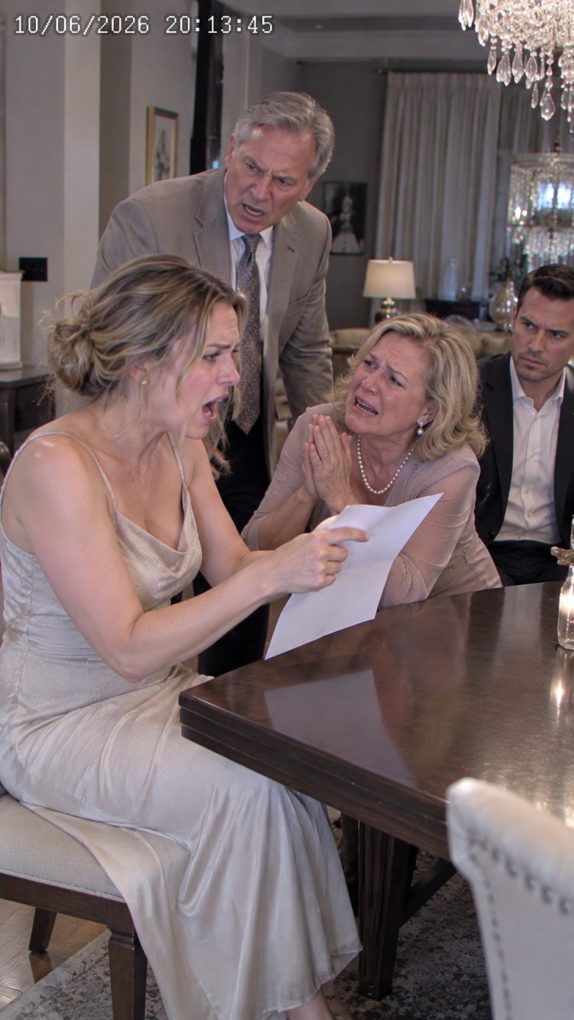
Papá me empujó la primera carpeta. Dentro había una carta de renuncia dirigida a mi empleador, en la que cedía la administración de mi cuenta de jubilación y mis inversiones personales. Otro documento autorizaba la venta de mi apartamento en Arlington. El dinero se depositaría en una cuenta conjunta controlada principalmente por Víctor.
Me reí porque la alternativa era gritar. «Estás loca». Mamá me agarró la mano. «Víctor puede darte estabilidad. Trabajas demasiado. Tienes treinta y un años. Este arreglo lo soluciona todo». Víctor añadió con calma: «Tus padres te explicaron tu difícil personalidad».
Entonces papá me dijo que la boda se celebraría esa noche. Un conocido de la familia, autorizado para oficiar ceremonias civiles, llegaría supuestamente a las ocho. Después, Victor me llevaría a su casa en Maryland. Mis padres hablaban como si estuvieran hablando de un parto programado.
Me puse de pie. —Me voy. Papá se interpuso en la puerta. Medía un metro noventa y era mucho más pesado que yo. —No hasta que firmes. El corazón me empezó a latir con fuerza. Mamá cogió mi bolso de la mesita auxiliar y lo dejó detrás de su silla.
Fue entonces cuando Víctor dijo algo que lo aclaró todo. «Robert, nuestro acuerdo se basaba en que el apartamento estuviera libre de deudas». Papá respondió: «Así es. Ella es la dueña absoluta». Ninguno de los dos notó el cambio en mi expresión.
Acuerdo.
No es una introducción. No es una relación. Es un acuerdo.
Miré a mi madre. —¿Qué te dio? —Se negó a responder. Papá finalmente estalló y me dijo que Víctor ya le había adelantado 80.000 dólares para rescatar su empresa constructora en quiebra. Si me negaba a casarme con él, tendría que pagarme el dinero de inmediato.
—¿Tomaste dinero por mí? —susurré.
Papá se acercó. “Nos hemos sacrificado por ti toda tu vida. Ahora vas a ayudar a esta familia”.
Metí la mano lentamente en el bolsillo de mi chaqueta. Mi teléfono seguía allí.
Sin bajar la vista, pulsé el acceso directo de emergencia que había configurado meses antes.
Entonces grité: “¡Papá, aléjate de la puerta!”
Dad lunged for my phone, but I backed into the dining table and shouted again. The emergency shortcut had already contacted 911 and shared my location. I kept the line open inside my pocket while making sure everyone in the room continued talking.
Mom hissed that I was embarrassing them. Victor stood and told Dad to calm down. Strangely, he seemed more nervous about the police than about losing his supposed bride. That frightened me even more.
I demanded my purse. Mom refused. Dad said I could leave after signing the documents. “You can keep your job for another month if that makes you feel better,” he offered, as though employment were something he had authority to grant me.
Victor interrupted. “That isn’t what we discussed.” Dad turned toward him, and they started arguing. Victor wanted immediate access to the apartment proceeds after marriage. Dad insisted he had promised only that I would combine finances with him.
Their argument gave me exactly what I needed. I grabbed a dining chair and positioned it between Dad and me. “Nobody touches me,” I said loudly. “I am not marrying anyone. I am not signing anything. I want to leave.”
Someone knocked hard on the front door.
Dad froze.
“Fairfax County Police,” a voice called.
Mom’s face went white. Dad whispered for everyone to stay quiet, but I screamed that I was inside and being prevented from leaving. Officers entered moments later after Mom finally opened the door.
I told them Dad had blocked the exit and my parents had taken my purse. Victor immediately claimed everything was a misunderstanding involving a voluntary marriage arrangement. An officer separated us while another recovered my belongings.
The documents made the situation much harder to dismiss. They included detailed information about my apartment, employer, savings, retirement account, and even the estimated value of jewelry inherited from my grandmother.
Then police found a signed loan agreement between Victor and Dad. The $80,000 payment was real. Attached handwritten notes referenced my marriage, property, and expected transfer of assets.
Victor suddenly insisted the money was merely a business loan and that marriage discussions were separate. Dad blamed Mom. Mom blamed Dad. Their carefully organized plan collapsed within minutes once everyone needed a different explanation.
I left with police assistance and spent that night at my coworker Maya’s house.
The next morning, I froze my credit, changed every financial password, contacted my employer, and hired an attorney.
Then my attorney discovered my father had already tried to list my apartment for sale.
The attempted listing changed everything. Dad had sent a real-estate agent documents claiming he was authorized to act for me. The signature on the supposed authorization looked like mine, but I had never signed it.
Mi abogado notificó de inmediato a la agencia inmobiliaria, a mi aseguradora de la propiedad libre de hipoteca y a las autoridades. El anuncio nunca se publicó, pero los investigadores ahora contaban con pruebas que iban mucho más allá de una cena familiar espeluznante.
También descubrí cómo mis padres sabían tanto sobre mis finanzas. Años atrás, mientras vivía temporalmente con ellos después de la universidad, mi madre había guardado copias de mis declaraciones de impuestos, extractos bancarios y documentos laborales. Al parecer, había mantenido un archivo sobre mí desde entonces.