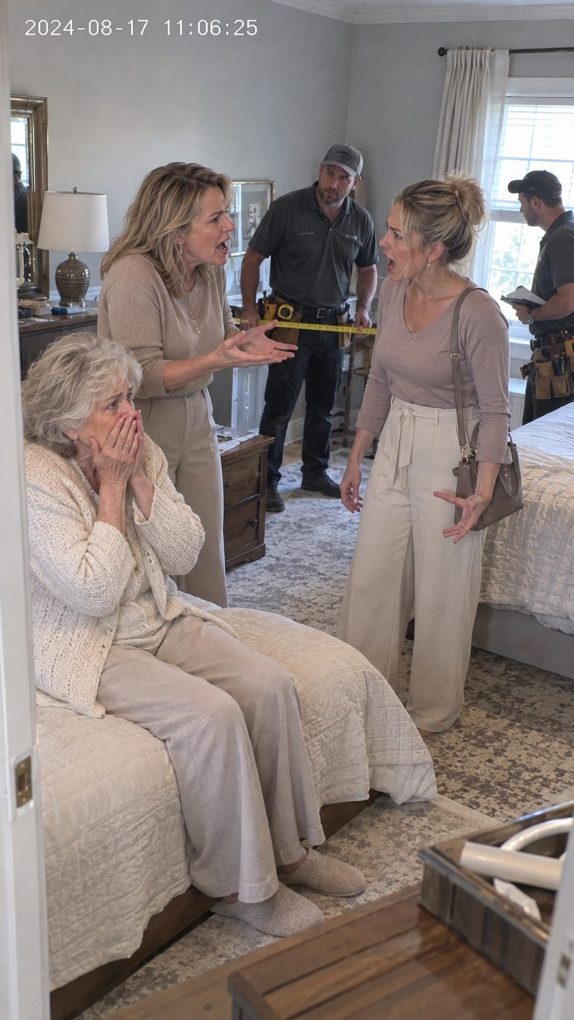
J’ai trouvé deux ouvriers en train de prendre des mesures dans la chambre de ma grand-mère pendant que j’allais chercher ses médicaments. L’un tenait un bloc-notes, et l’autre marquait le mur où se trouvait sa commode ancienne. Quand j’ai demandé des explications, il m’a montré les plans de rénovation d’une suite parentale. Ma mère avait autorisé les travaux, et ma sœur, qui venait de se marier, était désignée comme future occupante.
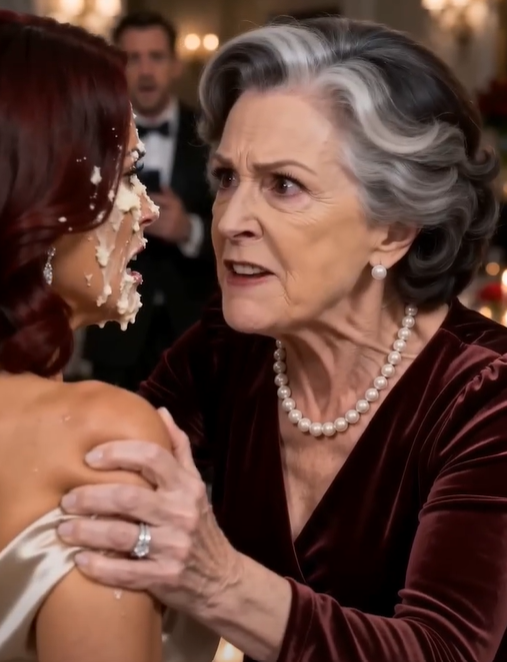
Le week-end précédent, Madison avait épousé son mari, Tyler, dans un country club huppé. Grand-mère avait passé trois jours à réparer la dentelle délicate de sa robe de mariée, la boutique ayant refusé de terminer les retouches. À la réception, Madison s’était moquée publiquement de la robe bon marché de sa grand-mère. Ma mère avait ri et lui avait dit de ne pas se faire photographier par le photographe.
Grand-mère a quitté la réception plus tôt que prévu sans se plaindre. En visitant son atelier de couture cet après-midi-là, j’ai trouvé ses tissus, ses photos et sa machine à coudre emballés dans des cartons. Une étiquette manuscrite indiquait qu’ils étaient destinés à une résidence pour personnes âgées. Personne n’avait évoqué un éventuel déménagement de Grand-mère.
J’ai confronté ma mère dans la cuisine. Elle m’a expliqué calmement que Madison et Tyler avaient besoin de la plus grande chambre car ils comptaient fonder une famille. Grand-mère, a-t-elle dit, était devenue trop âgée pour entretenir une si grande propriété. Je lui ai rappelé que Grand-mère n’avait jamais demandé à personne de s’en occuper.
Ma mère a claqué sa tasse de café sur le comptoir. Elle a annoncé que grand-mère allait emménager dans une résidence pour personnes âgées dans deux semaines et que Madison deviendrait propriétaire de la maison. Quand je lui ai demandé si grand-mère était d’accord, elle a souri et a dit que les personnes âgées avaient parfois besoin de leur famille pour prendre des décisions difficiles.
J’ai immédiatement appelé grand-mère, qui logeait chez ma tante après le mariage. Elle s’est mise à pleurer quand j’ai mentionné les cartons. Elle n’avait jamais accepté de partir définitivement. Ma mère lui avait dit que la maison avait besoin de réparations temporaires et que ses affaires seraient en sécurité.
Je suis entrée dans l’atelier de couture de grand-mère et j’ai ouvert le tiroir du bas de son vieux meuble. Dans un dossier se trouvaient des avis d’imposition, des documents d’assurance et une copie de l’acte de propriété. La propriétaire s’appelait Eleanor Miller. Ma mère n’avait fait l’objet d’aucune fiducie ni d’aucun transfert de propriété.
When I showed my mother the document, she turned pale for a moment. Then she claimed Grandma had promised her the property years earlier. I told her that a promise was not a deed. Madison entered the kitchen and shouted that the contractors had already received a deposit.
That was when I noticed another document on the counter. My mother had scheduled a meeting with a real estate attorney to discuss transferring the house. Attached was a draft authorization bearing Grandma’s signature. I recognized the handwriting immediately, and it was not hers.
I photographed the suspicious document before my mother could take it away. She demanded that I delete the pictures and accused me of trying to ruin Madison’s marriage. Madison began crying, insisting that Tyler had already told his parents they would be moving into the house. Neither seemed concerned that Grandma had never agreed to surrender her home.
I left the property and drove directly to Aunt Rebecca’s house. Grandma was sitting beside the window, carefully mending a child’s sweater. When I showed her the renovation plans, her hands began trembling. She told me that my mother had recently asked her to sign several papers but had refused to explain what they contained.
Grandma also revealed that Madison had visited her two days before the wedding. She had demanded that Grandma stop wearing old-fashioned clothes and purchase something more suitable for the ceremony. Grandma explained that she had spent her available money replacing the house’s aging furnace. Madison responded that nobody wanted a poor-looking grandmother in the wedding photographs.
Rebecca contacted a local attorney, David Lawson, who specialized in property and elder law. He reviewed the deed and confirmed that Grandma remained the sole legal owner. The draft authorization had not transferred anything, but its questionable signature required investigation. He advised Grandma to preserve every document and prevent anyone from using her identity to authorize property transactions.
The following morning, David accompanied us to the county recorder’s office. The official records confirmed that no deed transferring ownership had been recorded. Grandma also signed written instructions revoking any previous permission for my parents to arrange renovations or property transactions on her behalf. David prepared formal notices for everyone involved.
Meanwhile, Madison posted photographs of the house on social media, announcing that she and Tyler were beginning renovations on their first family home. The comments congratulated them on their beautiful property. I showed Grandma the post, expecting anger. Instead, she quietly asked why Madison had never once thanked her for repairing the wedding gown.
That afternoon, David sent my mother a letter demanding that unauthorized renovations stop immediately. He also requested copies of any documents allegedly signed by Grandma. The contractors suspended their work after learning that the person who hired them was not the property owner. My mother called me repeatedly, threatening to cut me out of the family.