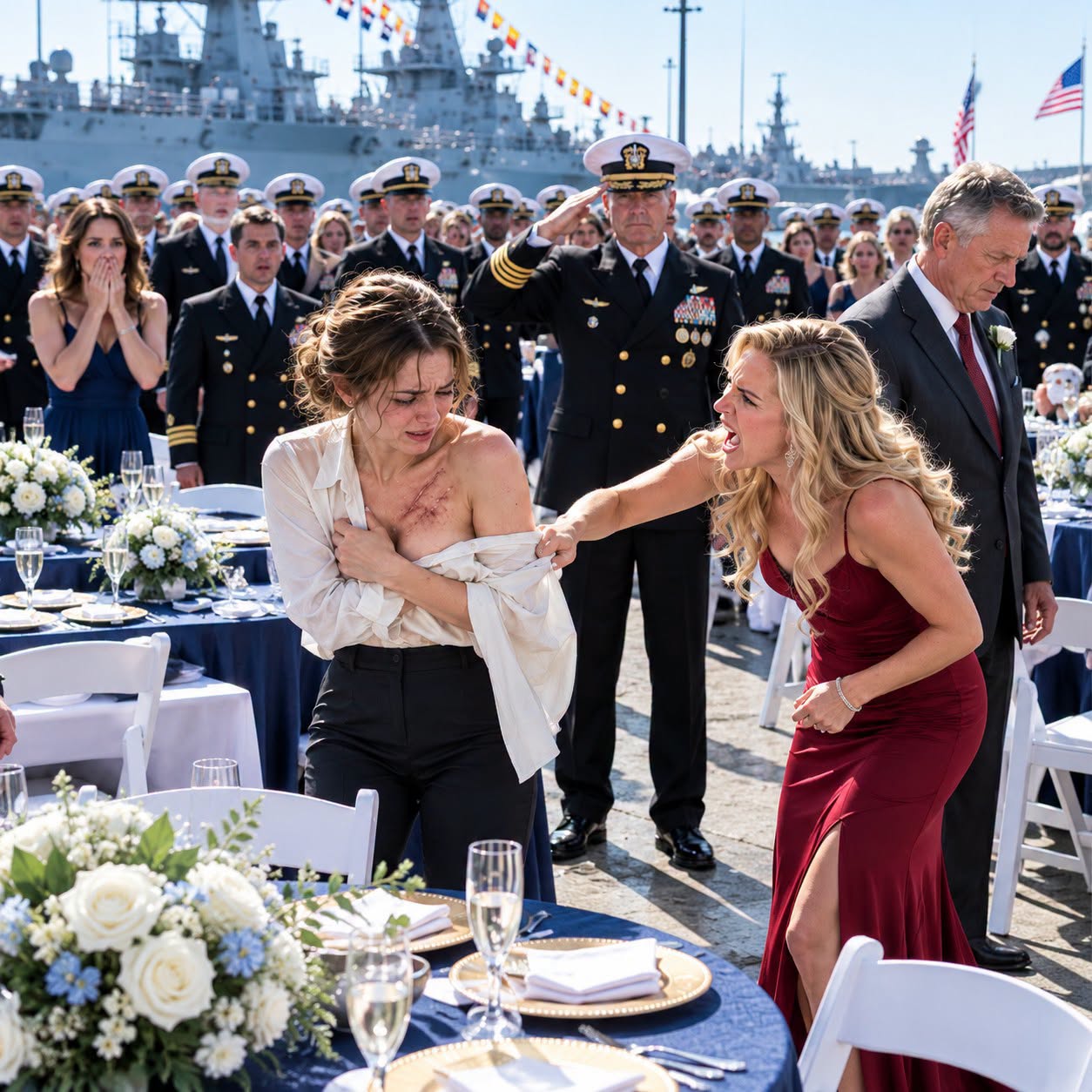
Der Ballsaal des Norfolk Waterside Marriott duftete nach poliertem Messing, Prime Rib und altem Meersalz, überdeckt von Lavendelwachs. Es war ein Duft, den Kapitän Hugh Alden, USN (a.D.), wie ein Leichentuch seiner Vorfahren trug. Fünfzig Jahre lang gehörte unser Familienname zur blau-goldenen Aristokratie Norfolks. In den Augen meines Vaters gab es nur zwei Arten von Menschen: jene, die bis zur Pensionierung tadellos dienten, und jene, die Schande über die Offiziersmesse brachten.
Fünf Jahre lang hatte ich eine dritte, unausgesprochene Kategorie eingenommen: die des Geistes.
Ich trug einen hochgeschlossenen, marineblauen Seidenrock mit betonten Schultern und einem blickdichten Rücken, der sich sauber bis zum Nacken erstreckte. Unter dem Stoff war meine Haut gar keine Haut, sondern ein Geflecht aus Allotransplantaten, starren Fasersträngen und Keloidwülsten, die bei jeder Handbewegung, die ich über einen Tisch griff, stark zogen. Für den flüchtigen Betrachter sah ich aus wie eine Managerin, die den Staatsdienst verlassen hatte, um sich selbstständig zu machen – eine Entscheidung, die mein Vater als stille Feigheit ansah, die er aber in der Öffentlichkeit tolerierte, solange ich Haltung behielt und schwieg.
„Steh gerade, Maya“, murmelte mein Vater und öffnete kaum den Mund, als Commander Douglas Vance mit einem Glas Bourbon vorbeischlenderte. „Deine Haltung lässt deine Jacke spannen. Du siehst aus wie ein junger Leutnant, der auf seinen Befehl wartet.“
„Ich stehe gerade, Dad“, sagte ich leise und hielt meine Hände locker über meiner Clutch verschränkt.
„Du siehst angespannt aus. Die Leute werden denken, du bereust deinen Weggang.“ Er nahm einen kräftigen Schluck von seinem Sprudelwasser mit Limette. Nach seiner dritten Bypass-Operation hatte er aufgehört zu trinken, doch sein Tonfall hatte noch immer die Schärfe eines hochprozentigen Bourbons. „Versuch zu lächeln. Marins Mann versucht heute Abend, einen Vertrag mit NAVSEA abzuschließen. Du solltest wenigstens nicht wie eine dunkle Wolke über ihrem Tisch hängen.“
Über den vollen Parkettboden strahlte meine jüngere Schwester Marin. Sie trug ein ärmelloses, rückenfreies Kleid aus champagnerfarbenem Satin, ihr blondes Haar war zu einer locker fallenden Lockenkrone hochgesteckt, die das Licht des Kronleuchters reflektierte. Neben ihr stand Gregory, ihr Ehemann seit drei Jahren, ein leitender Vizepräsident bei Titan Marine Logistics. Gregory hatte nie einen Tag in Uniform gedient, aber er besaß das gewinnende, breite Lächeln eines Mannes, der Dichtungen für Dieselmotoren mit vierhundert Prozent Aufschlag an Beschaffungsstellen verkaufte.
Marin caught my eye, waved a manicured hand, and excused herself from a circle of junior officers. She drifted toward us, her silk train whispering against the carpet.
“Look at you, Maya,” Marin purred, stepping between me and our father. She reached out and touched my high neckline, her fingernail grazing the stiffened collar. “Still dressing like a church librarian in August? It’s seventy-two degrees in here. You must be suffocating.”
“I’m fine, Marin,” I said evenly.
“Well, you don’t look fine. You look like you’re hiding.” She turned her dazzling smile onto Dad. “Doesn’t she, Daddy? We brought her out of that drafty little apartment in Portsmouth so she could socialize with normal human beings, and she’s standing by the potted ficus like an escort.”
My father let out a dry, dismissive breath. “Leave your sister alone, Marin. Just make sure Gregory doesn’t corner Admiral Harris until after dinner. Harris hates business talk before the salad course.”
“Oh, Gregory doesn’t need Harris,” Marin said smoothly. Her eyes flickered back to me, sharpening with a predator’s focus. “Actually, Maya, that reminds me. Gregory needs an introduction to Captain Miller over at SUPSHIP. Miller was your old skipper on the Vanguard, wasn’t he?”
My chest tightened beneath the silk. “Miller was my commanding officer five years ago, yes.”
“Great. Titan Marine just released a new line of rapid-seal thermal cut-off valves for auxiliary engine rooms. Gregory needs Miller to sign off on an accelerated field evaluation. Take him over there and give Gregory your personal recommendation.”
I looked across the room at Captain Miller, now grey-haired and thick-waisted, speaking with a pair of supply corps commanders. Then I looked at Marin. “Has the valve completed independent shock-and-vibe testing at NAVSSES?”
Marin blinked, annoyed. “What does that matter? It passed the preliminary factory bench run. Gregory says it’s fine.”
“Factory bench runs don’t simulate a ruptured high-pressure steam line or a secondary electrical fire in sea state five,” I replied, keeping my voice low and level. “If the valve hasn’t cleared Naval Surface Warfare Center certification, I won’t ask Miller to bypass protocol. I won’t put my name behind it.”
Marin’s jaw stiffened. A delicate flush crept up her neck, clashing with the champagne silk. “You won’t put your name behind it? What name, Maya? What name do you actually have left in this room?”
“Marin,” I warned softly.
“No, I’m serious!” Her voice rose, cutting through the murmur of the brass quintet playing nearby. Several heads turned. “You’ve spent five years moping around Hampton Roads, living off your disability pension, acting like you’re some tragic hero who gave everything for the flag. You washed out of the Navy! You had an incident, you lost your nerve, and you quit the moment things got rough!”
“That is enough,” I whispered, every muscle in my spine locking.
“Don’t tell me what’s enough!” Marin sneered, her eyes gleaming with sudden, spiteful malice. She took a half-step closer, lowering her voice so only the surrounding dozen officers could hear clearly. “You think you’re better than me. You think you’re better than Gregory. You sit there with your high collar acting like a saint who sacrificed her youth, when everyone in the wardroom knows you couldn’t take the heat. You panicked, Maya. You ran.”
“I didn’t run.”
“Then show them why you left!” Marin hissed.
It happened so fast my instincts—dulled by years of quiet civilian isolation—failed to catch her wrist. Marin reached behind me, her manicured fingers catching the delicate concealed zipper at the nape of my neck, and yanked downward with all her weight.
The silk did not merely unzip; the delicate seams gave way with a sharp, violent rip.