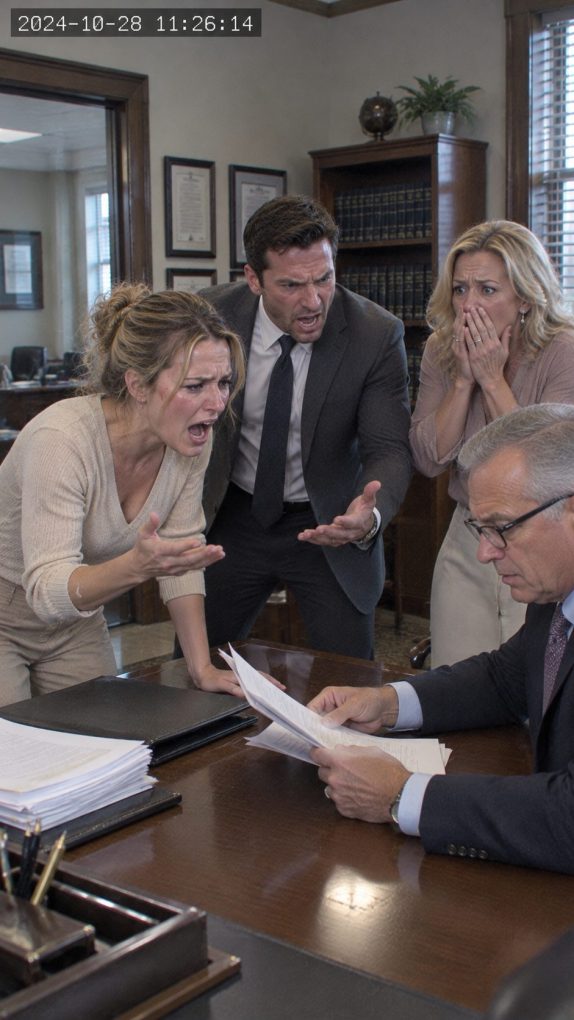
Le cri de ma belle-sœur m’a figée sur le seuil. Ma mère, âgée de soixante-seize ans, était assise sur le carrelage de la cuisine, un bol en plastique de soupe froide à la main. En face d’elle, mon frère et sa femme mangeaient un steak à la belle table que j’avais achetée.
J’avais conduit six heures de Chicago à Indianapolis sans les prévenir. Pendant neuf ans, j’avais payé l’hypothèque, les impôts fonciers, l’assurance et la plupart des dépenses du ménage parce que je croyais que ma mère était bien prise en charge.
« Maman ? » Ma voix s’est brisée.
Elle leva les yeux, surprise, et tenta aussitôt de se relever. Ses genoux fléchirent. Avant que je puisse l’atteindre, ma belle-sœur, Vanessa, frappa violemment la table avec sa fourchette.
« Je t’avais dit de ne pas te lever avant qu’on ait fini ! »
Je me suis précipitée vers ma mère et l’aidais à s’asseoir. Ses mains tremblaient. Elle avait un bleu qui s’estompait autour du poignet et son pull était taché.
« Qui t’a fait ça ? » ai-je murmuré.
« Elle tombe tout le temps », répondit mon frère Daniel d’un ton désinvolte. « Ne commence pas à l’accuser. »
Je me suis tournée vers lui. « Pourquoi mange-t-elle par terre ? »
Vanessa croisa les bras. « Parce qu’elle renverse de la nourriture partout. C’est notre maison, et c’est nous qui décidons. »
« Votre maison ? » ai-je répété. « J’ai versé plus de 280 000 $ pour cette propriété. »
Daniel rit, sortit un dossier du tiroir de la cuisine et le jeta sur la table. « Alors tu aurais dû vérifier les papiers. La maison m’appartient. »
À l’intérieur se trouvait un acte notarié transférant la propriété de ma mère à Daniel trois mois plus tôt. Mais quelque chose clochait. Ma mère était censée avoir signé le document le 18 mars chez un notaire du centre-ville d’Indianapolis. Or, ce jour-là, elle avait été hospitalisée pour une pneumonie.
J’ai regardé la signature. Le nom de ma mère était écrit d’une main assurée et fluide. Sa grave arthrite l’avait empêchée d’écrire plus que quelques lettres tremblantes pendant près de deux ans.
« Maman, c’est toi qui as signé ça ? » Elle secoua la tête. Daniel voulut prendre le dossier, mais je le lui retirai. Un autre document s’en échappa. C’était une procuration permanente donnant à Daniel le contrôle des finances de ma mère. Une demande de prêt hypothécaire de 190 000 dollars y était jointe. L’emprunteuse était ma mère, mais la signature autorisant le prêt était censée être la mienne. Je fixai Daniel. Son sourire s’effaça.
Daniel s’empara du dossier, mais j’avais déjà photographié chaque page. Vanessa se leva si brusquement que sa chaise racla le parquet.
« Vous n’avez pas le droit de vous mêler de nos finances ! » a-t-elle crié.
« Nos finances ? » ai-je répondu. « Vous avez utilisé la maison de maman comme garantie et vous avez falsifié ma signature. »
Daniel claimed I had signed the loan documents electronically. I opened my banking app and showed him my monthly mortgage payments. “I have every receipt, and I have never authorized another loan.”
My mother began crying quietly. She explained that Daniel had taken her identification and bank cards months earlier, promising to organize her medical expenses.
He had also stopped allowing her to answer my calls privately. Whenever I called, he stood beside her, telling her what to say.
Vanessa stepped toward my mother. “You ungrateful old woman! After everything we’ve done for you!”
I positioned myself between them. “Don’t threaten her again.”
Daniel insisted the documents were legitimate and challenged me to prove otherwise. I called the Indianapolis police nonemergency number and reported suspected elder abuse and financial exploitation.
While waiting for officers, I helped Mom pack medication, clothing, and her important papers. Daniel blocked the hallway and demanded the folder back. I kept my phone recording.
When two officers arrived, my mother described her living conditions and said she had never agreed to transfer ownership. The officers documented her bruises and explained that the disputed property documents required further investigation.
I took Mom to a hotel that night. The following morning, we met with an elder-law attorney named Rebecca Collins. Rebecca examined the documents and discovered that the notary commission number belonged to someone whose commission had expired the previous year.
The deed had nevertheless been accepted for recording. Rebecca also uncovered that Daniel had applied for the home-equity loan using forged financial records. Bank statements showed a $187,400 disbursement into a joint account Daniel shared with Vanessa. Most of the money had been transferred to a construction company registered under Vanessa’s maiden name.
The company had been dissolved eighteen months earlier. Then Rebecca discovered that the loan application listed me as a guarantor, supported by fabricated employment records and altered identification. Before we could discuss our next move, the lender’s fraud department called. They had discovered another application for $325,000, and Daniel was attempting to close it that Friday.
Rebecca immediately contacted the lender’s fraud department and submitted copies of my identification, verified signature records, and evidence that Mom had been hospitalized on the supposed signing date.
The lender suspended the pending transaction while its investigators reviewed the application. We also filed identity-theft reports and placed fraud alerts with the credit bureaus.
Daniel called seventeen times that afternoon. I ignored every call until he left a voicemail threatening to sell Mom’s belongings if we didn’t return.
Rebecca preserved the message. She then filed a civil lawsuit challenging the deed and requested an emergency injunction to prevent further transfers or additional borrowing against the property.
Entre-temps, un enquêteur des services de protection des adultes a interrogé la mère à l’hôtel. Pour la première fois, elle a admis que Vanessa l’obligeait à dormir sur un matelas étroit dans la buanderie.