“No voy a salir de mi cita en el spa solo para firmar unos papeles. Averíguenlo vosotros mismos.”
Eso fue lo que mi madre contó al hospital después de que el coche en el que iba fuera atropellado por un camión, cuatro días antes de mi decimosexto cumpleaños.
No la oí decirlo.
Estaba inconsciente en un hospital de Columbus, Ohio, con una clavícula fracturada, una conmoción cerebral y moratones en el pecho donde el cinturón de seguridad me había enganchado.
Pero cuando me desperté casi dos días después, la enfermera me dijo que mi abuela había conducido toda la noche desde Carolina del Norte.
Mi madre vivía a cuarenta y cinco minutos.
La abuela Ruth estaba sentada junto a mi cama, aún con la misma chaqueta gris con la que había llegado. Sus zapatos estaban debajo de la silla. Una taza de café intacta descansaba junto a una carpeta en su regazo.
“Hola, cariño”, susurró cuando abrí los ojos.
Intenté incorporarme.
Un dolor punzante me atravesó el hombro.
“No te muevas todavía.”
“¿Dónde está mamá?”
Los dedos de la abuela se apretaron más alrededor de los míos.
“La han contactado.”
Eso no era una respuesta.
El hospital había prestado tratamiento de emergencia sin esperar permiso parental. Pero después de estabilizarme, el personal necesitaba a un adulto responsable involucrado en las decisiones sobre mi recuperación, el seguimiento y el alta.
Mamá había rechazado repetidas peticiones para venir.
Debería haberme sorprendido.
En cambio, recordaba todas las veces que me había dicho que me preparara la cena porque tenía planes, o me había dejado esperando fuera del colegio hasta que el conserje se ofrecía a llamar a alguien.
Papá había muerto tres años antes.
Desde entonces, la frase favorita de mamá había sido: “Ya tienes edad para cuidarte sola.”
La abuela colocó suavemente un documento junto a mi manta.
El encabezado decía: Orden de Custodia de Emergencia Temporal.
“¿Qué es esto?”
“Un juez le ha autorizado a quedarse conmigo mientras se revisan las cosas. Hay otra audiencia programada.”
Miré la firma cerca de la parte inferior.
“¿Estoy en problemas?”
La cara de la abuela cambió.
“Oh, Emma. No.”
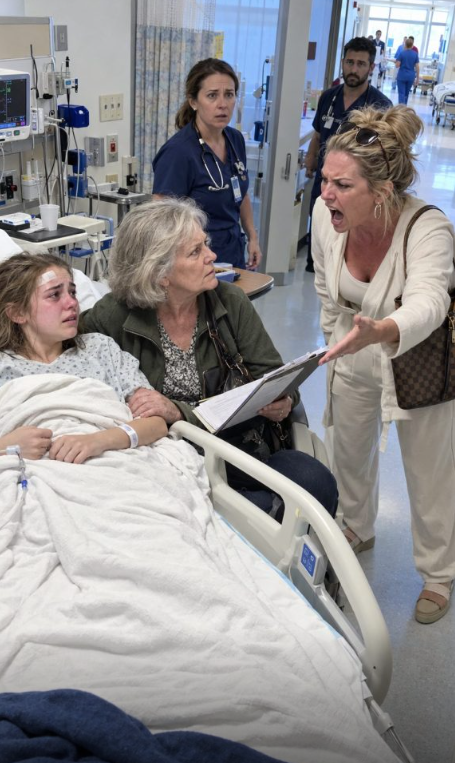
Antes de que pudiera explicarlo, la puerta de la habitación del hospital se abrió de golpe.
Mamá estaba allí con un abrigo color crema, el pelo perfectamente peinado y las gafas de sol puestas en la cabeza.
Miró los papeles.
Entonces gritó.
“¡NO PUEDE LLEVARSE A MI HIJA! ¡ESO ES ILEGAL!”
La abuela se quedó sentada.
“Vanessa, por favor, baja la voz.”
“¡Me has robado a mi hijo!”
Apareció una enfermera en el umbral.
Mamá señaló a la abuela.
“¡Dile a esta mujer que no tiene derecho a tomar decisiones por Emma!”
La abuela abrió su carpeta y sacó otro documento.
“Vanessa”, dijo en voz baja, “el tribunal ya sabe lo que ocurrió antes del accidente.”
Mamá dejó de gritar.
Miré la fecha del documento.
Se había presentado once días antes del accidente.
Y de repente, me di cuenta de que la abuela no había empezado a intentar protegerme en el hospital.
Mom reached for the document, but Grandma folded it closed.
“Emma doesn’t need to hear us argue,” she said.
“She needs to know you’re turning her against me!”
I watched Mom’s face. She hadn’t asked whether my shoulder hurt or whether I could remember the accident. She hadn’t even walked close enough to touch my hand.
The nurse asked her to step into the hallway.
Mom refused.
“I’m her mother. You can’t keep me away.”
“The court order establishes a temporary arrangement,” the nurse explained. “Your attorney can address it through the court.”
Grandma waited until Mom finally left.
Then she told me what had happened eleven days earlier.
My school counselor, Mrs. Bennett, had contacted child protective services after learning that Mom had left me alone for four nights during a weekend trip.
I’d told Mrs. Bennett because I’d missed a Monday exam after our electricity was disconnected. Mom had forgotten to pay the bill, and my phone died before my alarm went off.
I hadn’t known Mrs. Bennett would report it.
“She was worried about you,” Grandma said.
“Mom told me not to tell anyone.”
“I know.”
Grandma had already been speaking with a family attorney and gathering records. The accident hadn’t created the concerns. It had made them impossible to ignore.
A child welfare worker had documented Mom’s refusal to participate in hospital planning. Combined with the existing investigation, that information had supported the request for emergency custody pending a hearing.
“Am I going to live with you forever?” I asked.
“We don’t know yet. You’ll have a chance to be heard.”
That evening, Mom returned with a lawyer.
She stood at the foot of my bed and smiled in a way I’d seen whenever she wanted strangers to think everything was fine.
“Emma, honey, tell them you want to come home.”
I looked at Grandma.
“Can I finish getting better first?”
Mom’s smile disappeared.
“You’re making this much harder than it needs to be.”
Her attorney suggested speaking outside.
But Mom kept talking.
“Do you understand how much this is going to cost me?”
Grandma slowly stood.
“What do you mean, Vanessa?”
Mom folded her arms.
“The mortgage. The utilities. Everything.”
“Emma’s care comes first.”
“Easy for you to say. You aren’t the one depending on her father’s survivor benefits.”
I knew Dad had left us some financial support after he died. I didn’t know Mom received monthly Social Security survivor payments on my behalf.
Grandma looked at the caseworker standing near the door.
“Did you hear that?”
Mom’s eyes widened.
“I didn’t mean—”
The caseworker asked a question.
“Mrs. Parker, are you saying you need Emma returned to your household so those payments continue coming to you?”
My mother looked at me, then at the open door.
And the words she said next were worse than anything she’d said at the spa.
“She doesn’t even cost that much to take care of. What am I supposed to live on if you give her money to somebody else?”
For several seconds, nobody said anything.