The day I buried my husband, my daughter-in-law tried to bury me with him.
I still remember the sound of the folder hitting the wooden table beside the flowers from Robert’s funeral. It was a small sound, almost nothing compared to the voices of thirty relatives filling our backyard that afternoon, but somehow it cut through everything. It was the moment I realized grief had not brought my family closer—it had revealed who was waiting for my weakness.
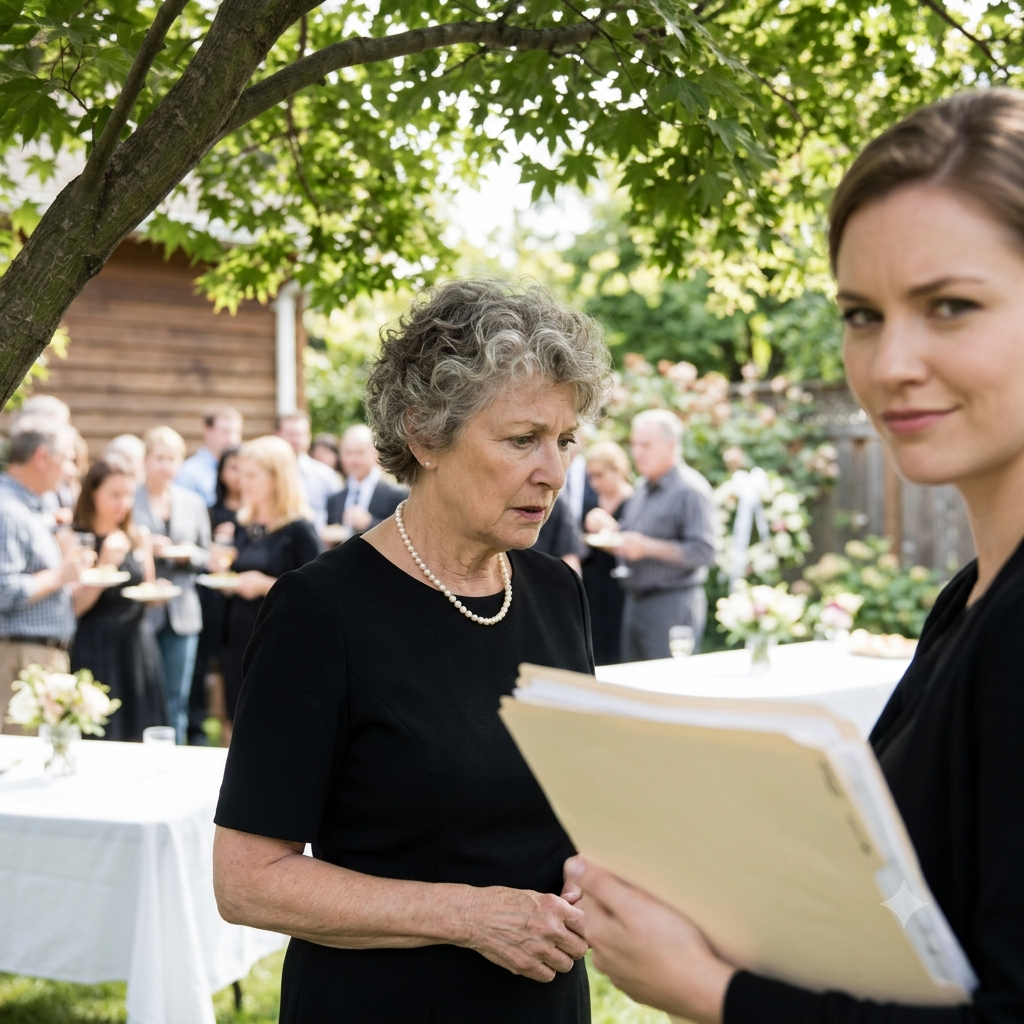
I was standing beneath the old maple tree Robert planted twenty-eight years earlier when Emily walked toward me with a smile that never reached her eyes.
She was holding a stack of papers.
At first, I thought they were sympathy cards or insurance documents. I thought maybe she had finally decided to help me with the endless responsibilities that come after losing someone you love.
I was wrong.
“Mom,” she said loudly enough for everyone nearby to hear, “we need to stop pretending this can continue.”
I looked at her, confused. “What are you talking about?”
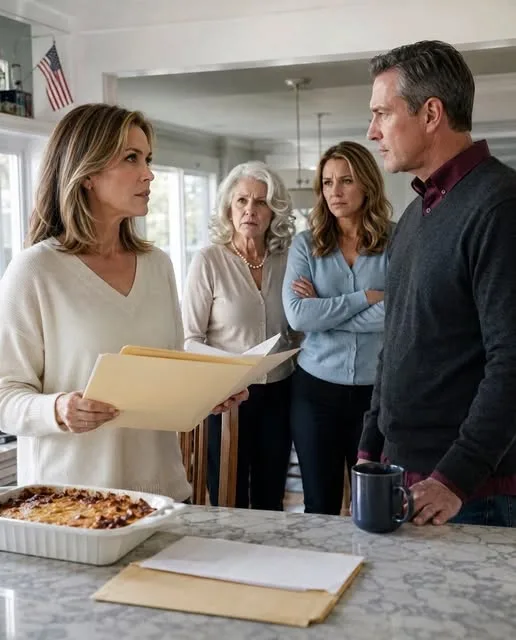
She opened the folder.
“This house.”
My heart tightened.
Not because I did not understand the words.
Because I understood them too quickly.
For forty-three years, that house had been my life. Every wall carried a memory of Robert. Every room held a piece of the family we built together.
The kitchen still had the small scratch on the counter from the night Robert accidentally dropped a pan while trying to cook me a birthday dinner. The hallway still had the marks showing how tall our son Daniel was at every age. The backyard still had the wooden bench Robert made with his own hands after I told him I wanted somewhere peaceful to drink coffee in the mornings.
It was not just a property.
It was the last place where my husband still felt close.
Emily looked around at the guests who had come to pay respects and said, “Everyone knows this house is too much for you now.”
I stared at her.
“Everyone?”
She shrugged.
“You can’t manage everything forever.”
I looked past her toward Daniel.
My son.
The little boy who used to run into this same backyard with scraped knees and tears in his eyes whenever he fell.
The man I had worked two jobs to support.
The child I had stayed awake beside when he had pneumonia at seven years old.
The young man whose wedding I paid for because I wanted him to begin his marriage without financial stress.
I expected him to look shocked.
I expected him to tell his wife she was wrong.
Instead, Daniel looked away.
That was when the pain truly began.
Not when Emily insulted me.
Not when she opened that folder.
Not even when she suggested that my home no longer belonged to me.
The deepest wound came from watching my own son choose silence.
“Daniel?” I whispered.
He rubbed his forehead. “Mom, please don’t make this into a fight.”
A fight.
That was the word he chose.
Not betrayal.
Not confusion.
A fight.
As if my home, my grief, and my future were just an argument happening at an inconvenient time.
Emily stepped closer. “I’m trying to help you. But you always make things harder than they need to be.”
I felt my fingers tighten around the edge of the table.
“Help me?”
“Yes.”
She lifted the folder slightly.
“We already started the process.”
The world seemed to stop.
“What process?”
She looked surprised.
Then she smiled.
“The sale.”
A few relatives nearby stopped talking.
My sister Margaret turned toward us.
“The sale of what?” she asked.
Emily looked at her like the answer was obvious.
“The house.”
I felt cold despite the warm afternoon air.
“My house?”
Emily’s expression hardened.
“Mom, this is exactly what I mean. You’re getting emotional.”
I stared at her.
“You said ‘the house’ as if it belongs to everyone except me.”
Daniel stepped forward.
“Mom, listen—”
“No,” I interrupted quietly. “I want to hear your wife.”
The silence around us grew.
Emily crossed her arms.
“Fine. You want honesty? Here it is. You’re holding onto something you can’t handle anymore. The stairs are dangerous. The maintenance is ridiculous. The taxes are expensive. And honestly, it’s selfish to keep a place this large when your children could benefit from it.”
My breath caught.
There it was.
The truth hiding behind all those months of fake concern.
It was never about helping me.
It was about what I had.
I remembered every conversation from the past year.
Emily saying the house was “too much.”
Emily suggesting I move into a smaller apartment.
Emily asking whether I had ever thought about “letting the next generation enjoy what Robert built.”
At the time, I had believed she was worried about me.