PART 1: THE LAUGHTER THAT DESTROYED MY MARRIAGE
The moment my mother-in-law called my father trash in front of five hundred wedding guests, I realized I had married the wrong woman.
But it wasn’t Beverly Martinez’s cruelty that finally broke me.
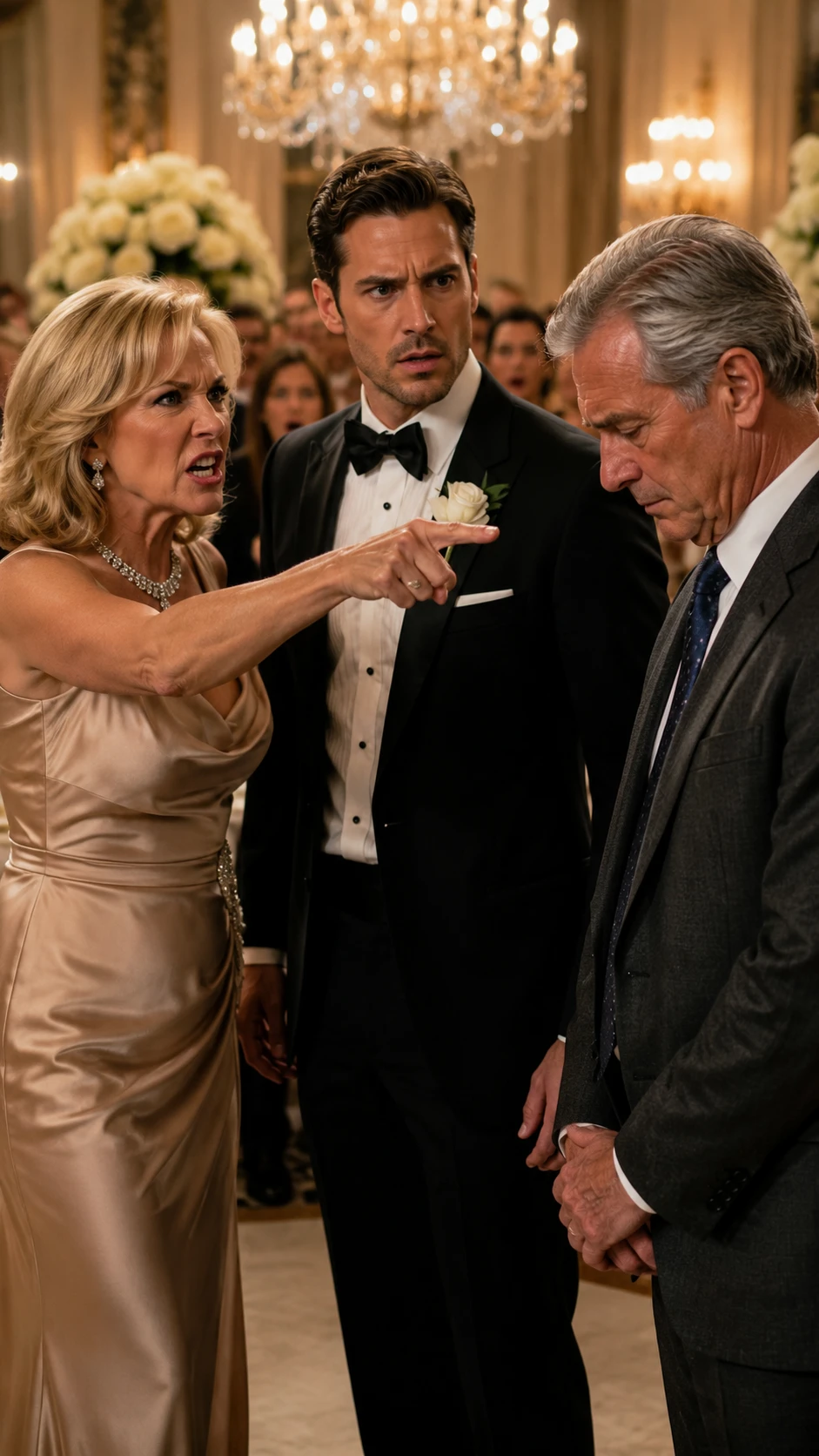
It was the sound of my bride laughing beside her.
That small, delighted laugh destroyed something inside me that no apology would ever repair.
My name is Blake Henderson, and until that evening, I believed I understood the difference between wealth and dignity.
My father had taught me that difference long before I could afford an expensive suit or walk confidently into a boardroom.
He taught it through eighteen-hour workdays, unpaid sacrifices, and the quiet determination of a man who never allowed poverty to become an excuse for dishonesty.
Yet there I stood beneath enormous crystal chandeliers, watching the people I had just welcomed into my family treat that same man like something they wanted removed from their beautiful ballroom.
The reception was being held at the Grand Meridian, an exclusive luxury hotel where everything seemed designed to remind ordinary people how much money they didn’t have.
White roses covered the walls.
Champagne flowed through elaborate fountains.
Gold-trimmed tables stretched across the enormous ballroom beneath glittering chandeliers.
A twenty-piece orchestra performed near the windows overlooking the city.
Five hundred guests had gathered to celebrate what everyone called the wedding of the season.
And my father was sitting near the back.
His name was Thomas Henderson.
He was sixty-eight years old, broad-shouldered despite his age, with silver hair, weathered hands, and a face marked by decades of work.
He wore the same charcoal suit he had worn to my college graduation.
It had been carefully pressed.
His shoes were polished.
Around his neck was an old navy tie that had belonged to my grandfather.
I knew he had spent nearly an hour getting ready.
I knew because he had called me that morning to ask whether the tie looked too old-fashioned.
“Your grandfather wore this when he married your grandmother,” he had said.
“Then it’s perfect, Dad.”
He had laughed quietly.
“You sure Fiona’s people won’t think I’m trying too hard?”
I remembered feeling a strange ache in my chest.
The man who had raised me alone was worried about embarrassing me.
He had never once asked whether the people he was meeting deserved his presence.
My mother died when I was nine.
For the next twenty-five years, Dad became everything our little family needed.
He worked construction during the day.
He repaired heating systems on evenings and weekends.
When a neighbor’s furnace broke during a snowstorm, he was usually the first person standing outside with his tools.
Sometimes he received payment.
Sometimes he accepted a homemade dinner.
Sometimes he simply shook hands and drove home.
He never explained why.
Whenever I asked, he said, “People remember how you treated them when they needed help.”
Our house was small, and our furniture never matched.
I wore secondhand winter coats.
Dad drove an aging pickup truck whose passenger door needed to be lifted before it would close properly.
But I never went to bed feeling unloved.
That was the kind of father Thomas Henderson had been.
And that was the man my new family was preparing to humiliate.
I first met Fiona Martinez three years earlier at a charity fundraiser.
She was beautiful, intelligent, and impossibly charming.
Her dark hair fell perfectly across her shoulders, and she wore an elegant champagne-colored gown that made her look like she belonged on the cover of a magazine.
We talked for nearly two hours that evening.
She asked questions about my career.
She laughed at my jokes.
When I mentioned my father, she smiled and said she admired men who remained devoted to their families.
I believed her.
That was my first mistake.
Fiona came from a world entirely different from mine.
Her father, George Martinez, was a billionaire real estate developer whose name appeared on luxury apartment buildings, commercial towers, and enormous construction projects across several states.
Her mother, Beverly, came from old money and had spent much of her life serving on charity boards.
Their home looked more like a private museum than a place where people actually lived.
Everything was beautiful.
Everything was expensive.
And almost everything had an invisible rule attached.
The first time Fiona brought me home, Beverly asked what my father did for a living.
“He’s worked in construction most of his life,” I answered.
Her smile remained perfectly arranged.
“How… practical.”
George asked whether Dad owned a company.
“He’s done contract work and repairs for years.”
George nodded as though that settled something important.
“There’s dignity in manual labor, of course.”
I didn’t understand why he needed to say “of course.”

