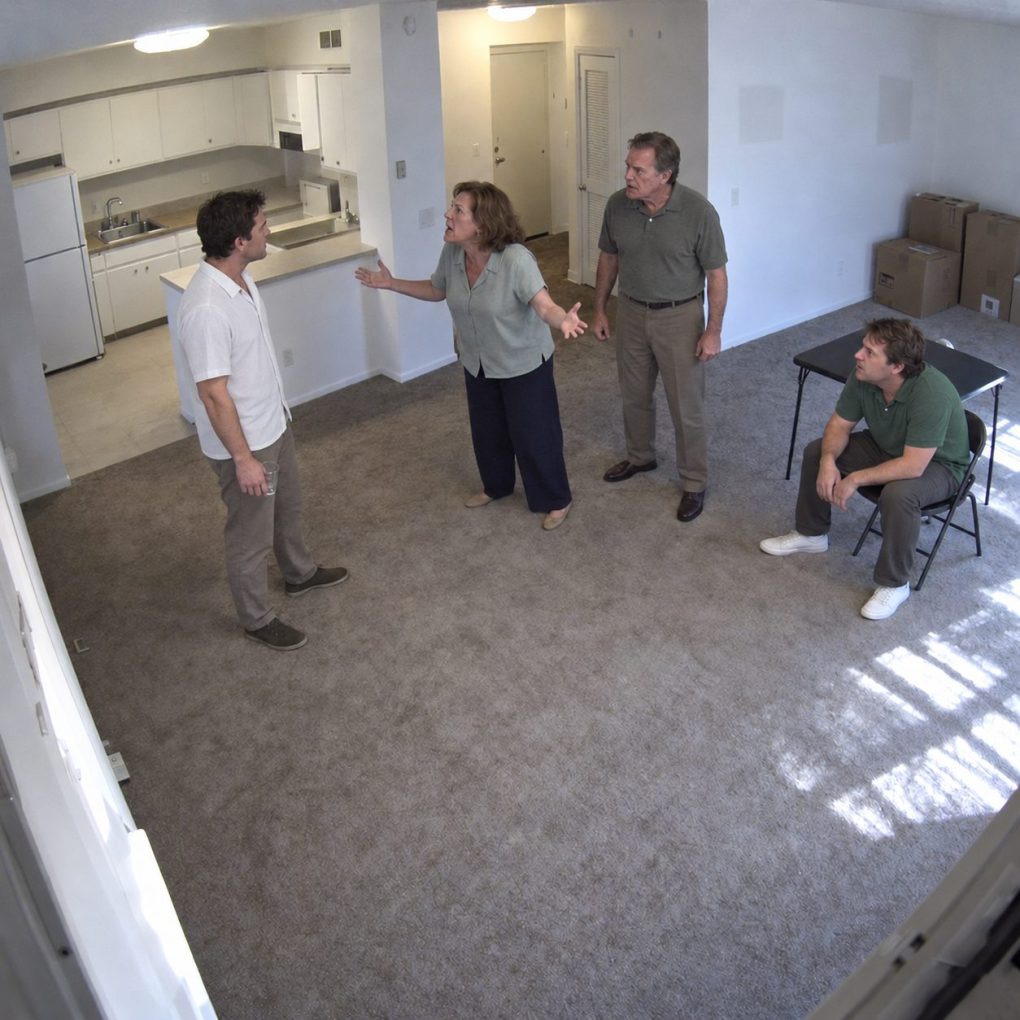
“The comfortable life is over,” Dad announced across my apartment living room. “Starting today, half your paycheck goes to your brother. He has newborns to support.” Mom nodded beside him as if they had just settled a family budget instead of volunteering my income.
My older brother, Jason, and his wife had recently welcomed twins. I loved my nephews, but Jason also had a mortgage, two cars, and a habit of buying whatever made life look successful. Three months before the babies arrived, he had financed a $54,000 SUV.
I worked as a systems analyst in Cincinnati and had spent seven years building a stable life. I paid my own rent, carried no credit-card debt, and had finally saved enough for a down payment on a condo. Apparently, that made me the family’s emergency fund.
Dad said Jason could not possibly manage daycare, formula, medical bills, and his mortgage on one income while his wife stayed home. I asked why Jason had not sold the new SUV. Dad frowned as if I had suggested selling one of the babies.
“Family sacrifices,” Mom said. “You’re single. What do you need all that money for?” I looked at both of them and smiled. “Fine.”
They relaxed immediately. Dad even patted my shoulder and said he knew I would “do the right thing.” Neither of them noticed that I had not promised to send Jason a single dollar.
What they did not know was that I had already accepted a new job in Chicago. My lease ended in eleven days, my furniture had been sold online, and movers were scheduled for Saturday morning. I had planned to tell my family after everything was finalized.
Instead, I decided not to explain anything. On Friday, I transferred my savings into an account at a different bank, closed the shared family credit card Mom occasionally used for “emergencies,” and removed myself from every automatic payment connected to my parents or Jason.
By Saturday evening, my apartment was almost empty. I kept one folding table, four chairs, and enough kitchen supplies to serve the lunch Mom had already invited herself to on Sunday. Everything else was packed in the moving truck heading north.
Mom arrived carrying potato salad. She walked into the kitchen, froze, and screamed, “Where is everything?!” Dad came in behind her and stared at the bare walls. I set four plates on the folding table and said, “Chicago.”
For several seconds, neither of them spoke. Then Dad asked what I meant by Chicago. I told him I was leaving Monday morning for a new position with a cybersecurity firm and that my new apartment was already waiting.
Mom put the potato salad down so hard the container cracked. “You can’t move now,” she said. “Your brother needs you.” I asked why Jason’s budget required me to remain in Ohio.
Dad reminded me of our conversation about half my paycheck. I reminded him that he had announced a plan. I had said “fine” because arguing with him would not have changed what I had already decided.
His face turned red. “So you lied to us?” I shook my head. “No. I let you finish talking.”
Then Mom noticed something else. The old coffee maker she had given me was gone, along with the microwave, bar stools, television, couch, and guest-room bed. I had sold almost everything because shipping cheap furniture to Chicago made no financial sense.
She suddenly asked whether I had also closed the family credit card. That question told Dad something he apparently did not know. For almost two years, Mom had been putting some of Jason’s groceries, diapers, and utility bills on a card linked to my account.
The total averaged about $620 a month. I had allowed it because Mom always described each charge as temporary. I had never realized how much of it was supporting Jason until I reviewed every statement before moving.
Dad looked at her. “You said you were paying for those things.” Mom stared at the floor.
The lunch never really happened. Jason arrived twenty minutes later because Mom had called him from the hallway. He came in furious and asked how I could abandon him right after the twins were born.
I asked him how much he expected me to send each month. He said Dad had suggested around $2,800, which was almost half my take-home pay. I asked whether he thought that was reasonable.
Jason answered, “You don’t have kids.” I pointed toward the parking lot and asked how much his new SUV payment was. He muttered, “Eight hundred and seventy-six.”
Then I asked about the motorcycle in his garage, the premium gym membership, and the season tickets he had renewed during his wife’s pregnancy. His anger shifted into embarrassment.

