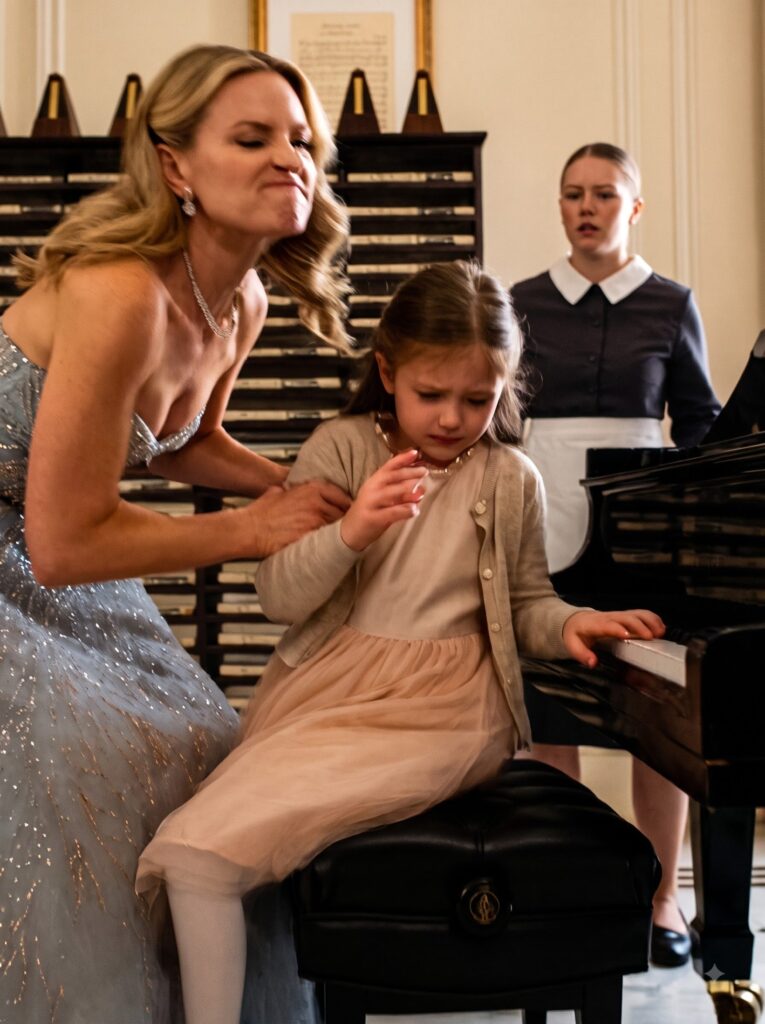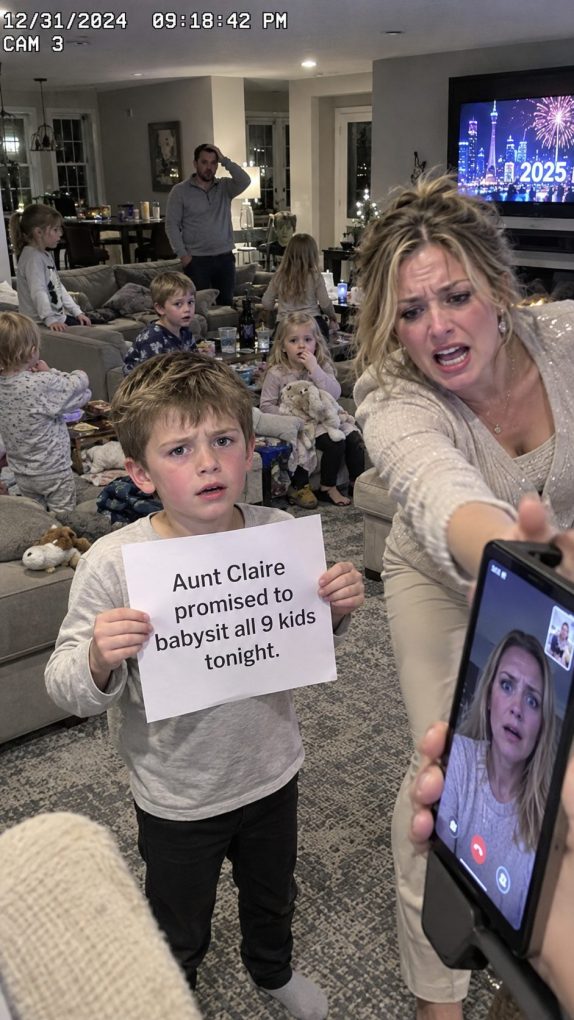
En Nochevieja, mi hermana estaba en la cocina de nuestros padres, vestida con un vestido de fiesta plateado, gritando porque el pedido de catering de 1700 dólares no había llegado. Nueve niños esperaban la cena y su supuesta niñera había desaparecido. Esa niñera era yo. Pero en lugar de salvar su celebración, estaba sentada junto a la chimenea en una tranquila cabaña de montaña, viendo cómo aparecían sus furiosos mensajes en mi teléfono.
Me llamo Lauren Mitchell y tenía treinta y cuatro años cuando finalmente dejé de permitir que mi familia me tratara como si fuera una empleada doméstica sin sueldo. Vivía en Denver, Colorado, y trabajaba como enfermera pediátrica. Durante años, mi hermana menor, Brittany, había dado por sentado que mi profesión significaba que estaba disponible permanentemente para cuidar de sus hijos.
Tres semanas antes de Nochevieja, Brittany anunció que iba a organizar una fiesta por todo lo alto en casa de nuestros padres. Invitó a varias parejas, contrató un servicio de catering carísimo y prometió a todos una velada sin niños, a pesar de no tener a nadie que los cuidara.
Cuando me informó de que tendría que cuidar a nueve niños, incluidos sus tres, me negué de inmediato. Había trabajado turnos agotadores durante las fiestas y ya había reservado unas vacaciones de tres noches en una cabaña de montaña cerca de Breckenridge.
Brittany se rió y dijo que mis vacaciones podían esperar. Nuestra madre estuvo de acuerdo, insistiendo en que las responsabilidades familiares eran más importantes que relajarse sola. Repetí que no estaría disponible y sugerí contratar a una niñera cualificada.
Dos días después, Brittany envió un mensaje grupal anunciando que me había ofrecido como voluntaria para cuidar a los niños. La corregí delante de todos. Ignoró mi respuesta y siguió hablando de meriendas, horarios para ir a dormir y dónde dormirían los niños.
El treinta de diciembre conduje hasta el hotel, me registré en mi habitación y desactivé las notificaciones innecesarias. A la noche siguiente, estaba leyendo junto a la chimenea cuando mi teléfono empezó a vibrar con llamadas frenéticas de Brittany.
Gritó que el servicio de catering había cancelado porque faltaba el pago final. Luego exigió saber por qué no había llegado para cuidar a los niños. Le recordé que nunca había accedido a cuidarlos y que estaba a varias horas de distancia.
Brittany me acusó de sabotear su fiesta deliberadamente. Afirmó que nueve niños lloraban, que los invitados estaban llegando y que nuestros padres estaban furiosos. Le dije que los niños necesitaban adultos responsables, no otra discusión, y que sus padres debían buscar a alguien que los supervisara de inmediato.
Then our mother joined the call and demanded that I drive home. I refused. Minutes later, Brittany sent a photograph of an unpaid catering invoice addressed to me. She had apparently used my name to place the $1,700 order without permission. As I examined the document, I realized that her disastrous party was about to expose something much more serious than her usual entitlement.
I enlarged the photograph and immediately noticed that the invoice listed my name, email address, and an old billing address. Brittany had apparently represented me as the person responsible for payment. I had never contacted the catering company or authorized anyone to use my information.
I called the caterer directly. The manager explained that the order had been placed online several weeks earlier using my details, but the required final payment had failed. The company had sent multiple reminders before canceling the delivery according to its written terms.
I asked the manager to preserve the order records and confirm that I had not personally approved the purchase. She agreed to document my dispute and provided instructions for submitting a formal written statement.
Meanwhile, Brittany continued sending furious messages. She accused me of humiliating her in front of wealthy friends and claimed that I owed her compensation for the ruined celebration. I reminded her that she had created the problem by promising services she had never arranged.
Our father called shortly before nine that evening. Unlike my mother, he sounded concerned rather than angry. He explained that several parents had already collected their children after discovering there was no babysitter. The remaining children were being supervised by their own parents.
I felt relieved that everyone was safe. I suggested ordering pizza and allowing the guests to enjoy a simpler evening. My father admitted that Brittany had refused because she considered inexpensive food embarrassing.
Then he asked whether I had really agreed to pay for the catering. I told him I had not. He became silent before admitting that Brittany had assured both parents I was sponsoring the entire party as a holiday gift.
The following morning, I contacted my bank and reviewed recent transactions. No catering payment had been processed, but I discovered several unfamiliar online purchases totaling nearly $900. The merchants were associated with decorations and party supplies.
I disputed the charges and requested replacement payment credentials. My bank began investigating whether the transactions were unauthorized. I also preserved messages showing that Brittany had repeatedly ignored my refusal to participate in the celebration.
Two days later, our mother called again. This time, she wasn’t shouting. She admitted that Brittany had used a card number saved from a previous family purchase and claimed she intended to repay everything after the holidays. Then my father revealed that this was not the first time Brittany had used my financial information without asking.
My father explained that Brittany had previously charged several family purchases to accounts belonging to relatives, promising repayment afterward. He had quietly covered some expenses to prevent arguments. My mother had known about the incidents but dismissed them as misunderstandings.
I was stunned. For years, I had believed Brittany was merely demanding and irresponsible. Learning that my parents had repeatedly concealed her financial behavior explained why she seemed convinced that consequences never applied to her.