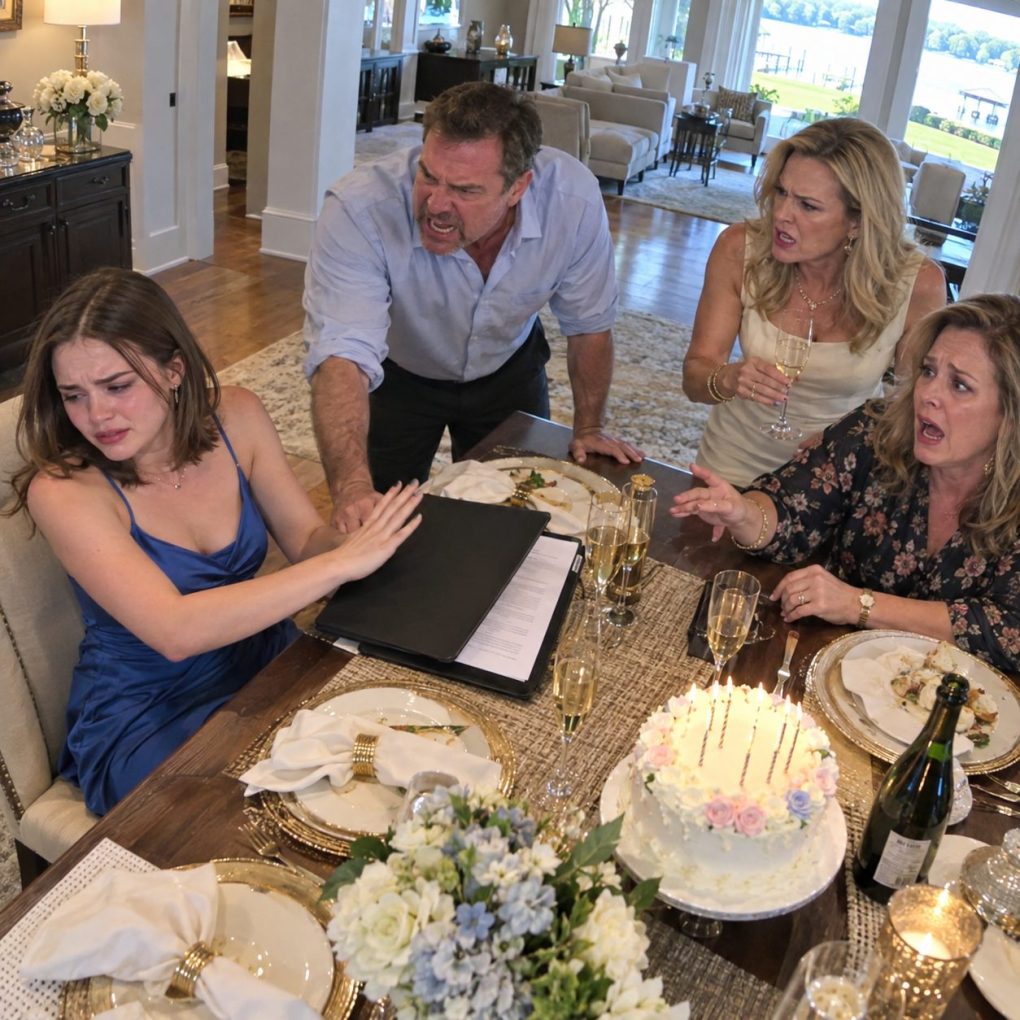
In der Nacht, als ich achtzehn wurde, erhob mein Vater ein Glas Champagner und sagte zu allen: „Auf Emily – endlich alt genug, um ihre Zukunft selbst in die Hand zu nehmen.“ Meine Tante Melissa lächelte so breit, dass es fast schon schmerzhaft aussah, und meine Stiefmutter Karen drückte mir die Schulter, als wären wir plötzlich beste Freundinnen. Sie dachten, die 3,5 Millionen Dollar, die mir meine verstorbene Großmutter hinterlassen hatte, würden um Mitternacht mir gehören – und irgendwie schon zum Frühstück ihnen. Ich lächelte zurück, denn sie hatten keine Ahnung, dass das Geld bereits außer Reichweite war.
Was sie nicht wussten: Ich hatte die drei Wochen zuvor heimlich mit Daniel Mercer, dem Anwalt, der den Nachlassplan meiner Großmutter aufgesetzt hatte, gesprochen. Zwei Monate zuvor hatte ich zufällig eine E-Mail auf dem Laptop meines Vaters mit dem Betreff „Emilys Geld nach dem 18. Geburtstag“ entdeckt. Darin ging es um die Ablösung seiner Hypothek, Investitionen in Melissas angeschlagenen Salon und darum, Karen die Kontrolle über meine Konten zu übertragen. Mein Name tauchte sechsmal auf, aber niemand hatte auch nur einen Satz darüber geschrieben, was ich mir wünschte.
An diesem Morgen, nachdem ich volljährig geworden war, half mir Daniel, die Erbschaft in einen professionell verwalteten Treuhandfonds mit einem unabhängigen Treuhänder zu übertragen. Ich blieb die Begünstigte, aber kein Familienmitglied durfte Geld abheben, Kredite darauf aufnehmen oder einen Bankangestellten unter Druck setzen, um Zugriff darauf zu erhalten. Ich behielt genug Geld auf einem separaten Girokonto für Studienkosten und Notfälle. Dann ging ich nach Hause, zog das blaue Kleid an, das Karen mir gekauft hatte, und tat so, als wüsste ich von nichts.
Beim Abendessen schob mein Vater einen schwarzen Ordner zwischen Geburtstagskuchen und Weingläsern über den Tisch. „Nur Papierkram“, sagte er beiläufig. Darin befand sich eine umfassende Finanzvollmacht, die ihn als meinen Bevollmächtigten einsetzte, sowie ein weiteres Blatt, das Karen berechtigte, in meinem Namen mit Banken zu sprechen. Melissa beugte sich vor und sagte: „Es ist klüger, wenn Erwachsene solche Geldangelegenheiten regeln.“ Als ich fragte, warum die Unterlagen vor meinem Geburtstag vorbereitet worden waren, antwortete niemand.
Ich sah die drei an und spürte, wie mir ein Schauer über den Rücken lief. „Ich lese es morgen“, sagte ich. Papas Lächeln verschwand. „Da steht nichts zu lesen.“ Ich schloss die Mappe und schob sie zurück über den Tisch. „Dann gibt es auch nichts zu unterschreiben.“
Einige Sekunden lang herrschte Stille. Karen umklammerte ihr Glas fester, und Melissa warf meinem Vater einen panischen Blick zu, den sie nicht verbergen konnte. Dieser kurze Blick zwischen ihnen sagte mir alles. Am Morgen würden sie feststellen, dass das Vermögen, das sie bereits im Kopf aufgeteilt hatten, nicht mehr dort lag, wo sie es erwartet hatten.
At 7:12 the next morning, someone pounded on my bedroom door hard enough to shake the frame. My father walked in without waiting, holding his phone in one hand and a printed bank statement in the other. His face was red. “What did you do?” he demanded.
I sat up slowly, already dressed because I had barely slept. He threw the statement onto my bed; the account that had held my grandmother’s inheritance showed a transfer balance of zero. Karen stood behind him in the hallway, whispering that I was “panicking over nothing,” while Melissa was downstairs on speakerphone with the bank. Nobody asked whether I was okay.
Dad ordered me to call Daniel and reverse the transfer. When I refused, his anger changed direction. He said my grandmother had trusted him to guide me, that I was too young to understand taxes, investments, property, or “how families survive.” Then he admitted he had already promised a contractor a deposit for a lake house renovation because he believed I would “help the family” after my birthday.
I stared at him. “You spent money you didn’t have because you assumed I would give you mine?” He called that selfish; Karen called it cruel. Melissa came upstairs crying, saying her salon would close without $80,000 and that Grandma would have wanted me to help her. That was when I understood none of them were asking what I wanted—they were explaining why my refusal made me a bad person.
At 9:03, Daniel called. My father tried to take the phone from my hand, so I put the call on speaker. Daniel calmly explained that the transfer had been completed lawfully after I turned eighteen, that the trustee was independent, and that no family member could access the trust. My father asked whether he could challenge it, and Daniel simply replied, “You are free to speak with your own attorney.”
The house changed after that sentence. Nobody shouted anymore; they became careful. That afternoon, I packed a suitcase and moved into my best friend Ava’s parents’ guest room until college orientation. Before I left, Dad stood by the front door and said, “If you walk out, don’t expect this family to be waiting when you come back.”
I wanted to tell him that family should never make love conditional on account access, but I only said, “Then I guess I’ll find out what was real.” Driving away, I felt terrified, guilty, and strangely light. Protecting the money had been the easy part. The harder truth was realizing that sometimes the moment you finally gain control of your life is the same moment you learn who only loved you when they believed they could control it.
For the first two weeks, my father did not call. Karen sent messages about “respect,” Melissa posted vague quotes about ungrateful children, and relatives I barely knew began texting that money should never come before family. I stopped defending myself. Daniel advised me to save every message, keep financial records private, and let the trustee handle any request involving the inheritance.
