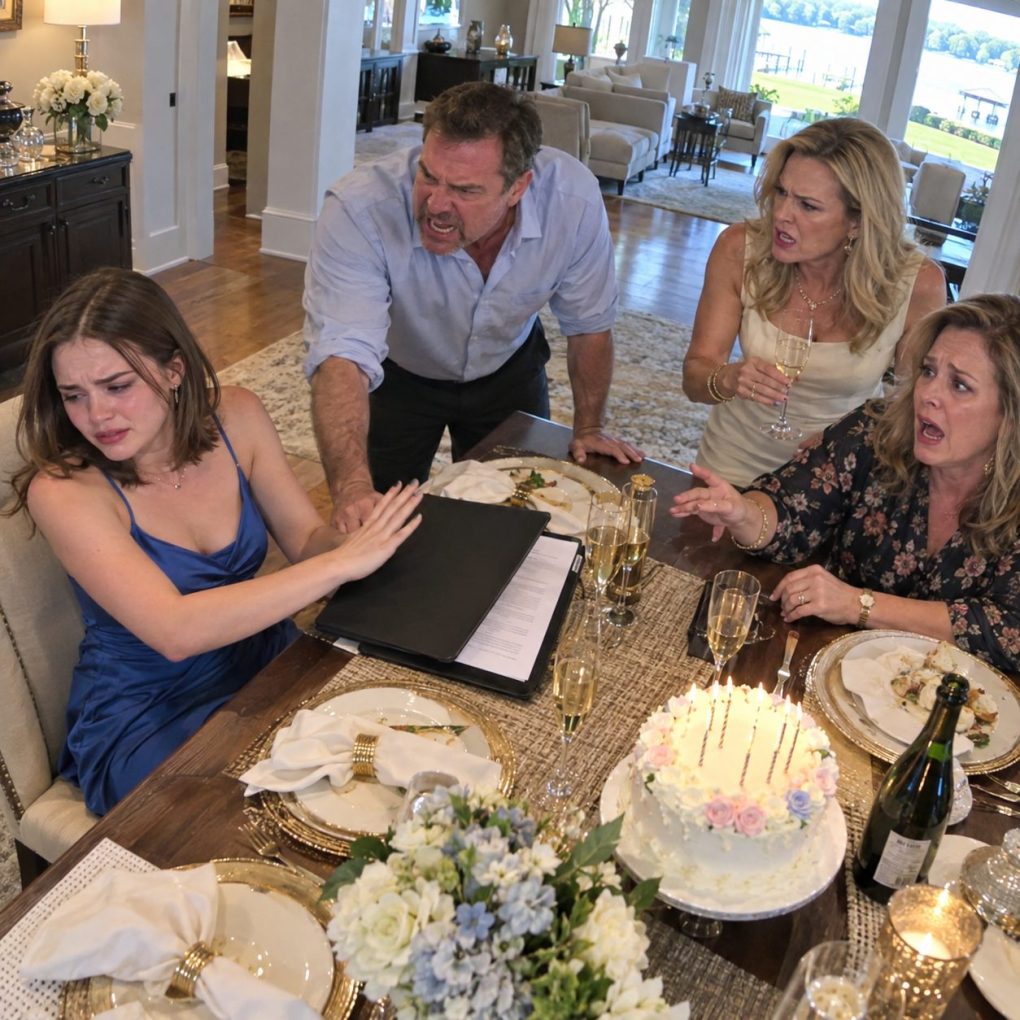
Le soir de mes dix-huit ans, mon père leva son verre de champagne et annonça à tous : « À Emily ! Enfin assez grande pour prendre son destin en main. » Ma tante Melissa affichait un sourire si large qu’il en paraissait douloureux, et ma belle-mère, Karen, me serra l’épaule comme si nous étions devenues les meilleures amies du monde. Elles croyaient que les 3,5 millions de dollars que ma grand-mère m’avait légués me reviendraient à minuit – et, comme par magie, à elles avant le petit-déjeuner. Je leur souris en retour, car elles ignoraient que cet argent était déjà hors de leur portée.
Ce qu’ils ignoraient, c’est que j’avais passé les trois semaines précédentes à rencontrer discrètement Daniel Mercer, l’avocat qui avait rédigé le testament de ma grand-mère. Deux mois plus tôt, j’avais aperçu par hasard un courriel sur l’ordinateur portable de mon père, intitulé « Fonds d’Emily après ses 18 ans ». Il y était question du remboursement de son prêt immobilier, d’un investissement dans le salon de coiffure de Melissa, alors en difficulté, et de confier à Karen la gestion de l’accès à mes comptes pour les membres du foyer. Mon nom y figurait six fois, mais personne n’avait mentionné mes souhaits.
Ce matin-là, une fois devenue majeure, Daniel m’a aidée à transférer l’héritage dans une fiducie gérée par un professionnel et un administrateur indépendant. Je restais la bénéficiaire, mais aucun membre de ma famille ne pouvait retirer d’argent, emprunter sur cette fiducie ni faire pression sur un employé de banque pour y avoir accès. J’ai conservé une somme suffisante sur un compte courant séparé pour les frais de scolarité et les imprévus. Puis je suis rentrée chez moi, j’ai enfilé la robe bleue que Karen m’avait achetée et j’ai fait comme si de rien n’était.
Pendant le dîner, papa a fait glisser un dossier noir sur la table, entre le gâteau d’anniversaire et les verres à vin. « Des papiers, tout simplement », a-t-il dit nonchalamment. À l’intérieur se trouvait une procuration financière très détaillée le désignant comme mon mandataire, ainsi qu’une autre page autorisant Karen à parler aux banques en mon nom. Melissa s’est penchée en avant et a dit : « C’est plus sage de laisser les adultes gérer ce genre d’argent. » Quand j’ai demandé pourquoi ces documents avaient été préparés avant mon anniversaire, personne n’a répondu.
Je les ai regardés tous les trois et j’ai senti un froid m’envahir. « Je le lirai demain », ai-je dit. Le sourire de papa s’est effacé. « Il n’y a rien à lire. » J’ai refermé le dossier et l’ai repoussé sur la table. « Alors il n’y a rien à signer. »
Pendant plusieurs secondes, personne ne parla. Karen serra son verre, et Melissa jeta un regard à mon père, une panique fugace qu’elle ne put dissimuler. Ce bref échange d’œil en disait long. Au matin, elles découvriraient que la fortune qu’elles avaient déjà partagée mentalement ne se trouvait plus là où elles l’attendaient.
At 7:12 the next morning, someone pounded on my bedroom door hard enough to shake the frame. My father walked in without waiting, holding his phone in one hand and a printed bank statement in the other. His face was red. “What did you do?” he demanded.
I sat up slowly, already dressed because I had barely slept. He threw the statement onto my bed; the account that had held my grandmother’s inheritance showed a transfer balance of zero. Karen stood behind him in the hallway, whispering that I was “panicking over nothing,” while Melissa was downstairs on speakerphone with the bank. Nobody asked whether I was okay.
Dad ordered me to call Daniel and reverse the transfer. When I refused, his anger changed direction. He said my grandmother had trusted him to guide me, that I was too young to understand taxes, investments, property, or “how families survive.” Then he admitted he had already promised a contractor a deposit for a lake house renovation because he believed I would “help the family” after my birthday.
I stared at him. “You spent money you didn’t have because you assumed I would give you mine?” He called that selfish; Karen called it cruel. Melissa came upstairs crying, saying her salon would close without $80,000 and that Grandma would have wanted me to help her. That was when I understood none of them were asking what I wanted—they were explaining why my refusal made me a bad person.
At 9:03, Daniel called. My father tried to take the phone from my hand, so I put the call on speaker. Daniel calmly explained that the transfer had been completed lawfully after I turned eighteen, that the trustee was independent, and that no family member could access the trust. My father asked whether he could challenge it, and Daniel simply replied, “You are free to speak with your own attorney.”
The house changed after that sentence. Nobody shouted anymore; they became careful. That afternoon, I packed a suitcase and moved into my best friend Ava’s parents’ guest room until college orientation. Before I left, Dad stood by the front door and said, “If you walk out, don’t expect this family to be waiting when you come back.”
I wanted to tell him that family should never make love conditional on account access, but I only said, “Then I guess I’ll find out what was real.” Driving away, I felt terrified, guilty, and strangely light. Protecting the money had been the easy part. The harder truth was realizing that sometimes the moment you finally gain control of your life is the same moment you learn who only loved you when they believed they could control it.
