Escuché a mi madre decir esas palabras a través de la puerta entreabierta de la cocina.
Mi hermano pequeño, Grant, se rió.
“Probablemente llorará. Asegúrate de que Jenna lo grabe.”
Estaba en el pasillo sosteniendo una caja de cartón con abrigos de invierno donados.
Durante doce años, ayudé a dirigir la organización benéfica navideña que mi difunto padre fundó en Grand Rapids, Michigan. Recogimos abrigos, víveres y ayuda de emergencia para familias en dificultades.
Papá solía decir que la Navidad no era para hacer que la gente se sintiera generosa. Se trataba de asegurarse de que nadie se sintiera olvidado.
Llevaba dieciocho meses fuera.
Ahora mamá usaba su organización benéfica para planear mi humillación pública.
“No para de preguntar por esas donaciones desaparecidas”, continuó Grant. “Si hacemos que todos piensen que ella se llevó el dinero, nadie va a creer ni una palabra más de lo que diga.”
Respondió mamá sin dudar.
“Exacto. Tiene que aprender qué pasa cuando se vuelve contra su familia.”
Mis dedos se apretaron alrededor de la caja.
Dos meses antes, mientras revisaba los registros financieros de la organización, descubrí 18.600 dólares en pagos a una empresa llamada Northline Holiday Logistics.
Las facturas afirmaban que la empresa había entregado cientos de abrigos de invierno.
Pero nuestro trastero estaba casi vacío.
Cuando le pedí a Grant recibos de entrega, me dijo que me ocupara de mis asuntos.
Cuando le pregunté a mamá, me apartó del comité financiero de la organización.
Había estado intentando resolver la discrepancia en silencio.
Aparentemente, tenían otros planes.
Puse la caja junto a las estanterías de almacenamiento y me fui sin anunciarme.
En casa, abrí la carpeta que llevaba desde octubre: facturas, registros de inventario, extractos bancarios y correos electrónicos que había recibido mientras formaba parte del comité de finanzas.
Luego preparé un documento final.
Lo envié en privado a los tres miembros independientes de la junta de la organización, solicitando una investigación antes de la recaudación de fondos navideña.
A las 9:17 de esa noche, sonó mi teléfono.
MAMÁ.
“¡Cómo te atreves a ir a mis espaldas!” gritó. “¿Tienes idea de lo que le has hecho a esta familia?”
Miré la foto de papá en mi escritorio.
Entonces sonreí.
“Mamá, ¿te ha gustado la factura que he resaltado en la página ocho?”
Silencio.
“Esa factura tiene la firma de papá autorizando el pago”, continué.
“¿Y bien?”
“Mamá, papá murió hace dieciocho meses.”
Escuché cómo cambiaba su respiración.
“¿Quieres explicar por qué supuestamente aprobó un pago hace tres meses?”
Entonces susurró algo que nunca esperé.
“Grant me dijo que había eliminado esa página.”
No respondí de inmediato.
Mamá seguía al teléfono, respirando con dificultad.
“¿Así que sabías que el documento era falso?”
“No tergiverses mis palabras, Elise.”
“Entonces explícame a qué te referías.”
Bajó la voz.
“Tu hermano estaba intentando arreglar un problema. No tenías que destruirlo por papeleo.”
“Dieciocho mil seiscientos dólares no son papeleo.”
“La familia es lo primero.”
Volví a mirar la fotografía de papá.
“Eso es exactamente lo que pensabas decirle a todos antes de acusarme.”
Colgó.
A la mañana siguiente, Margaret Ellis, la presidenta de la junta de la organización, me llamó. Ella había revisado mi dossier y ya había pedido a un contable externo que examinara los registros.
“Elise, gracias por traernos esto. Por favor, no contactes tú mismo con el vendedor. Necesitamos preservar los registros originales.”
I agreed.
By lunchtime, Mom had sent a message to forty-three relatives and charity volunteers.
It breaks my heart to announce that Elise has been financially dishonest with her father’s charity. We will address this during our Christmas Eve gathering.
She included my photograph.
I stared at it for several seconds.
Then my phone rang.
My aunt Diane.
“Sweetheart, is any of this true?”
“I didn’t take the money.”
“I know your father trusted you.”
“He did.”
“Then why would your mother say something like this?”
I glanced at the old Christmas photograph hanging above my desk.
“Because she doesn’t want anyone asking where the money actually went.”
By December 23, the accountant had identified three payments to Northline Holiday Logistics. The invoices reused the same delivery photograph with different dates.
The supposed vendor’s business address matched a commercial mailbox registered to Grant.
Margaret suspended additional payments pending the board’s review.
Mom called again.
“You’ve embarrassed your brother in front of the entire board!”
“He submitted the invoices.”
“You could have talked to me!”
“I tried. You took away my access.”
She became quiet.
Then she said, “I’m still giving my speech tomorrow. Everybody deserves to know how you’ve treated this family.”
I could have stayed home.
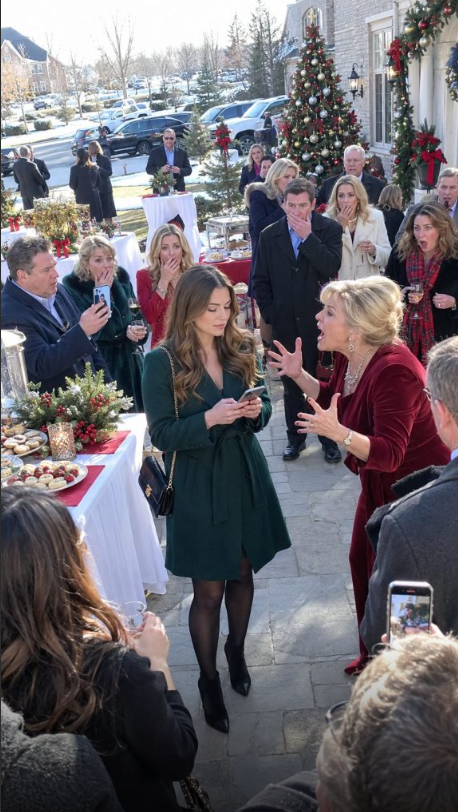
Instead, I attended the Christmas Eve gathering, where donors and relatives filled the community hall with paper plates, winter coats, and children carrying wrapped gifts.
Mom stood beside a decorated Christmas tree holding three pages of notes.
Grant avoided looking at me.
Margaret sat near the front with two other board members.
Mom tapped the microphone.
“Before dinner, there’s something painful I need to say about my daughter.”
Margaret stood.
“Carol, the board has asked you not to make unverified accusations while the review is ongoing.”
Mom lifted her chin.
“I won’t be silenced in my own husband’s charity.”
Then Grant’s wife, Lauren, walked forward and handed Margaret a small envelope.
“I found this in our home office,” she said, her voice shaking. “I think you need to see it.”
Margaret opened the envelope.
Inside was a printed email from Mom to Grant.
The subject line read:
CHRISTMAS EVE — WHAT TO SAY ABOUT ELISE.
And beneath it was the sentence that would change everything.
“If she gets them looking at the invoices, tell everyone she stole the money before she can prove where it went.”
Mom stared at the envelope in Margaret’s hands.
“Lauren,” she whispered, “what have you done?”
Lauren’s eyes were red.
“What you should have done when Elise first asked about the missing coats.”
Grant pushed his chair backward.
“You went through my office?”