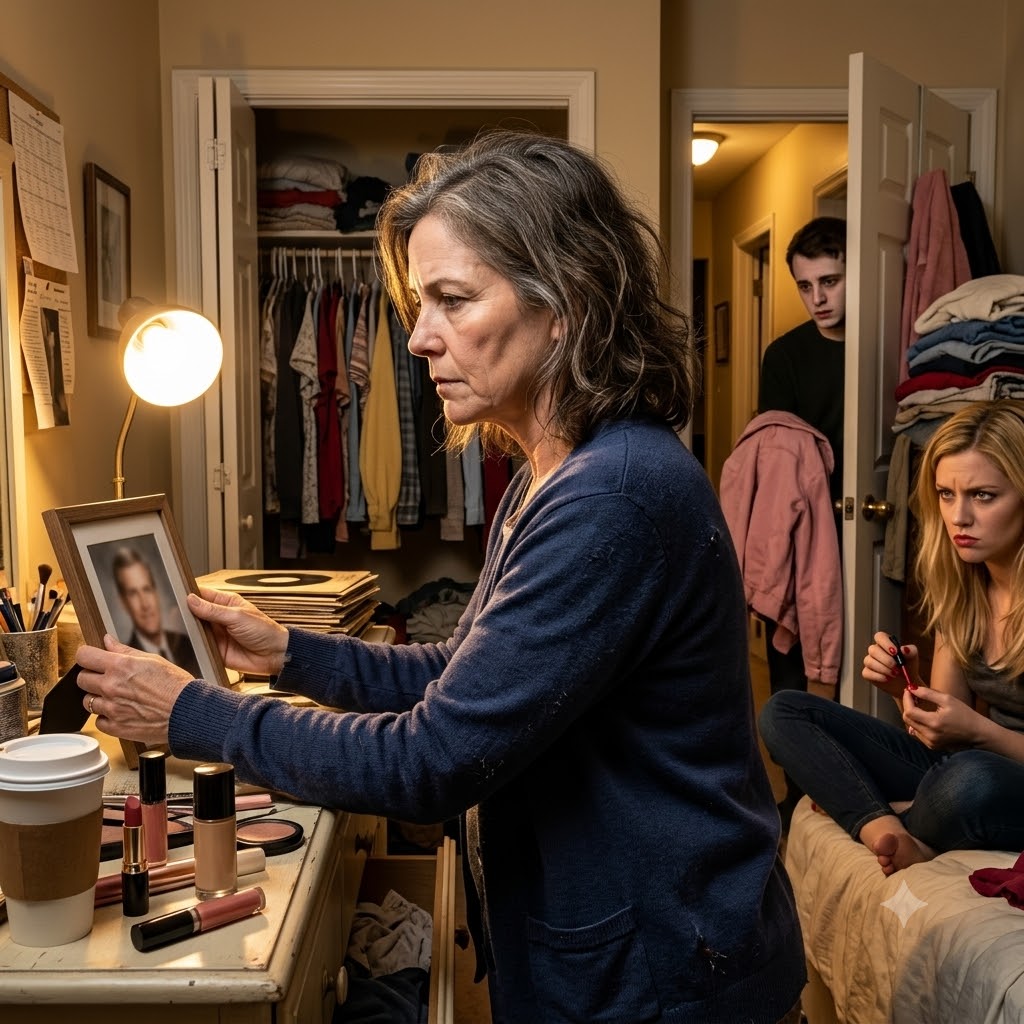
PART 1- THE CAKE IN THE TRASH
My daughter-in-law threw the birthday cake I had made for my granddaughter into the trash.
And when I objected, my own son looked at me as if I were the one causing trouble.
“Mom, please,” Daniel said. “Don’t ruin Sophie’s birthday.”
I remember staring at him and thinking that eleven months earlier, I had sold the home I had shared with his father for thirty-seven years.
I had given Daniel £80,000.
And he had promised me a home for life.
Yet there I was, sixty-four years old, standing beside a kitchen bin with strawberries, cream, and pieces of Victoria sponge crushed beneath coffee grounds and dirty paper towels.
For the first time, I wondered whether the downstairs room Daniel had promised me had ever existed anywhere except in the story he sold me.
My name is Maggie Lawson.
Until that afternoon, I would have told you that my greatest weakness was loving my family too much.
I know now that wasn’t quite true.
My weakness was believing that love meant I should never ask for proof.
My husband, Robert, died after thirty-seven years of marriage.
There are deaths that explode through a family, and there are deaths that seem to remove the oxygen from a house one room at a time.
Robert’s was the second kind.
After the funeral, I would wake in the night and reach across our bed before remembering there was nobody there. His shoes remained beneath the wardrobe for months. His gardening gloves were still on the shelf in the shed. There was a half-used bottle of aftershave in the bathroom that I couldn’t bring myself to throw away.
Daniel worried about me.
Or at least I believed he did.
He was our only child. He had a wife, Claire, and two children, Sophie and Max. After Robert died, Daniel began visiting more often.
“You shouldn’t be rattling around this place alone,” he told me one Sunday.
I was making tea.
“I’ve managed so far.”
“That isn’t the point.”
“What is the point?”
He leaned against the kitchen counter.
“You don’t need to prove anything anymore, Mom.”
It sounded kind.
That was why it worked.
Over the next few months, he mentioned the same idea repeatedly.
His house had space downstairs. With some building work, he said, part of the ground floor could become a private area for me.
Not merely a bedroom.
A proper little home within their home.
A bedroom, bathroom, and sitting area.
French doors facing the garden.
Privacy when I wanted it. Family when I didn’t.
“You could have your own entrance if you wanted,” Daniel said.
Claire showed me photographs on her tablet.
Cream walls.
Oak flooring.
A little blue armchair beside a window.
“You’d make it lovely,” she said.
I imagined Sophie coming downstairs to tell me about school. Max wandering in because he was hungry. Sunday dinners without my having to drive home afterward to an empty house.
Most of all, I imagined belonging somewhere again.
Daniel knew that.
Perhaps better than I did.
When he first mentioned money, he did it carefully.
“The building costs have gone mad,” he said.
“How mad?”
He hesitated.
That hesitation made me trust him more.
I thought a dishonest man would have arrived with a number already prepared.
Eventually, he asked whether I could put £80,000 from the sale of my house toward the work.
It was an enormous amount of money to me.
But the house Robert and I had bought decades earlier was worth far more than we had paid for it. If I sold, I would still have savings.
And according to Daniel, I wasn’t giving up my home.
I was exchanging one home for another.
The morning before I transferred the money, he sent me a message.
I saved it.
Later, I would read it so many times that I knew every word.
“Your £80k is for the downstairs room and works. You’ll have a home with us for life. Promise.”
I stared at that message for perhaps thirty seconds.
Then I transferred the money.
Because he was my son.
Because Robert had loved him.
Because Sophie and Max wanted Nana nearby.
Because I thought asking my own child for a contract would make me seem cold.
Because mothers sometimes confuse trust with proof.
Six weeks later, I stood inside the house where Robert and I had raised Daniel and watched strangers carry away furniture that didn’t fit into storage.
I found one of Daniel’s old toy cars behind a radiator.
I sat on the stairs holding it and cried.
Not because of the toy.
Because thirty-seven years could apparently fit into cardboard boxes if enough men with a van were paid to carry them.
Daniel hugged me when I arrived at his house.
“You won’t regret this,” he whispered.
For the first few weeks, I didn’t.
Sophie was twelve then and delighted to have me there.
Max made a cardboard sign in blue marker.
NANA’S DEN.
“This goes on your door when they finish your room,” he announced.
I kissed the top of his head.
“I’ll hold you to that.”
The room, Daniel explained, would take longer than expected.
The builder was delayed.
Then there was a permit issue.
Then material costs had increased.
Then someone was waiting for a subcontractor.
Every explanation sounded plausible by itself.
Meanwhile, I stayed in a small room beside the laundry area.
“Temporary,” Daniel kept saying.
So I behaved like a temporary guest.
I tried to take up as little space as possible.
That was my first mistake.
I collected Sophie and Max from school.
I cooked.
I folded laundry.
I waited for deliveries.
I cleaned the kitchen.
At first Claire thanked me.
Then she began leaving lists.
“Could you pick up Max at four?”
“Can you put the chicken in at five?”
“There’s washing in the machine.”
“Delivery between twelve and three.”
Nothing on its own was unreasonable.
That was how it happened.
A favor became a habit.