Chapter 1 – The Rip Heard Round the Room
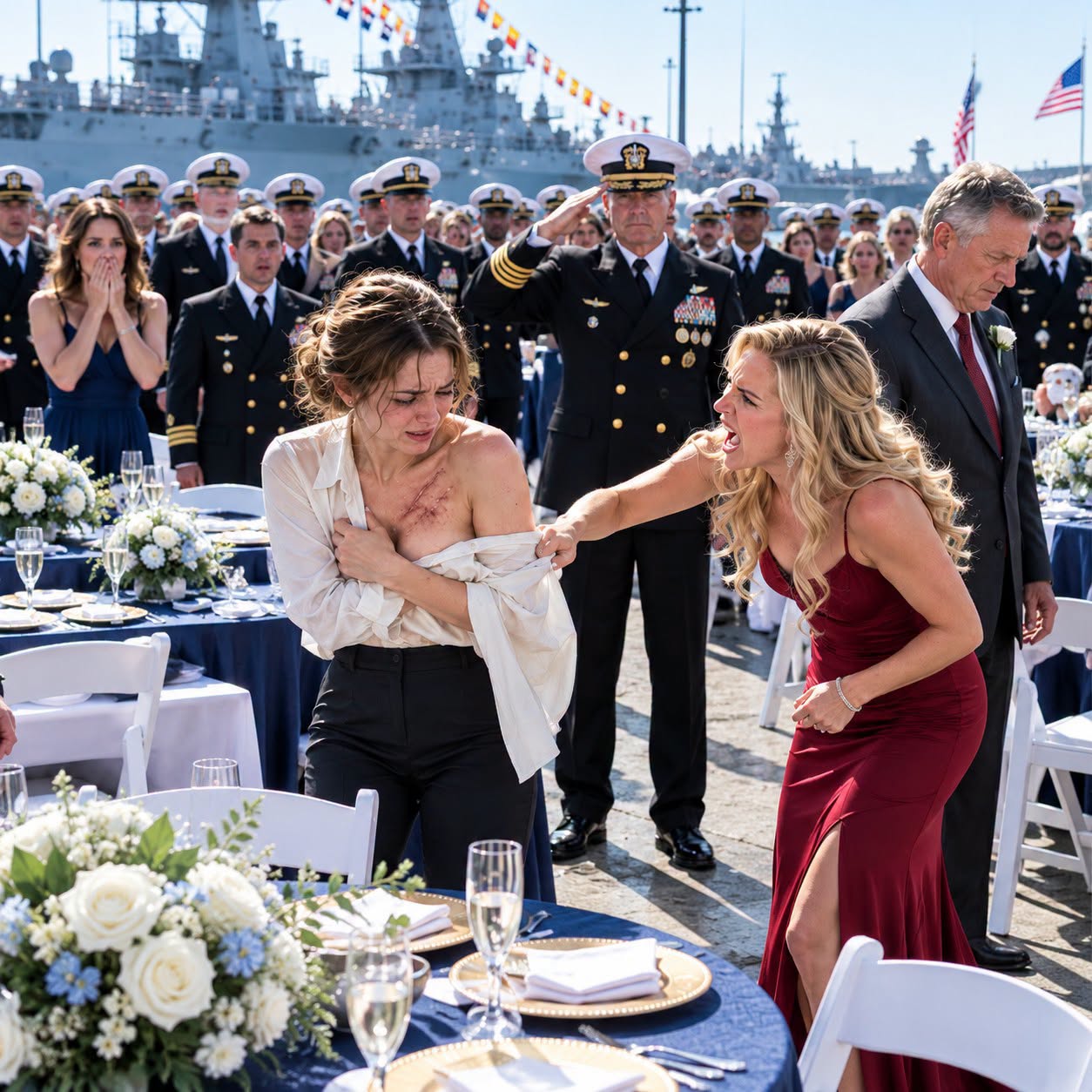
The soft hum of a brass quintet playing standard jazz arrangements usually brought a sense of decorum to the Norfolk Officer’s Club, but tonight the air felt thick with tension. Sunlight flickered through the floor-to-ceiling bay windows overlooking the Chesapeake Bay. Men and women in dress whites moved in precise, disciplined clusters, holding low-balled glasses of bourbon and crystal flutes of champagne.
I stood near a towering ice sculpture of an anchor, keeping my spine straight and my head up. My pale blue silk blouse was modest, high-necked, and tailored to conceal what five years of skin grafts and physical therapy had left behind.
I didn’t want to be here. I had agreed to attend the Annual Navy Relief Society Gala for one reason only: my father, retired Captain Hugh Alden. After my premature medical retirement from the United States Navy, our relationship had dwindled to sporadic phone calls and cold, uncomfortable dinners. When he called two weeks ago and asked—almost pleaded—for me to stand beside him as his family representative for a lifetime achievement award, I swallowed my pride and agreed. I thought, perhaps naively, that he was reaching out an olive branch.
I was wrong.
“You look like a ghost, Maya,” my sister Marin’s voice cut through the background music. She glided up beside me, her high heels clicking loudly against the polished hardwood floor. She wore a tailored red gown that screamed for attention, holding a champagne glass by its slender stem. Behind her stood her husband, Richard, looking slick, nervous, and slightly out of place in an off-the-rack tuxedo.
“I’m fine, Marin,” I said calmly, taking a small sip of sparkling water. “It’s just a crowd.”
“A crowd of real officers,” Marin sneered, lowering her voice so only Richard and I could hear. “People who actually finished their service instead of taking an early exit.”
Richard shifted his weight, pulling a glossy leather portfolio from under his arm. “Marin, take it easy. Remember why we’re here.” He turned to me, offering a tense, practiced smile. “Maya, look… we just need two minutes with Commodore Vance. You know him from your days on the USS Pegasus. If you just introduce us and vouch for Vanguard Marine’s new thermal filtration valves, the procurement committee will put us on the shortlist. It’s a ten-million-dollar contract.”
I looked at the portfolio Richard was holding, then directly into my brother-in-law’s anxious eyes. “Richard, I told you on the phone three days ago. I haven’t reviewed the technical schematics for those valves. I haven’t seen the stress-test reports. I spent twelve years as a Surface Warfare Officer and a Chief Engineer. I will never put my name on equipment I haven’t personally verified. Sailors’ lives depend on those systems.”
Marin took a step closer, her blue eyes flashing with malice. “You won’t put your name on it? Who are you to act so high and mighty? You washed out! You couldn’t even handle a routine tour without running back home to hide!”
“Marin, stop,” I said quietly, feeling a sharp pang in my chest. “This isn’t the place.”
“No, let’s talk about the place!” Marin raised her voice slightly, drawing the eyes of a nearby commander and his wife. “You’ve spent five years sitting in your apartment, playing the tragic veteran, letting Dad believe you couldn’t hack it. Meanwhile, Richard is actually trying to build a business that supports the fleet!”
“She’s right, Maya,” my father’s deep, booming voice boomed behind us. Captain Hugh Alden stepped into the circle. His hair was silver, his posture stiff as iron, his chest adorned with decades of ribbons. He didn’t look at my face; he looked straight ahead, his jaw tight. “Your sister and Richard are trying to make something of themselves. The least you could do, after everything I’ve done to keep your name clean around here, is make a simple introduction.”
“Dad,” I murmured, my voice cracking slightly. “It’s not a simple introduction. It’s an endorsement. If those valves fail under high pressure—”
“Enough with the mechanical excuses!” my father snapped coldly. “You always had an excuse when things got tough.”
My heart pounded against my ribs like a trapped bird. Five years of silence. Five years of absorbing their quiet contempt because I was bound by a non-disclosure directive regarding the classified nature of the incident on the USS Pegasus. I had accepted the discharge, accepted the whispered rumors, and accepted my father’s disappointment to protect the military’s ongoing investigation. But standing here, watching my own family treat me like a disgrace, made something snap inside me.
“No, Dad,” I said firmly. “I will not do it.”
