I remember thinking that nothing about the situation looked dramatic enough to explain how deeply it hurt. I knew the history behind every difficult personality in the family, which meant I could explain almost any behavior if I tried hard enough. Explanations had become a trap. I did not need everyone to agree with me. I needed to be able to live with the decision after the room became quiet. I had always connected the house with safety, belonging, or celebration. That assumption no longer felt automatic. The familiar excuses appeared almost immediately: stress, misunderstanding, bad timing, family pressure. None of them changed the facts. Instead of asking what would make everyone comfortable, I asked what would prevent the same thing from happening again. I could not yet see the ending, but I could finally see the next honest step.
There was a strange clarity in realizing that the words had already been said and could not be taken back. I had often chosen silence because I thought silence protected relationships. I had not understood that silence can also protect the behavior damaging them. I did not need everyone to agree with me. I needed to be able to live with the decision after the room became quiet. I was not interested in turning one painful moment into a permanent war. I was interested in stopping the pattern that had produced it. Nobody seemed prepared for calm resistance. They had expected emotion because emotion would have been easier to dismiss. I stopped searching for a perfect sentence. There was no sentence that could make people welcome a consequence. Later, I would understand that this was the moment the story changed direction.
“But there’s plenty of room.” “I know,” Melissa replied coldly. “I just don’t want you at the table.” Eleanor’s face fell as laughter drifted in from the dining room. 👇 Part 2 in the comments.
I remember thinking that nothing about the situation looked dramatic enough to explain how deeply it hurt. For years, I had been the person who remembered birthdays, adjusted schedules, solved last minute problems, and told myself that love was measured by how much inconvenience I could absorb. One detail kept returning to me because it changed the meaning of everything around it: “But there’s plenty of room.” “I know,” Melissa replied coldly. “I just don’t want you at the table.”… There are moments when doing nothing is also a decision. I could feel that truth pressing against every excuse I had used before. I was not interested in turning one painful moment into a permanent war. I was interested in stopping the pattern that had produced it. For the first time, I allowed other people to sit with the discomfort their own choices had created. I chose not to negotiate against myself by offering compromises before anyone had even acknowledged the harm. That was enough for the next minute.
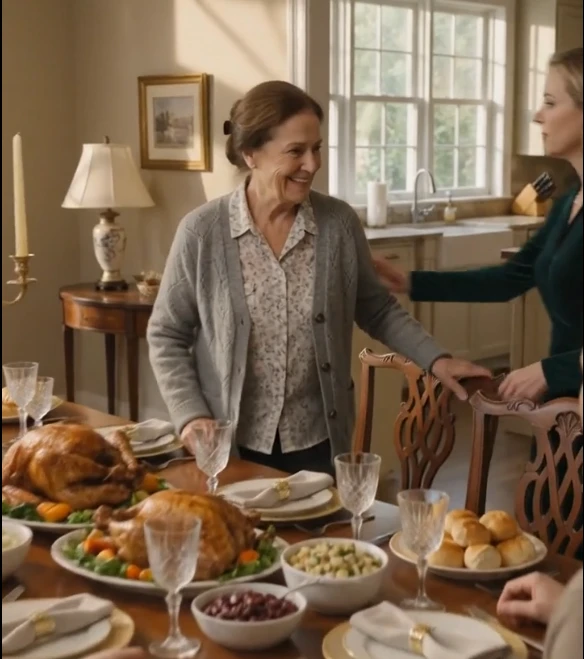
I had learned over the years that the most important moments often arrive without warning. I had often chosen silence because I thought silence protected relationships. I had not understood that silence can also protect the behavior damaging them. There are moments when doing nothing is also a decision. I could feel that truth pressing against every excuse I had used before. I had always connected the house with safety, belonging, or celebration. That assumption no longer felt automatic. The situation became simpler once I separated intention from impact. They could claim whatever intention they wanted. I still had to respond to what had actually happened. For once, I allowed the person who created the problem to experience the inconvenience of solving it. At the time, I only knew I was finished pretending the situation was smaller than it was.
There was a strange clarity in realizing that the words had already been said and could not be taken back. I had accepted many little imbalances because each one seemed too small to justify a confrontation. Together they had created a relationship in which my comfort was always considered negotiable. The person I most needed to convince was not anyone standing across from me. It was the part of myself that still believed saying no required permission. I was not interested in turning one painful moment into a permanent war. I was interested in stopping the pattern that had produced it. I listened carefully because people often reveal more when they believe the only problem is your reaction. The path forward was not pleasant, but it was visible now. The pain remained, but confusion was beginning to leave.
