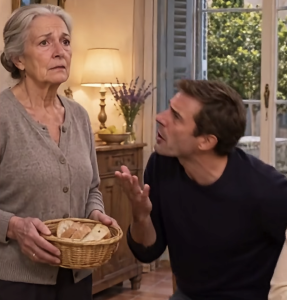
 “Mom, when exactly are you planning to leave?” My son Daniel asked this question at 6:18 p.m., in front of my two grandchildren, after two years of free childcare, prepared meals, and paid groceries. I was seventy-one years old. My daughter-in-law, Renée, didn’t look up from her plate. That silence hurt me more than the question itself.
We were staying in their house near Aix-en-Provence, in Puyricard. Fourteen-year-old Noah stopped looking at his phone. Eleven-year-old Lucie held her fork perfectly still over her pasta. I placed the bread basket between the glasses.
“Do you want me to leave?”
Daniel shrugged. “We’d like to get our space back. The children are growing up. We have to move on.”
Two years earlier, after my husband Henri’s funeral, it was he who had asked me not to stay alone in our house in Orange. “Come stay with us for a while, Mother. You’ll be surrounded by people.” I had sold our house, packed thirty-eight years’ worth of memories into boxes, and accepted the small room at the end of the hall. Renée still called it “the guest room.”
Since then, I had prepared hundreds of snacks, taken Noah to football practice and Lucie to piano lessons, waited for deliveries, looked after sick children, and folded mountains of laundry. In the evenings, I often left dinner warm so that Daniel and Renée could get home peacefully.
Once, in the hallway, I heard Renée murmur behind their door: “She eats here, she uses everything, but what does she really bring?” Daniel didn’t reply. Just like that evening.
What they didn’t know was that a few months earlier, after leaving a doctor’s appointment, I had bought a EuroMillions ticket at the tobacconist’s. I checked the numbers three times at my bedside table. The winnings were eighty-nine million euros.
I hadn’t announced anything. With the advice of independent professionals, I had taken the necessary steps, organized my finances, and protected my peace of mind. The money hadn’t made my grief disappear. It had reminded me of a forgotten possibility: I could choose where I lived.
At the table, I could have told them. I could have watched their faces change. Instead, I folded my napkin.
“Excuse me,” I murmured.
I went out onto the terrace. No one followed me. Behind the bay window, Renée was serving dessert as if nothing important had been said.
At 2:13 a.m., I turned on my bedside lamp and wrote four lines in my notebook: reveal nothing; consult my lawyer; protect the accounts; find a house. Not a room someone lends me. A house where I could invite my grandchildren without asking permission.
Attorney Patricia Delmas saw me as soon as possible. She advised me not to mention my winnings until the paperwork was in order and put me in touch with the appropriate specialists. A few days later, I visited a house with four bedrooms, shade trees, an east-facing veranda, and a terrace large enough for tea.
I was already familiar with it. Daniel and Renée had been talking about this property for weeks, referring to their “new life.” They had visited it, but their financing wasn’t ready. With the help of my advisor, I submitted an offer to purchase at the asking price, without taking out a loan.
I didn’t tell them anything.
That’s when their attitude changed. Daniel brought me breakfast. Renée suddenly suggested I spend more time with the children. I noticed everything, without yet understanding why.
The following Saturday, at 8:11 a.m., Renée entered my room without knocking. Near my Bible, she noticed an envelope from my lawyer’s office and a small brass key brought back from the visit. Her gaze lingered on them.
“Did you buy a house?”
Before I could answer, the doorbell rang. A man in a suit was waiting outside the door, a briefcase of documents against him.
“I am Alain Perrin,” he said. “We had an appointment at nine o’clock for a signing.”
I had not made any appointment with this notary.
Renée went down the stairs so fast that she almost missed the last step.
“I’ll take care of it,” she announced, already reaching for the visitor’s towel.
The notary kept it with him. He reintroduced himself, verified the address, and explained that he was there for an appointment regarding a power of attorney. Those required to sign had to be present, and the documents had to be clearly explained to them.
Daniel appeared, barefoot, still surprised by the doorbell. “What power of attorney?”
Renée glanced briefly at me. “Nothing to worry about. It’s just to make things easier with your mother.”
