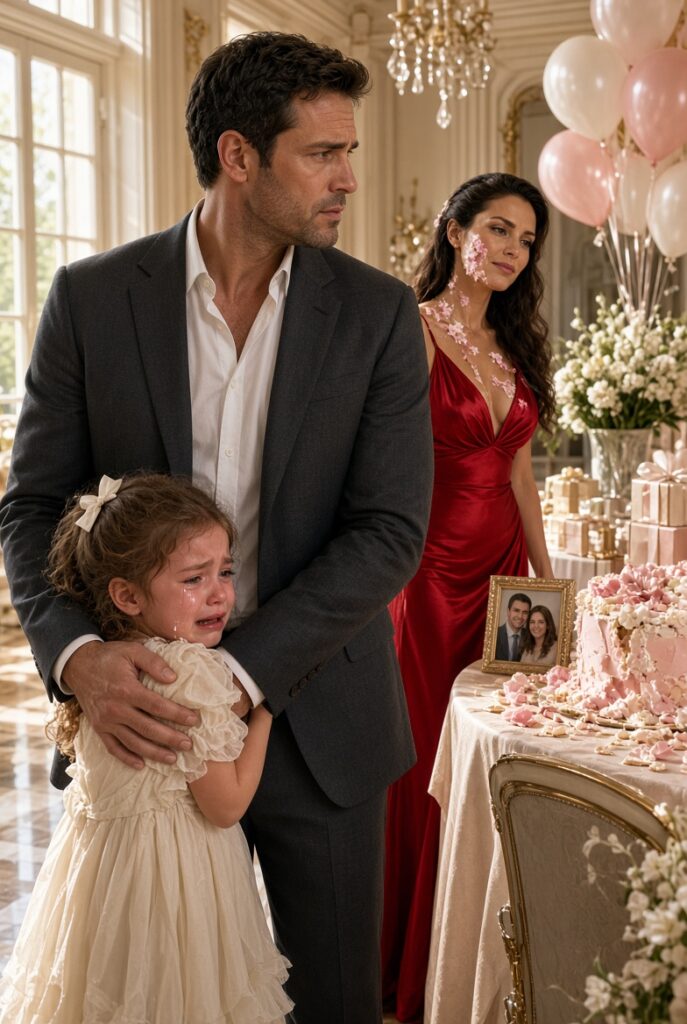
“Call the company yourself, Mom.”
“I don’t have the password! You set up the online portal!”
“Then hit ‘forgot password.’ It’s under Dad’s name. It has his Social Security number on file.”
“Claire Elizabeth, you do not talk to me in that tone! You drive back here right now and fix this heating issue, or so help me—”
“The heat isn’t off,” I said, watching Micah carefully arrange three crumbs into a straight row beside his fork. “The blower probably has a dirty filter. But if it does go off, you have Dad’s phone, and you have Ross. Ross lives there rent-free. He can call a technician.”
“Ross is resting his back! He had a double shift at the warehouse last Thursday!”
“Ross hasn’t worked at the warehouse since October, Mom. The manager called me three weeks ago asking if I knew where to send his final W-2 because Ross gave them my old address.”
A sharp intake of breath. For a second, I thought I had broken through the wall—that the revelation of her favorite child’s latest lie would crack the veneer of her righteousness. But with Evelyn Vance, reality was merely an obstacle to be routed around.
“That warehouse was toxic,” she snapped, her tone instantly hardening into defensive iron. “They were working him like a dog for twelve dollars an hour. He has chronic sciatica, which you would know if you ever asked about anyone other than yourself and your train hobbyist. Now stop playing games. Are you coming over here or not?”
“No,” I said. “I’m not.”
“If you don’t come over here and sort out this heat, do not bother coming back for Christmas dinner tomorrow night. Don’t bother bringing Micah’s gifts, either. We will give them to the church drive.”
“Keep them,” I said.
“Claire—”
“Goodbye, Mom.”
I tapped the red circle on the screen. The call disconnected with a dry, mechanical chirp.
The café was warm. The scent of roasted beans and burnt sugar hung heavy in the air, sweet and mundane. Micah looked up at me, his eyes huge behind his plastic-rimmed glasses.
“Are we not going to Grandma’s tomorrow?” he asked.
I laid the phone face down on the laminate table. “No, buddy. We’re not.”
He didn’t cry. He didn’t ask why. He simply picked up his fork, pressed the flat tines down against a piece of cinnamon crust, and whispered, “Can we make waffles at our house instead?”
“We can make waffles,” I told him, reaching across the table to smooth down the cowlick at the crown of his head, feeling the stiff, sticky grease still clinging to the roots of his fine brown hair. “We can make as many waffles as you want. With strawberries. And the real maple syrup from the glass bottle.”
A tiny, fragile smile flickered across his mouth, the first one I had seen since we walked through my mother’s front door at four o’clock that afternoon. “The kind that costs eight dollars?”
“The eight-dollar kind,” I said. “Every single drop.”
***
We lived four miles away, in a two-bedroom brick duplex on a quiet side street lined with silver maples. It wasn’t the kind of home my mother approved of. When I signed the lease three years ago after finally walking away from the legal wreckage of my divorce, she had stood in the living room with her arms crossed, eyeing the baseboard heaters and the 1980s laminate counters with visible disgust.
*“It smells like other people’s cooking, Claire,”* she had said, wrinkling her small, sharp nose. *“A girl with a corporate title shouldn’t be renting half a house from an old Greek couple. You should buy. You should look at those townhomes off Sawmill. Ross says those will appreciate twenty percent by next spring.”*
Ross, of course, had never owned so much as a lawnmower, let alone real estate. But in my mother’s house, Ross’s theoretical knowledge of the universe was treated as gospel, while my real-world management of sixty-five freight corridors for an interstate logistics firm was dismissed as “pushing papers behind a desk.”
When we got inside, the first thing I did was lead Micah straight to the bathroom.
“Strip down to your underwear,” I told him, turning the brass handles of the clawfoot tub until a thick, steaming torrent roared against the porcelain. “The sweater goes straight into the sink.”
I took the green sweater—the one he had picked out from the Target clearance rack because he said it looked like the evergreen trees along the Northern Pacific rail line—and dropped it into cold water. A milky, brownish film immediately bloomed across the surface, smelling of sage, cheap beef bouillon, and rendered fat. I reached for the dish soap and began kneading the wool between my knuckles, pressing the heels of my hands together until the suds turned gray.
In the tub, Micah sank down until the water reached his chin. He blew a tiny raft of bubbles across the surface, watching them pop against the porcelain edge.
“Mom?”
“Yeah, sweetie?”
“Grandma said I talked back.”
I stopped scrubbing. My hands were deep in the warm, greasy suds, my knuckles red from the friction. I looked over my shoulder at him. The steam had pinked his cheeks, but the shadow under his eyes was dark and bruised-looking.
“Did you talk back?” I asked gently.
“Ross said trains were stupid. He said only weird kids who don’t have friends memorize engine numbers. I just told him that engines are historical. I said the Big Boy 4014 could pull three thousand tons over Sherman Hill, and that’s not stupid, that’s just engineering.” He swallowed, his throat bobbing above the waterline. “Was that talking back?”
I turned back to the sink, shut off the tap with an elbow, and wrung out the green wool with so much force my wrist tendons creaked.