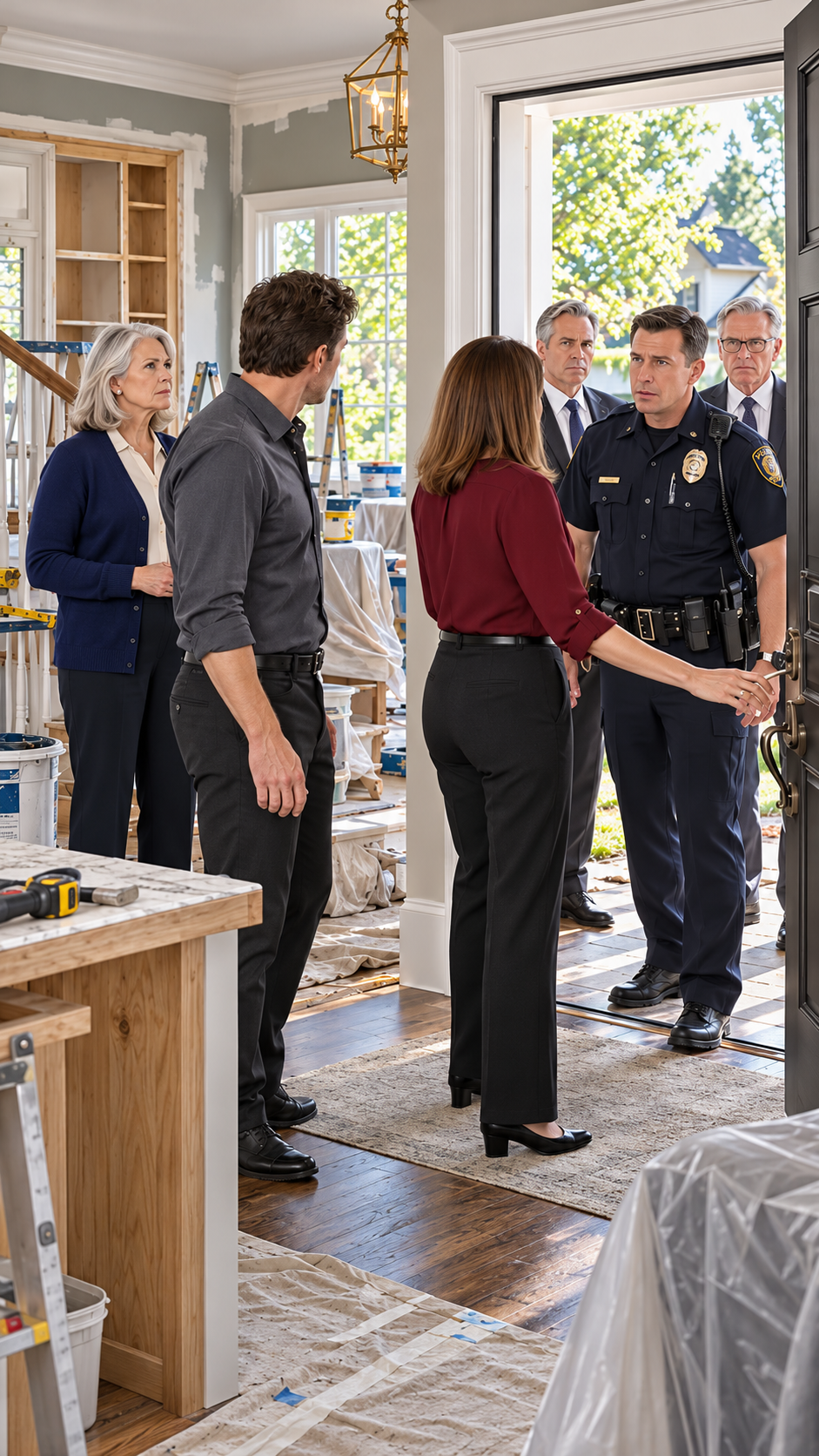
The police officer’s hand stopped halfway to his radio.
My son was still holding the document.
His name was Eric.
For thirty-nine years, I had known every version of his face.
The round-cheeked little boy who used to fall asleep against my shoulder.
The teenager who pretended he wasn’t afraid when his father taught him to drive.
The young man who cried at his wedding.
The exhausted new father who once called me at two in the morning because his daughter had a fever and he didn’t know what to do.
But I had never seen the expression he wore while reading that page.
Not anger.
Not yet.
It was fear.
“What is this?” he asked again.
My daughter-in-law, Melissa, grabbed the document from him.
The attorney beside me, Charles Whitmore, answered.
“It is a recorded transfer of title into the Nora Ellington Revocable Living Trust.”
Melissa blinked.
“So?”
Charles remained calm.
“So Mrs. Ellington is trustee. She retains complete legal control of the property during her lifetime.”
Eric shook his head.
“That doesn’t change anything. Mom was already the owner.”
“You’re correct,” Charles said. “But you should continue reading.”
Melissa’s eyes moved downward.
I watched the exact moment she reached the paragraph that mattered.
Her lips parted.
“No.”
Eric snatched the page back.
“What?”
She didn’t answer.
So Charles did.
“The previous estate plan left the residence to Eric after Mrs. Ellington’s death.”
My son looked at me.
“Previous?”
I nodded.
Charles continued.
“The amended trust directs that the property will no longer pass to Eric Ellington.”
The house went silent.
Even the police officer looked from Charles to me.
Eric stared at the document.
“Who gets it?”
“My grandchildren’s trust,” I said.
His face changed again.
Melissa’s changed faster.
“What do you mean, grandchildren’s trust?”
“Exactly what it sounds like.”
My grandchildren, Sophie and Benjamin, were sixteen and thirteen.
Under the new terms, if I died while still owning the house, the property would be sold unless the trustee determined keeping it was financially appropriate.
The proceeds would be protected for their education, first homes, medical needs, and future.
Eric could not borrow against it.
Melissa could not sell it.
Neither could pressure the children into signing it over when they turned eighteen.
The trustee after my death would be an independent fiduciary.
Not Eric.
Not Melissa.
Not anyone they could bully over Thanksgiving dinner.
Eric slowly lowered the paper.
“You changed your will because we painted a wall?”
“No.”
My voice surprised me with how steady it sounded.
“I changed my estate plan because you looked me in the eyes and told me my home would be yours eventually.”
“Mom—”
“And when you said it, I finally understood how you see me.”
“That isn’t fair.”
“What part?”
He opened his mouth.
Nothing came out.
I pointed toward the hallway.
“My belongings are piled in a spare room. Your wife selected paint colors for walls she doesn’t own. Someone removed my cabinet doors. My bedroom furniture has been damaged. You entered my home while I was away and began transforming it into your home because apparently you believed my death was merely paperwork that had not happened yet.”
Melissa crossed her arms.
“We were trying to improve the place.”
“You were trying to erase me from it.”
She rolled her eyes.
And that tiny gesture mattered.
More than she probably understood.
The police officer noticed it too.
He stepped forward.
“Mrs. Ellington, were they staying here before your trip?”
“No.”
“Did they have keys?”
Eric spoke quickly.
“I’ve had a key for years.”
The officer looked at him.
“Having a key isn’t permission to move in.”
“I’m her son.”
“That also isn’t permission.”
Melissa’s voice rose.
“This is ridiculous. Families don’t call police over renovations.”
Charles looked at her.
“Did Mrs. Ellington authorize you to remove her personal possessions from her bedroom?”
Melissa didn’t answer.
“Did she authorize you to hire contractors?”
Silence.
“Did she authorize you to establish residence here?”
Nothing.
The officer reached for his radio again.
Eric suddenly stepped toward me.
“Mom. Tell him to stop.”
It was the first time he sounded like my son again.
Not because he was sorry.
Because consequences had appeared.
That difference hurt.
“Why?”
“Because this is getting insane.”
“No, Eric. What was insane was returning from a two-week trip and discovering that two people had decided I no longer had authority over my own house.”
“We didn’t say that.”
“You didn’t need to.”
I pointed toward the gray wall.
“You painted it.”
The officer asked whether Eric and Melissa had belongings inside the house.
Melissa immediately said yes.
My stomach tightened.
“How many?”
She glanced toward Eric.
“Some clothes.”
“Where?”
“Upstairs.”
I looked at her.
“Where upstairs?”
She didn’t answer.
I walked past them.
