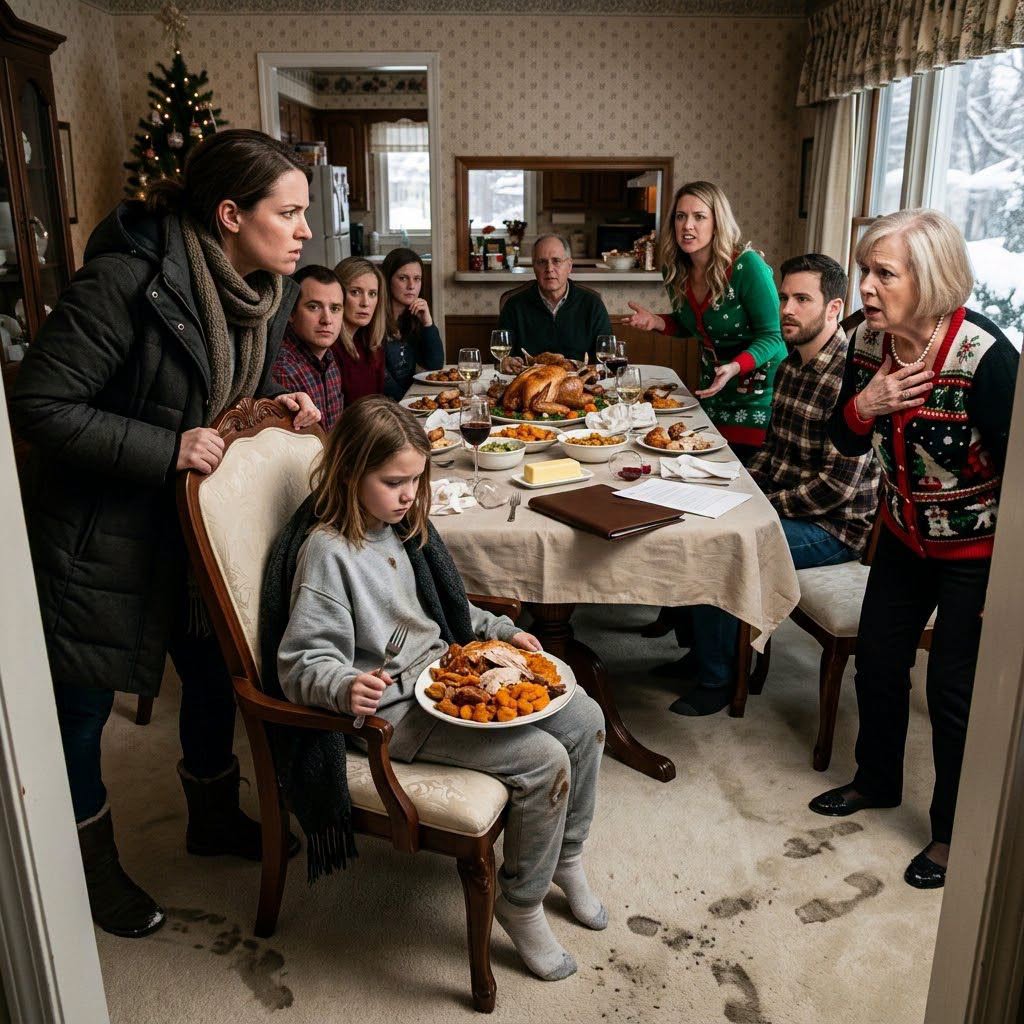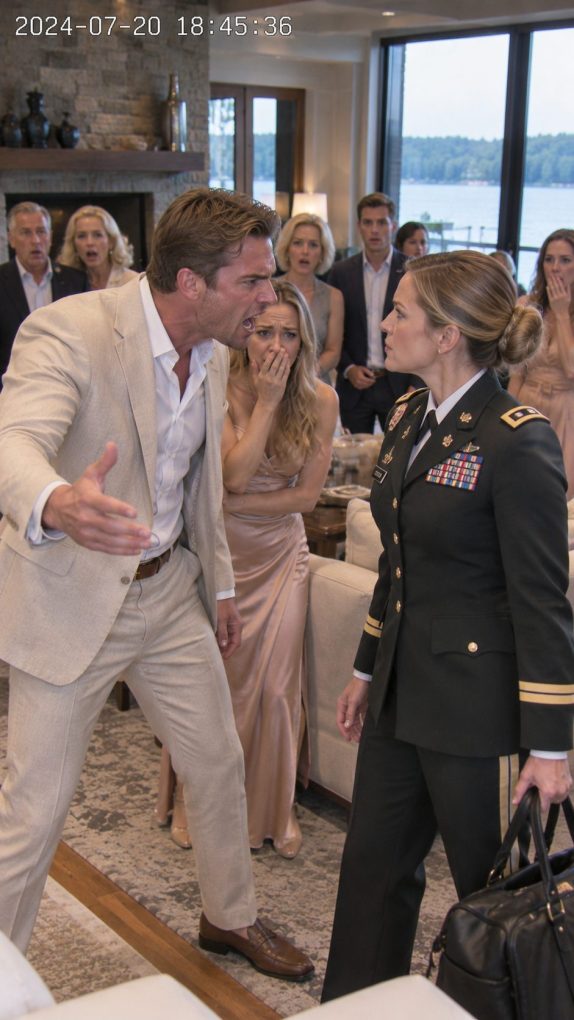
„Verschwinde, du wertloser Parasit!“, schrie mein Schwager mir während unserer Familienfeier direkt ins Gesicht. Er drohte, mich vom Sicherheitsdienst vom Grundstück zerren zu lassen, während zwanzig Verwandte zusahen. Ich schnappte mir leise meine Militärtasche und ging. Zehn Minuten später sprach ich mit einem höheren Offizier über etwas, das mein Schwager unbedingt geheim halten wollte.
Mein Name ist Oberst Emily Carter. Ich bin 45 Jahre alt und habe 23 Jahre in der US-Armee gedient. Nach einem Auslandseinsatz war ich nach Nord-Virginia zurückgekehrt, um den 70. Geburtstag meines Vaters in dem Seehaus zu feiern, das ich sechs Jahre zuvor gekauft hatte.
Meine jüngere Schwester Rachel und ihr Mann Ryan Mitchell wohnten vorübergehend bei uns, da sie ihr Haus renovierten. Ich hatte es erlaubt, weil Rachel zur Familie gehörte. Leider benahm sich Ryan bald, als gehöre ihm das Haus, veranstaltete Partys, wechselte die Schlösser aus und erzählte Verwandten, ich sei nur ein arbeitsloser Soldat, der von Sozialleistungen lebte.
An jenem Samstagnachmittag kam ich mit meiner schwarzen Militärtasche an. Fast zwanzig Verwandte hatten sich im Esszimmer versammelt, als Ryan mir den Weg versperrte. Er wollte wissen, warum ich ohne Erlaubnis erschienen war. Ich erinnerte ihn ruhig daran, dass mein Name im Grundbuch stand.
Ryan lachte laut auf. Er packte meine Reisetasche und warf sie Richtung Tür, wobei einige meiner persönlichen Gegenstände verstreut wurden. Rachel stand hinter ihm und vermied meinen Blick. Mein Vater versuchte einzugreifen, aber Ryan schlug mit der Handfläche auf den Esstisch und befahl allen, sich da rauszuhalten.
„Glaubst du, eine Uniform macht dich wichtig?“, schrie Ryan. „Du bist nichts als ein Parasit, der erwartet, dass dich alle respektieren!“ Er kam näher und drohte, seine Sicherheitsleute zu verständigen, um mich entfernen zu lassen. Einige Verwandte starrten zu Boden, während andere die Konfrontation nervös filmten.
Ich nahm meine Tasche, ohne zu antworten. Bevor ich ging, bemerkte ich mehrere mir unbekannte Fahrzeuge neben der Garage. Zwei Männer in Jacken mit dem Aufdruck „Sentinel Defense Solutions“ luden versiegelte Ausrüstungskisten aus. Ryan stellte sich sofort zwischen mich und die Fenster, als er sah, wohin ich schaute.
Draußen rief ich Generalmajor Thomas Whitaker an, einen hochrangigen Offizier, der eine Überprüfung der Einhaltung der Vorschriften bei Rüstungsaufträgen an mehreren Armeestandorten leitete. Anfang der Woche hatte er mich gebeten, ihm alle glaubwürdigen Bedenken bezüglich Sentinel zu melden, einem Auftragnehmer, gegen den derzeit wegen vertraulicher Ausrüstungsdokumente ermittelt wird.
I explained what I had witnessed, carefully separating facts from suspicions. Whitaker instructed me not to confront anyone or handle the equipment. He said he would refer the information to the appropriate investigative authorities because my brother-in-law had previously worked as a subcontractor for Sentinel.
As I ended the call, my father hurried onto the porch, looking terrified. He whispered that Ryan had been using my garage for months and had forbidden anyone from entering it. Then he handed me an envelope Ryan had accidentally left inside. Across its front were three words that made my stomach tighten: Restricted Inventory Transfer.
I opened the envelope only far enough to recognize the document heading, then stopped. I knew better than to examine materials that might belong to a sensitive investigation. I photographed the envelope’s exterior, placed it in a clean folder, and called the investigator whose contact information General Whitaker had provided.
Within an hour, a representative from the Army Criminal Investigation Division contacted me. He explained that investigators would need to establish whether the equipment had any connection to government property before taking further action. I gave him Ryan’s employment details, the vehicle descriptions, and my father’s account of the garage activity.
Meanwhile, Ryan called me repeatedly. When I finally answered, he demanded that I return immediately and apologize in front of the family. He claimed I had embarrassed him during an important business gathering. I told him the discussion was over and that he needed to remove his unauthorized equipment from my property.
Ryan’s tone changed. He suddenly offered to pay me $20,000 if I allowed him to continue using the garage for another month. When I refused, he threatened to sue me for interfering with his business. I ended the conversation and preserved the messages for investigators.
That evening, Rachel arrived at my temporary apartment crying. She confessed that Ryan had told her he was storing surplus communications equipment purchased through legitimate government auctions. But she had recently discovered invoices showing serial numbers that didn’t match the inventory descriptions. Whenever she questioned him, he became furious.
Rachel also revealed that Ryan had been using my address as the registered storage location for his subcontracting company without my permission. She had discovered the paperwork while searching for mortgage records. Worse, Ryan had instructed her to sign documents confirming that I had authorized the arrangement.
I asked whether she had signed anything. Rachel shook her head, explaining that she had refused and secretly photographed the forms. When she showed me the pictures, I saw a supposed authorization letter bearing my printed name and a signature that resembled mine. I had never signed it.
The following morning, investigators obtained the appropriate legal authorization to examine the garage. I cooperated as the property owner but remained outside while trained personnel documented the contents. They recovered equipment and records that required further verification against government inventory databases. No one suggested that my military rank gave me special authority over the investigation.
Ryan arrived while the examination was underway. His confident expression disappeared when he saw the investigators. He demanded to know who had reported him, then pointed at me and accused me of destroying his career because of a family argument. I remained silent as an investigator directed him away from the garage.
Later that afternoon, my attorney discovered that Ryan had submitted an altered property authorization to support a commercial insurance application. The document falsely suggested I had approved business storage at the house. When investigators compared it with Rachel’s photographs, they identified discrepancies that raised additional question