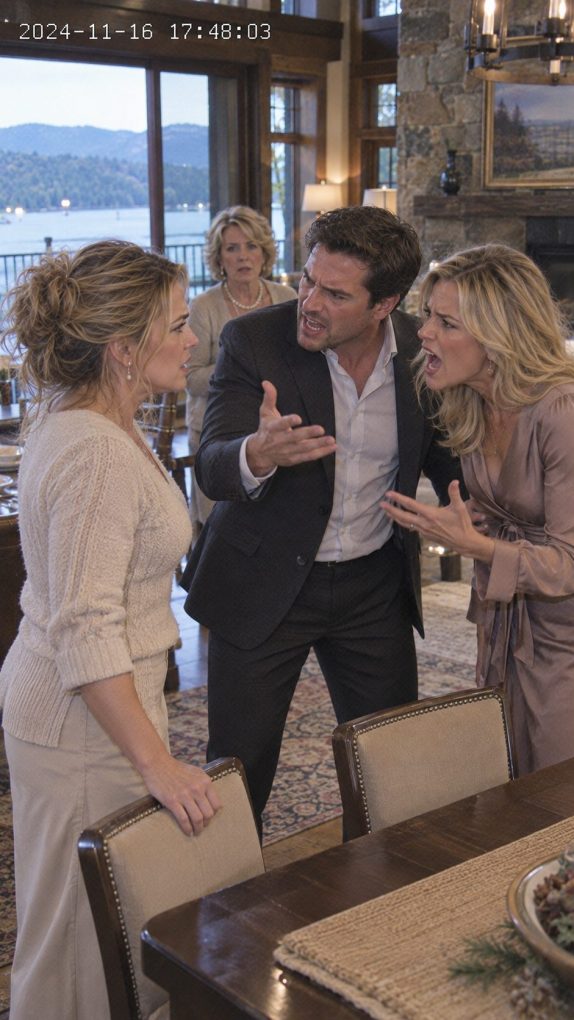
Caleb left the office with the agreement folded in his coat pocket. Vanessa and her mother walked ahead of him. At the curb, he paused and looked back at me, but I didn’t chase after him. I’d done enough chasing for one lifetime.
For three weeks, I heard nothing. I went back to my new routine: morning walks, lunch with old friends, and meetings with the advisers Martin recommended. I placed most of the sale proceeds in conservative investments and set aside enough for taxes and the company’s final obligations. I didn’t buy a mansion or announce gifts. I wanted time to think before money turned every relationship into a negotiation.
Then Caleb emailed. His message was short. He apologized for arriving with plans for my house and for treating the company sale as if it were a family windfall. He said he had been ashamed to contact me after leaving, and the article had made him wonder whether he’d waited too long.
I read it twice. There was no request for money, no mention of the guest suite, and no suggestion that I owed him forgiveness. I replied that I was willing to meet for coffee, just the two of us.
He came alone. We sat outside a café near the courthouse, where neither of us could hide behind a family gathering or an attorney’s conference table. He told me he had left because staying in the business reminded him of his father’s death and made every conversation with me feel like a work meeting.
“I should have told you that instead of disappearing,” he said.
“I should have heard you before every conversation became about keeping the company alive,” I answered. “I was grieving too, and I thought work was the only thing I could control.”
Neither of us was completely right or completely innocent. That was harder to admit than blaming one another, but it was a better place to begin.
We agreed not to discuss money for six months. Caleb and Vanessa would handle their mortgage and her mother’s housing without counting on me. I wouldn’t use the company sale as a test of his affection, and he wouldn’t treat it as proof that I could solve every problem.
Die ersten Besuche waren unangenehm. Wir sprachen über alltägliche Dinge: seinen Job, meinen Garten, den Hund, den er und Vanessa adoptiert hatten. Er hat keinen Kredit beantragt. Ich habe die alte Vereinbarung nicht erwähnt. Vertrauen kehrte in kleinen Momenten zurück, nicht in dramatischen Versprechen.
Vanessa hat eine separate Nachricht geschickt, in der sie sich dafür entschuldigt hat, dass sie angenommen hat, sie könnte mein Zuhause umgestalten. Ich akzeptierte es, aber ich behielt das Haus genau so, wie ich es wollte. Ihre Mutter fand eine Einzimmerwohnung in der Nähe ihrer Kirche und zog mit Hilfe ihrer eigenen Familie ein.
Ein Jahr später besuchte Caleb mich an meinem Geburtstag. Er brachte ein gerahmtes Foto von seinem Vater und mir vor den ersten Laden, den wir eröffnet hatten. Er sagte, er habe es beim Durchsuchen der Kisten gefunden. Ich dankte ihm, und zum ersten Mal seit dreizehn Jahren saßen wir zusammen, ohne darüber zu sprechen, was einer von uns erben könnte.
Schließlich habe ich meinen Nachlassplan mit Martin aktualisiert. Ich traf meine Entscheidungen privat, sorgfältig und ohne jemandem einen Anteil zu versprechen. Mein Sohn war in meinem Leben willkommen, aber die Verkaufserlöse waren nicht der Eintrittspreis.
Das erste Dokument hatte Caleb daran erinnert, dass er sich einst entschieden hatte, die Firma zu verlassen. Die schwierigere Wahrheit war, dass keiner von uns diese dreizehn Jahre umschreiben konnte. Wir konnten nur entscheiden, was wir mit der noch bevorstehenden Zeit tun würden – und ob wir eine Beziehung aufbauen könnten, die nicht vom Geld abhängt.