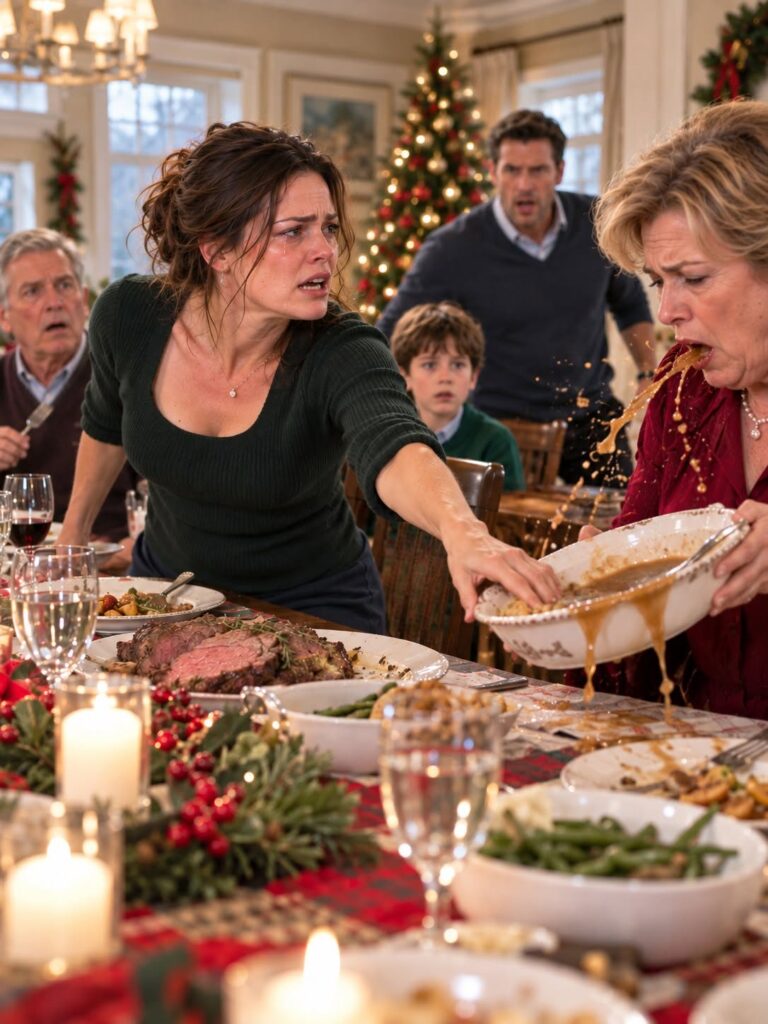
El grito de mi cuñada me detuvo en la puerta. Mi madre, de setenta y seis años, estaba sentada en el suelo de la cocina, con un tazón de plástico lleno de sopa fría. Frente a ella, mi hermano y su esposa comían bistec en una preciosa mesa de comedor que yo había comprado.
Conduje seis horas desde Chicago hasta Indianápolis sin avisarles. Durante nueve años, pagué la hipoteca, los impuestos sobre la propiedad, el seguro y la mayoría de los gastos del hogar porque creía que mi madre estaba bien atendida.
—¿Mamá? —Mi voz se quebró.
Ella levantó la vista, sobresaltada, e inmediatamente intentó ponerse de pie. Le flaquearon las rodillas. Antes de que pudiera alcanzarla, mi cuñada, Vanessa, golpeó la mesa con el tenedor.
“¡Te dije que no te levantaras hasta que hayamos terminado!”
Me apresuré a acercarme y ayudé a mi madre a sentarse en una silla. Le temblaban las manos. Tenía un moretón que se estaba desvaneciendo alrededor de la muñeca y el suéter estaba manchado.
—¿Quién te hizo eso? —susurré.
—Siempre se cae —respondió mi hermano Daniel con indiferencia—. No empieces a hacer acusaciones.
Me giré hacia él. “¿Por qué está comiendo en el suelo?”
Vanessa se cruzó de brazos. “Porque derrama comida por todas partes. Esta es nuestra casa y nosotros ponemos las reglas”.
—¿Tu casa? —repetí—. He pagado más de 280.000 dólares por esta propiedad.
Daniel se rió, sacó una carpeta del cajón de la cocina y la arrojó sobre la mesa. —Entonces deberías haber revisado los papeles. La casa es mía.
Dentro había una escritura de garantía registrada que transfería la propiedad de mi madre a Daniel tres meses antes. Pero algo andaba mal. Supuestamente, mi madre había firmado el documento el 18 de marzo en una notaría del centro de Indianápolis. Ese mismo día, había sido hospitalizada con neumonía.
Observé la firma. El nombre de mi madre estaba escrito con una letra fluida y segura. Su grave artritis le había impedido escribir más que unas pocas cartas temblorosas durante casi dos años.
Mamá, ¿firmaste esto? Ella negó con la cabeza. Daniel intentó alcanzar la carpeta, pero yo la aparté. Entonces se deslizó otro documento. Era un poder notarial que le otorgaba a Daniel el control sobre las finanzas de mi madre. Adjunto había una solicitud de préstamo hipotecario de 190.000 dólares. La prestataria era mi madre, pero la firma que autorizaba el préstamo supuestamente era mía. Miré fijamente a Daniel. Dejó de sonreír.
Daniel agarró la carpeta, pero yo ya había fotografiado todas las páginas. Vanessa se levantó tan bruscamente que su silla rozó el suelo de madera.
—¡No tienes derecho a inmiscuirte en nuestras finanzas! —gritó.
—¿Nuestras finanzas? —respondí—. Usaste la casa de mamá como garantía y falsificaste mi firma.
Daniel claimed I had signed the loan documents electronically. I opened my banking app and showed him my monthly mortgage payments. “I have every receipt, and I have never authorized another loan.”
My mother began crying quietly. She explained that Daniel had taken her identification and bank cards months earlier, promising to organize her medical expenses.
He had also stopped allowing her to answer my calls privately. Whenever I called, he stood beside her, telling her what to say.
Vanessa stepped toward my mother. “You ungrateful old woman! After everything we’ve done for you!”
I positioned myself between them. “Don’t threaten her again.”
Daniel insisted the documents were legitimate and challenged me to prove otherwise. I called the Indianapolis police nonemergency number and reported suspected elder abuse and financial exploitation.
While waiting for officers, I helped Mom pack medication, clothing, and her important papers. Daniel blocked the hallway and demanded the folder back. I kept my phone recording.
When two officers arrived, my mother described her living conditions and said she had never agreed to transfer ownership. The officers documented her bruises and explained that the disputed property documents required further investigation.
I took Mom to a hotel that night. The following morning, we met with an elder-law attorney named Rebecca Collins. Rebecca examined the documents and discovered that the notary commission number belonged to someone whose commission had expired the previous year.
The deed had nevertheless been accepted for recording. Rebecca also uncovered that Daniel had applied for the home-equity loan using forged financial records. Bank statements showed a $187,400 disbursement into a joint account Daniel shared with Vanessa. Most of the money had been transferred to a construction company registered under Vanessa’s maiden name.
The company had been dissolved eighteen months earlier. Then Rebecca discovered that the loan application listed me as a guarantor, supported by fabricated employment records and altered identification. Before we could discuss our next move, the lender’s fraud department called. They had discovered another application for $325,000, and Daniel was attempting to close it that Friday.
Rebecca immediately contacted the lender’s fraud department and submitted copies of my identification, verified signature records, and evidence that Mom had been hospitalized on the supposed signing date.
The lender suspended the pending transaction while its investigators reviewed the application. We also filed identity-theft reports and placed fraud alerts with the credit bureaus.
Daniel called seventeen times that afternoon. I ignored every call until he left a voicemail threatening to sell Mom’s belongings if we didn’t return.
Rebecca preserved the message. She then filed a civil lawsuit challenging the deed and requested an emergency injunction to prevent further transfers or additional borrowing against the property.
Mientras tanto, un investigador de los Servicios de Protección de Adultos entrevistó a la madre en el hotel. Por primera vez, admitió que Vanessa la había estado obligando a dormir en un colchón estrecho en el cuarto de lavandería.
Su habitación se había convertido en el vestidor personal de Vanessa. Daniel la había amenazado con internarla en una residencia de ancianos si se quejaba.
Mamá se cubrió la cara. “Pensé que si me quedaba callada, no tendrías que preocuparte”.
Le tomé la mano. “Nunca debiste haber vivido así”.