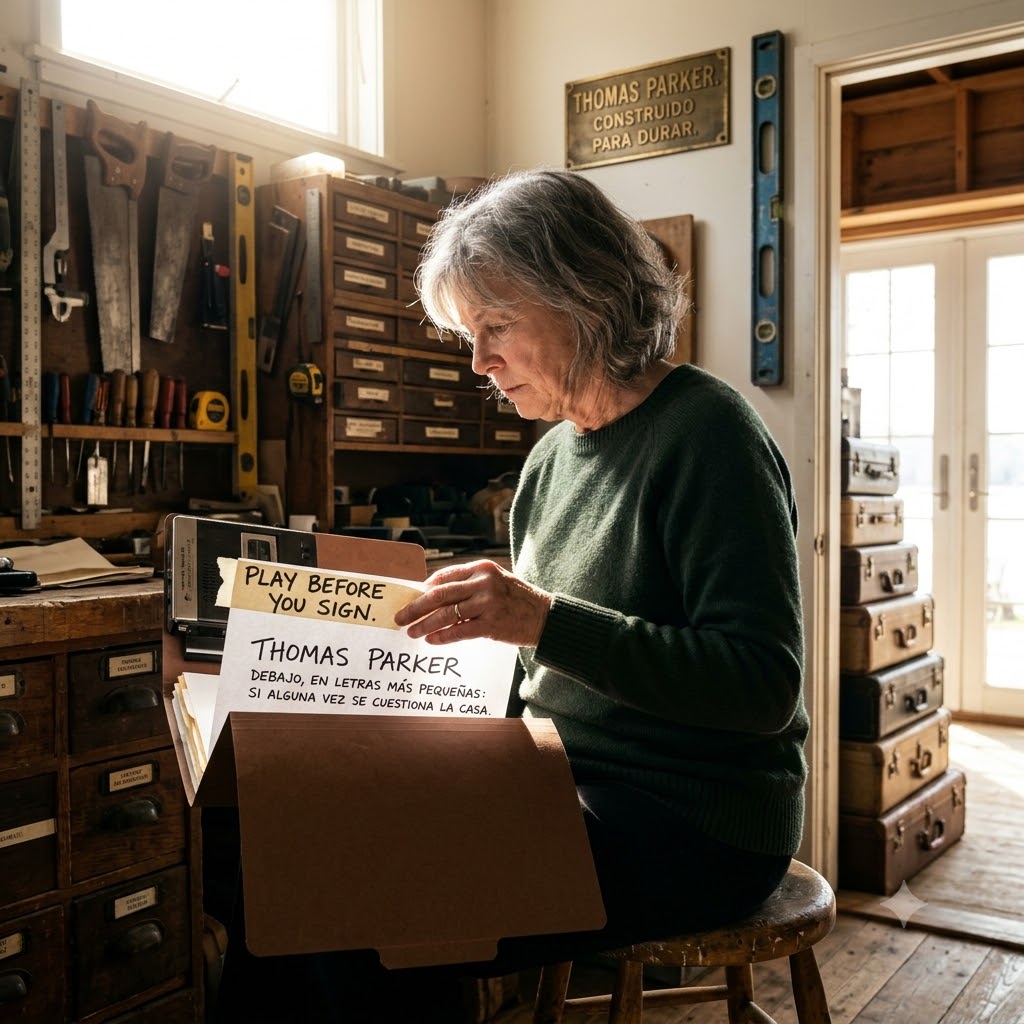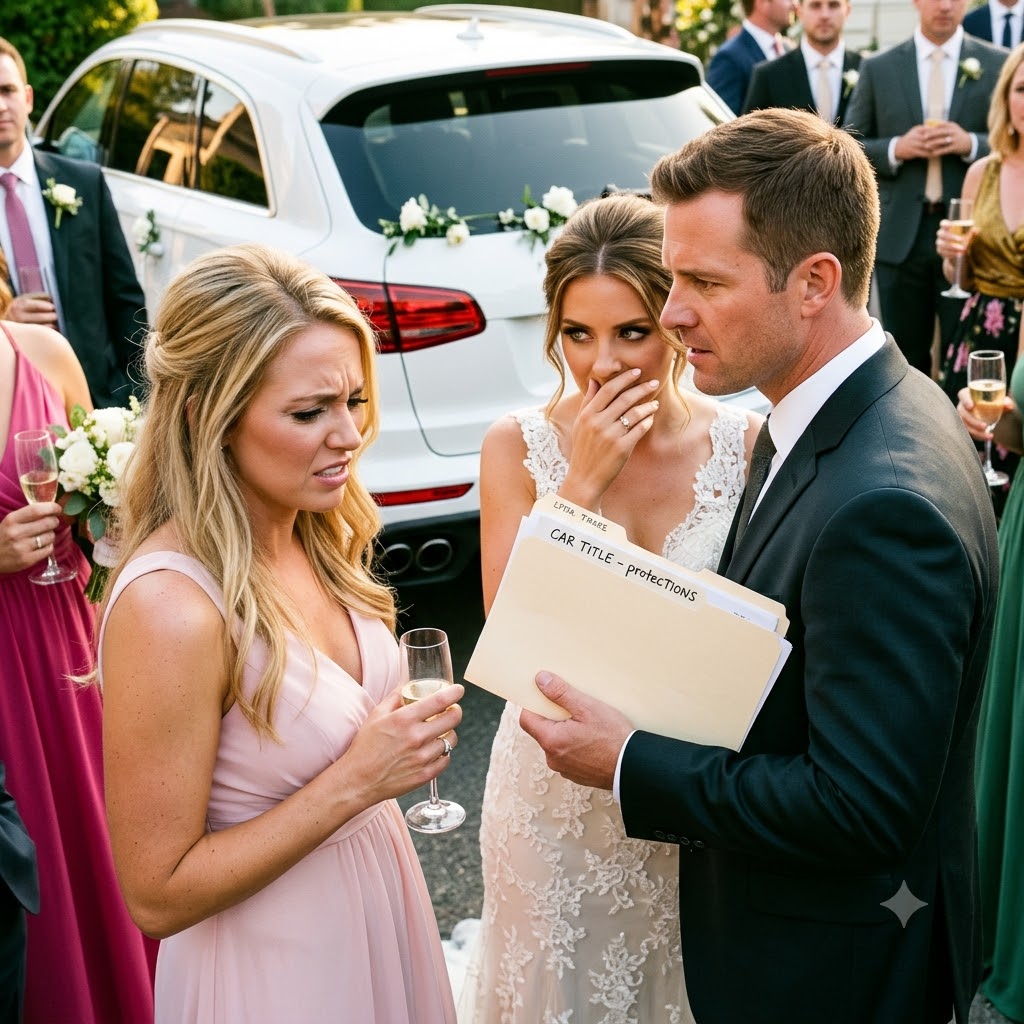
Mi hermana se reía detrás del lugar de la boda, diciéndole a su novio que pronto conduciría el SUV de 78.000 dólares que me habían regalado mis suegros. Ya había convencido a nuestra madre de que debía entregarle el vehículo como regalo de boda. Lo que ella no sabía era que mi marido había gestionado la documentación de la propiedad semanas antes. Cuando le mostró los documentos de título, su emoción se convirtió en pánico absoluto.
Me llamo Amanda Collins y tenía treinta y dos años cuando mi hermana pequeña, Brittany, intentó robarme el regalo más caro que jamás había recibido. Mi marido, Michael, y yo estábamos celebrando nuestra boda en una preciosa finca a las afueras de Nashville, Tennessee, rodeados de casi cien familiares y amigos.
Los padres de Michael nos sorprendieron con un SUV de lujo como regalo de boda. Sabían que mi coche antiguo no era fiable y querían que tuviéramos un transporte fiable cuando finalmente formáramos una familia. El regalo fue generoso, pero nunca imaginé que provocaría tanta hostilidad.
Brittany siempre había competido conmigo. Cuando recibí un ascenso, exigió que nuestros padres la ayudaran a comprar ropa de diseñador. Cuando Michael le propuso matrimonio, ella se quejó de que su novio no podía permitirse un anillo de compromiso igual de caro.
Durante la recepción, Brittany se acercó a nuestra madre y anunció que merecía el SUV porque tenía dos hijos y necesitaba un vehículo más grande. Nuestra madre estuvo de acuerdo, insistiendo en que los recién casados sin hijos no tenían motivo para poseer algo tan caro.
Me negué de inmediato. Brittany gritó que yo era egoísta y acusó a los padres de Michael de humillarla deliberadamente dándome un regalo que no podía permitirse. Varios invitados se volvieron hacia nosotros mientras nuestra madre exigía que entregara las llaves.
Michael se puso a mi lado y me explicó que el vehículo era mío. Brittany se rió y afirmó que los bienes familiares debían compartirse. Luego anunció que ya había contratado el seguro y que planeaba recoger el SUV a la mañana siguiente.
Mi marido sacó tranquilamente una carpeta de su chaqueta. Dentro estaban el contrato de compra, la solicitud de título y la documentación de la donación. El vehículo había sido comprado directamente por sus padres y titulado exclusivamente a mi nombre, sin gravamen ni propiedad compartida.
La expresión de Brittany cambió cuando Michael explicó que no tenía autoridad legal para tomar o vender o registrar el SUV. También reveló que el concesionario había recibido instrucciones de entregar llaves y documentos solo a mí.
Luego Michael nos mostró un mensaje que Brittany había enviado al concesionario, afirmando falsamente que yo le había autorizado a recoger el vehículo. Nuestra madre miraba la pantalla incrédula. Brittany se lanzó a por el teléfono, pero Michael retrocedió. Antes de que nadie pudiera hablar, el gerente del concesionario llamó para informar que alguien había intentado presentar una autorización falsa usando mi nombre.
Michael contestó la llamada en altavoz mientras Brittany se quedaba paralizada junto a nuestra madre. El gerente del concesionario explicó que una mujer había contactado con la oficina de ventas esa misma mañana, alegando que estaba autorizada a recoger el SUV y transferir su matrícula.
The manager had refused because the paperwork did not match the dealership’s records. The authorization contained a signature resembling mine, but the identification information was incomplete. Michael thanked him and requested that all related documents and communications be preserved.
Brittany immediately accused us of setting a trap. She claimed that our mother had promised her the SUV and that she believed the transfer was already approved. I reminded her that neither our mother nor anyone else had authority to give away property belonging to me.
Our mother tried to intervene, insisting that Brittany had simply misunderstood the situation. But Michael showed her the message requesting a transfer of ownership. It clearly stated that I had personally authorized Brittany to receive the vehicle.
I asked Brittany why she had used my name without permission. She refused to answer directly. Instead, she began crying and claimed that her children deserved a better life. Several relatives watched as she accused me of choosing an expensive car over my own family.
Michael calmly explained that the SUV was not available for negotiation. He also reminded Brittany that submitting false ownership documents could have serious consequences. I told her that any further attempt to take the vehicle would be reported to the authorities.
The reception continued, but the atmosphere had changed. Brittany left early with her boyfriend, while our mother remained visibly upset. Michael’s parents approached me privately and apologized for the conflict their gift had unintentionally triggered.
I assured them that they had done nothing wrong. Their generosity had simply exposed my sister’s sense of entitlement. Michael’s father explained that the ownership protections were standard precautions they had requested because the vehicle was intended specifically for me.
The following morning, I contacted the dealership and obtained copies of the disputed authorization. I also filed a report documenting the attempted unauthorized transfer. The officer explained that investigators would determine whether the evidence supported further action.
Three days later, Brittany appeared at our home with our mother. She demanded that I withdraw the report and threatened to tell the entire family that Michael was controlling me financially. Then she revealed the real reason she had been desperate to obtain the SUV: she had already promised it as collateral for a personal loan.
I stared at Brittany, struggling to understand what she had admitted. She explained that she owed nearly $24,000 in credit card debt and had recently borrowed money from a private lender. She had told the lender that she would soon own a valuable SUV and could use it to secure repayment.
Michael asked whether she had provided the lender with any documents identifying the vehicle. Brittany admitted that she had sent photographs of the SUV and a copy of the dealership’s promotional paperwork. Fortunately, she had not obtained the actual title or registration.
Our mother immediately begged us to help Brittany avoid financial disaster. She insisted that my sister had acted out of desperation and should not be punished for trying to provide for her children. I reminded her that Brittany had attempted to claim property she did not own.