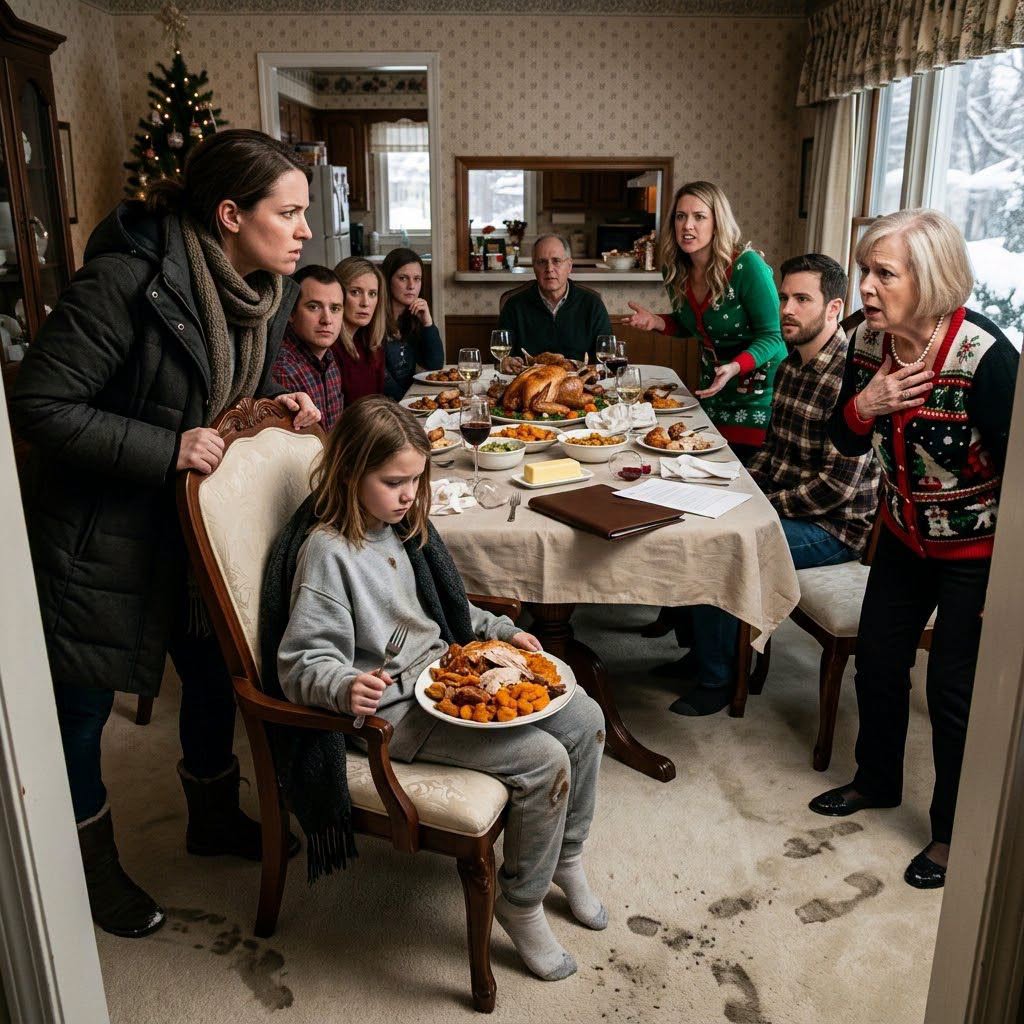
Mi madre me llamó desde mi propia cocina y me dijo: «Deja de ser egoísta. Tu hermana necesita esta casa más que tú».
Estaba a setecientas millas de distancia.
Y mi hermana ya vivía allí.
Agarré el teléfono con tanta fuerza que me dolieron los nudillos.
“¿Qué quieres decir con que está en mi casa?”
Mamá suspiró. —No empieces. Siempre estás viajando por trabajo. Emily tiene dos hijos. La casa está vacía la mitad del tiempo.
“No está vacío. Es mi hogar.”
Entonces oí a mi hermana de fondo.
“Dile que ya he trasladado a los niños a la habitación grande.”
Se me revolvió el estómago.
Me había marchado a Denver para un proyecto de consultoría de seis semanas. Mi madre tenía una llave de repuesto para emergencias. Se suponía que esa llave era para reparar tuberías rotas, activar alarmas o revisar el correo si me retrasaba.
Por lo visto, decidió que “emergencia” significaba trasladar a mi hermana a la casa que yo había estado pagando durante once años.
Terminé la llamada y abrí mi aplicación de seguridad.
La cámara frontal estaba desconectada.
La cámara del garaje estaba desconectada.
Pero una pequeña cámara de interior que tenía en mi oficina seguía grabando porque funcionaba con una batería aparte.
Abrí el feed.
Ahí estaba mamá.
De pie junto a mi escritorio con una pila de papeles.
Emily se sentó en mi silla.
Mamá dijo: “Una vez que se modifique la escritura, podrá quejarse todo lo que quiera. Diremos que quería que los chicos tuvieran estabilidad”.
Emily se rió.
“¿De verdad puede detenerlo?”
Mamá respondió: “No, si presentamos la demanda antes de que ella regrese”.
Dejé de respirar.
No fue un malentendido.
Ese era el plan.
Guardé la grabación inmediatamente y llamé al abogado que había gestionado mi compra años atrás, Daniel Price.
Escuchó sin interrumpir.
Luego me pidió que le enviara el audio, capturas de pantalla y una copia de mi escritura actual.
Diez minutos después, volvió a llamar.
Su voz era completamente diferente.
“Esto no es un desacuerdo familiar.”
Me quedé mirando por la ventana del hotel.
“¿Qué es?”
“Posible fraude, intento de falsificación, ocupación ilegal, y tal vez más, dependiendo de lo que hayan denunciado.”
Entonces hizo una pausa.
“Claire, esto podría convertirse en un delito.”
Reservé el primer vuelo de regreso a casa.
Pero Daniel me dijo que no fuera directamente a la casa.
“Que sigan hablando”, dijo. “Y no les adviertas”.
A la mañana siguiente, mientras esperaba en el aeropuerto, mi teléfono recibió otra alerta de esa cámara oculta.
Mi madre sostenía un bolígrafo.
Emily sostenía lo que parecía ser una copia de mi firma.
Y junto a ellos estaba sentado un notario al que no reconocí.
Para cuando aterrizó mi avión, Daniel ya había consultado el sistema de registro del condado.
Aún no se había transferido nada.
Pero alguien había preparado una escritura de cesión de derechos que mostraba que yo transfería voluntariamente la casa a Emily por diez dólares.
Mi firma estaba ahí.
No era mío.
Daniel me dijo que no contactara a mamá hasta que él tuviera todo listo.
The office camera had recorded nearly forty minutes of conversation. In one clip, Mom coached Emily on how to explain the transfer if anyone asked.
“She travels constantly,” Mom said. “We’ll say she wanted the boys to have stability.”
In another, Emily asked, “What if Claire fights it?”
Mom answered, “She won’t want the scandal.”
That line hurt more than the forgery.
They were counting on my silence.
Daniel contacted the title company, filed a fraud alert on the property, and sent notice that no deed should be accepted without direct verification from me.
Then we went to the house.
Mom opened the door wearing my cardigan.
Emily stood behind her.
Neither looked ashamed.
“You really brought a lawyer?” Mom asked.
Daniel held up a folder.
“You attempted to transfer property using a signature my client denies making.”
Emily crossed her arms. “We’re family.”
Daniel said, “That does not create ownership.”
Mom turned to me.
“Your sister has children. You have a career. Why do you need four bedrooms?”
I looked past her.
My photos had been removed from the hallway.
Emily’s furniture was in my living room.
A framed picture of her family sat where mine used to be.
Then Daniel played the recording.
Mom’s face changed before the first thirty seconds were over.
Emily whispered, “Turn that off.”
He didn’t.
When the recording reached the part about filing before I returned, Daniel stopped it himself.
“This evidence is preserved,” he said. “So are the draft deed and signature sample.”
Mom went pale.
Then the doorbell rang.
A process server was standing outside with papers bearing both their names.
The papers were not instant eviction orders.
Daniel wanted everything done properly.
So did I.
They formally protected my ownership claim, demanded access to my property, and warned Mom and Emily to stop any attempt to alter or record title documents.
The notary became the first person to cooperate.
She said Mom had asked her to notarize a signature she claimed was mine. But when the notary realized I was not physically present, she refused to complete the certification and kept copies of the paperwork.
That decision stopped the deed from being recorded.
The forged signature was reported to authorities. The ownership dispute and possession of the house went through the proper civil process.
Emily and Mom hired attorneys.
Their story changed twice.
First, they claimed I had verbally promised Emily the house.
Then they said the transfer was only supposed to be temporary.
The recording destroyed both explanations.
The court confirmed the property remained entirely mine, and after the required notice period, Emily agreed to move out before enforcement became necessary.
I never blamed her children.
They had done nothing wrong.
Mom called me heartless.
I asked one question.
“If you believed this was fair, why did you need my fake signature?”
She had no answer.