PART 1: The Walking Credit Card
My husband laughed when his sister called me the family’s walking credit card, and that was the night I realized the most expensive thing I had ever paid for was my own humiliation.
Her name was Vanessa, and she made the announcement while raising a glass of wine that I would eventually be expected to pay for.
“Don’t worry about the prices, everyone, because our family brought its own walking credit card.”
The laughter traveled around the restaurant table while I sat there holding my water glass, waiting for my husband to say something.
Daniel laughed louder than anyone.
I remember studying his face, searching for even the smallest sign that he understood how embarrassing those words were.
Instead, he leaned toward his sister and told her she was terrible, although his affectionate grin made it perfectly clear he considered her joke hilarious.
I had been married to Daniel for eleven years, and somewhere along the way, generosity had become an obligation that nobody bothered to thank me for.
I worked long hours in a demanding corporate management position, earned a comfortable salary, and had always believed that sharing my good fortune with family was something to be proud of.
What I had never agreed to was becoming responsible for every extravagant decision his relatives made.
The first family dinner had been innocent enough, or at least that was what I told myself afterward.
Daniel’s parents invited us to a restaurant, his siblings arrived with their spouses, and everyone ordered whatever looked appealing.
When the waiter brought the check, Daniel’s brother suddenly remembered an urgent telephone call, Vanessa disappeared into the restroom, and his parents began discussing the parking situation.
Daniel simply looked at me with an apologetic smile.
“Would you mind getting this one, sweetheart?”
I paid because everyone was watching, and I didn’t want to create an uncomfortable scene.
The second dinner followed almost exactly the same pattern, although the restaurant was more expensive and the relatives considerably less embarrassed.
By the fifth gathering, I could predict the performance before the plates were cleared.
Someone would mention an unexpected expense, another person would pretend to search for a missing wallet, and Daniel would lean toward me with that familiar expression.
The strange thing was that nobody ever appeared concerned about money while ordering.
Vanessa selected premium seafood without glancing at the prices, Daniel’s brother preferred the largest steaks, and his wife had developed a particular affection for imported champagne.
They ordered appetizers for the table without asking, requested expensive desserts after insisting they were full, and sometimes added boxed meals to take home.
Their confidence grew with every dinner I paid for.
At first, they offered weak expressions of gratitude that disappeared almost before I finished signing the receipt.
Eventually, even those vanished.
I began noticing how differently they behaved when I wasn’t present.
At an ordinary lunch that Daniel attended without me, Vanessa complained about the cost of a simple sandwich and insisted everyone split the bill precisely.
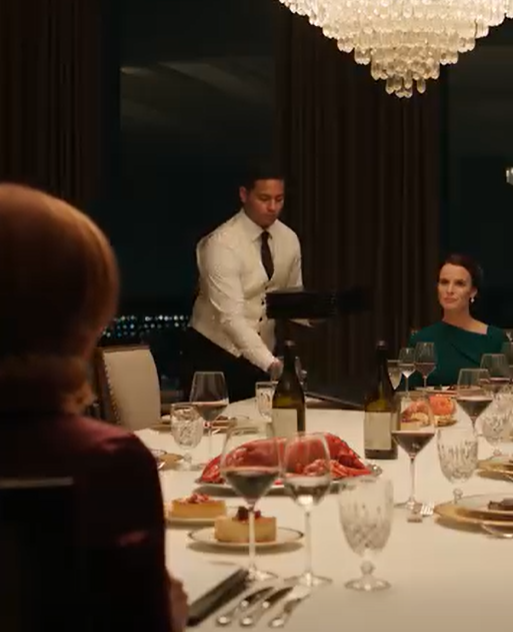
Yet whenever I joined them, she developed an appetite that apparently required lobster, wine, dessert, and something extra for the following morning.
That contradiction bothered me more than the money itself.
They understood the value of a dollar perfectly well when it belonged to them.
They simply behaved as though mine had no value at all.
One evening, after another expensive family dinner, I sat beside Daniel in our parked car and asked him whether he had noticed what was happening.
He sighed before I even finished speaking.
“Please don’t start another argument about money.”
I stared through the windshield at the restaurant entrance, where his relatives were laughing and climbing into their vehicles.
“Your sister just ordered two meals to take home after I paid for everybody’s dinner.”
“She’s got a family to feed.”
“So do other people, Daniel, but they don’t expect someone else to pay for everything.”
He turned toward me with the patient expression he used whenever he believed I was being unreasonable.
“You earn more than most of them, and it’s not like we’re struggling.”
I looked at him.
“That isn’t the point.”
“Then what is the point?”
“The point is that they don’t ask, they don’t offer, and they don’t even pretend to appreciate it anymore.”
Daniel leaned back against the headrest and rubbed his forehead.
“They’re family, and I don’t understand why you insist on making everything so complicated.”
I wanted him to acknowledge that my feelings mattered more than his family’s convenience.
Instead, he started the engine and informed me that he was tired of discussing something so trivial.
I said nothing for the rest of the drive.
That silence became our routine.
Whenever I raised the issue, Daniel accused me of being overly sensitive, and whenever I stopped talking, he treated my silence as agreement.