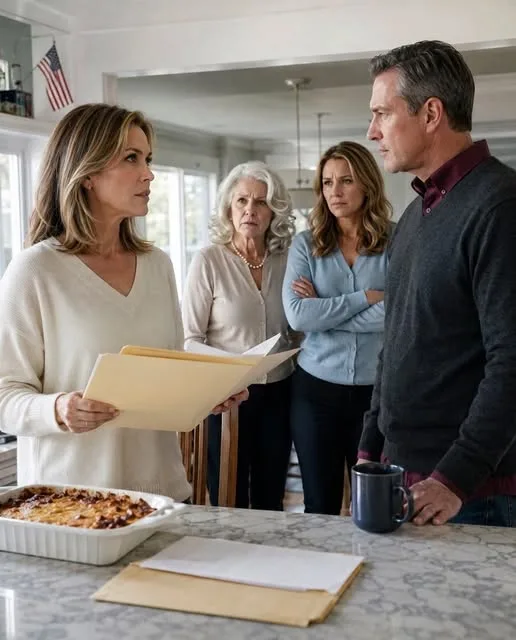
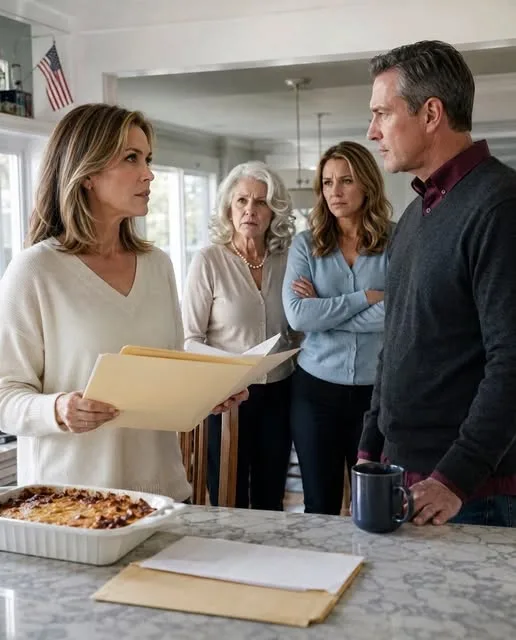
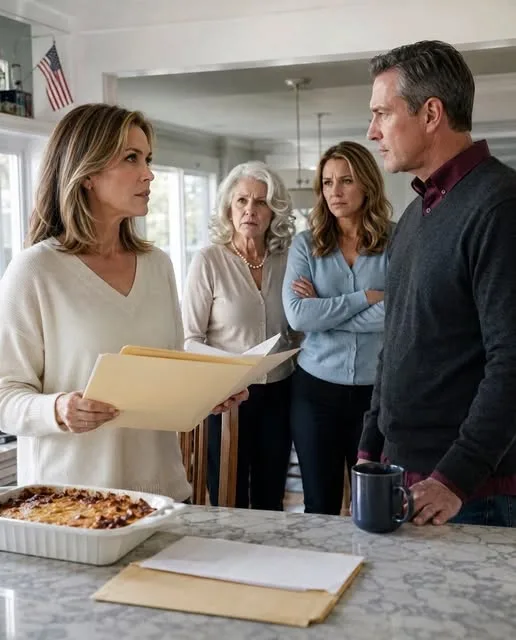
Then Leah opened a message from Derek to his parents, dated two months before our engagement. “Once Allison’s my wife, she won’t want a divorce over paperwork,” he’d written. “We’ll get the guarantee at the family breakfast.” Vivian replied, “Good. Keep the bank appointment off her calendar until after the ceremony.” I could hear his wedding vows again: trust me, always.
Natalie handed me a list of thirty-seven couples booked at The Foundry, many after its lease expired. Their deposits had already been spent. Across the top, Richard had written, “If Allison refuses, make her understand these weddings are her responsibility.” As I read it, my phone buzzed. The venue had posted my wedding photograph with a caption announcing that its “new family partner” would personally guarantee every event. They weren’t just stealing my property. They were preparing to blame me for the people they’d already betrayed.
I wanted to drive straight to The Foundry and tell every couple what Derek’s family had done. Leah stopped me. The venue still had a valid lease, and I couldn’t simply lock the doors because I owned the building. We needed to protect my title without punishing couples who’d paid in good faith. For the first time since the slap, anger became a plan.
Leah challenged the forged deed in court and sought an order preventing new transfers or liens while the case was heard. The lender halted its application. We demanded that the Foundry remove the false announcement implying I’d guaranteed its bookings, and sent a correction to customers through counsel. I supplied the original lease, handwriting samples, and proof I hadn’t appeared before Vivian to sign anything. The hotel’s preserved footage showed Derek striking me at brunch.
Vivian called me heartless. Richard said I was destroying a family business. Derek alternated between apologies and threats, sometimes in the same voicemail. My lawyer handled further contact. I stayed with my sister, reported the harassment, and began the legal process of ending my marriage. I accepted that the marriage I’d imagined was over, even if a divorce wouldn’t become final immediately.
Natalie gave investigators the company’s actual books. The venue had used future deposits to cover old expenses, and Derek’s development venture had drained more cash. Vendors demanded payment. Some weddings went forward under short-term arrangements; others were canceled, with customers seeking refunds through their card issuers or claims against the business. There was no miraculous fund to repay everyone, and I refused to pretend my property could fix their lies.
Eventually, the Whitmores’ venue company entered bankruptcy. Evidence from the original lease and disputed acknowledgment led to a judgment voiding the forged deed and restoring clear title to me. Vivian surrendered her notary commission while authorities investigated the false certification. The financing never closed. Criminal inquiries continued separately, but the attempted transfer no longer threatened the mill.
Natalie lost her job when the business closed. She found bookkeeping work elsewhere and sent me one message: “I should have spoken sooner.” I wrote back, “Yes. But you finally did.” It wasn’t instant forgiveness. It was recognition that telling the truth had cost her the family she knew.
Derek contacted me on our first anniversary. He said we could start over, away from his parents. He still referred to the slap as just “a bad moment.” I kept his message for my lawyer and didn’t reply. Our breakup had given me enough distance to realize that his remorse was always about what he had lost, never about what he had done.
Once the mill’s ownership was settled and the old lease expired, I found a new operator with audited finances and stricter deposit practices. He voluntarily offered discounted appointments to several couples who had fallen on hard times due to the foundry’s closure. On opening day, I touched the brick wall my father had restored, while sunlight streamed through the tall windows.
For twenty-one hours I had worn a ring and called Derek my husband. He thought a slap would teach me obedience; his family believed a wedding would bring my father’s inheritance into their hands. But I didn’t ruin their business by refusing. They had already jeopardized it long before I entered the breakfast room. I simply refused to be dragged down with them.