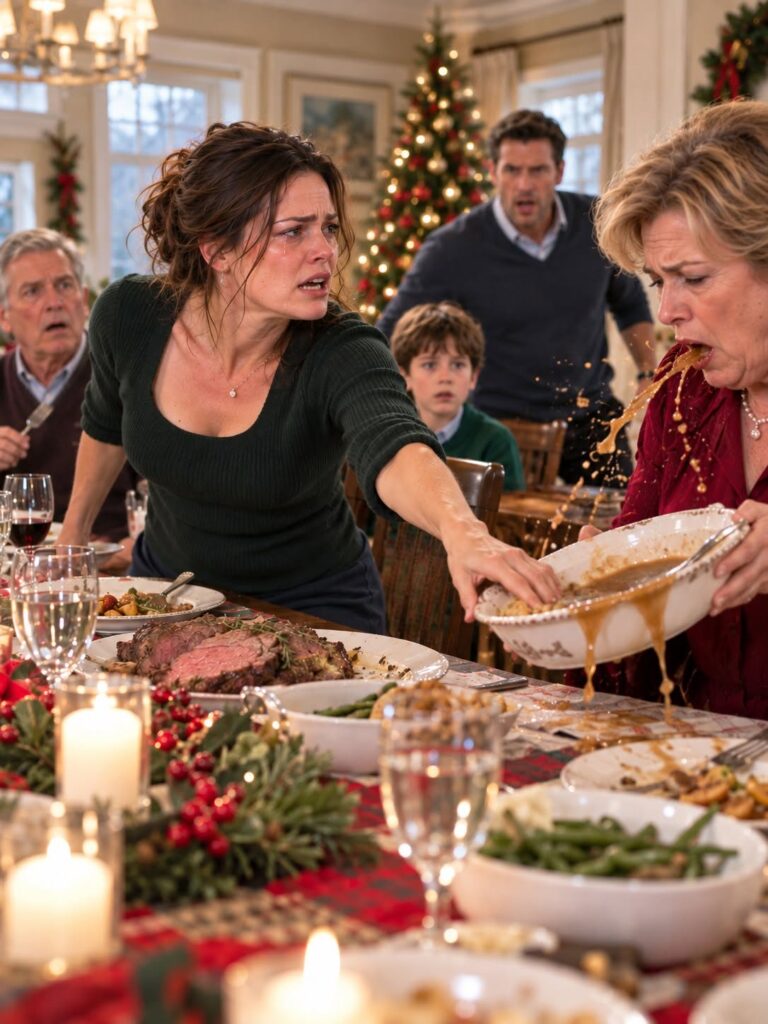
 Mi padre eligió un restaurante de carnes caro en el centro de Chicago para su sexagésimo cumpleaños, invitó a catorce familiares, pidió dos botellas de vino antes de que llegaran todos y pasó la mayor parte de la cena comportándose como si la velada hubiera sido organizada exclusivamente en su honor, lo cual, técnicamente, así fue. Lo que nadie en la mesa sabía era que tres días antes, mi madre me había llamado y me había preguntado si pagaría la cena discretamente como regalo de cumpleaños para él, porque el dinero había escaseado desde que papá se jubiló y ella quería que disfrutara de una noche extravagante sin preocuparse por la cuenta.
Acepté, a pesar de que nuestra relación había estado tensa durante meses.
El problema era mi hermano menor, Ryan.
Ryan tenía treinta y un años, estaba desempleado de nuevo y vivía en un apartamento que papá creía que yo debía pagar porque yo era “el exitoso”. Me negué después de enterarme de que Ryan había rechazado dos trabajos porque ninguno pagaba lo que él creía merecer, y papá interpretó mi negativa como prueba de que me había vuelto egoísta.
A mitad de la cena, volvió a empezar.
—Tu hermano no estaría pasando apuros si la familia aún significara algo para ti —dijo papá en voz lo suficientemente alta como para que todos lo oyeran.
Dejé el tenedor. “Ryan está sentado a tres asientos de aquí. Puedes hablar con él sobre sus propias facturas.”
Ryan miró fijamente su bebida.
Papá se rió. “¿Ves? Esto es lo que el dinero le hace a la gente”.
La abuela Eleanor, la madre de papá, de ochenta y tres años, se inclinó hacia él. «Richard, es tu cumpleaños. Deja de buscar pelea».
Eso le avergonzó más que cualquier cosa que yo pudiera haber dicho.
Cuando nuestro camarero, Marcus, regresó casi al final de la cena y nos preguntó si queríamos que nos sirvieran todo junto, papá me miró directamente.
“Todos con un solo cheque”, dijo, “excepto ella”.
Marcus dudó.
Papá señaló levemente con su copa de vino.
“Ella no está incluida en nuestra cuenta.”
La mesa quedó en silencio.
Mamá susurró: “Richard”.
Pero continuó, disfrutando aparentemente del momento. «A la gente independiente le gusta ganarse la vida por sí misma, ¿verdad, Claire?»
Sentí que algo dentro de mí se calmaba inesperadamente.
—Por supuesto —dije.
Le pedí a Marcus que pusiera mi comida y la cena de la abuela Eleanor en cuentas separadas, porque la abuela vivía con una renta fija y ya me había comentado en voz baja que le preocupaban los precios del restaurante.
Papá frunció el ceño.
“¿Por qué de mamá?”
“Porque la estoy cuidando.”
La factura restante llegó varios minutos después.
Con el vino, los filetes, los aperitivos, los postres y las bebidas que papá había pedido con tanto entusiasmo para todos, la cuenta ascendió a poco más de 1200 dólares antes de la propina.
Lo miró fijamente.
Entonces mamá se giró lentamente hacia mí.
That was when she realized I was no longer reaching for my credit card.
“Claire,” Mom said quietly, “can I speak to you for a second?”
Dad looked between us. “What’s going on?”
I could have embarrassed him immediately, but I did not want the waiter standing there while our family argument became entertainment for an entire restaurant. I paid my check, covered Grandma’s meal, left Marcus a generous tip for dealing with us, and stood to help Grandma with her coat.
Dad finally asked, “Where are you going?”
“Home.”
He laughed nervously. “We haven’t paid yet.”
“You told Marcus I wasn’t part of your tab.”
“You know what I meant.”
“I actually don’t.”
Mom closed her eyes.
That was when Dad looked at her.
“What did you tell her?”
She answered reluctantly. “Claire was going to pay for dinner.”
His expression changed so fast that even Ryan looked uncomfortable.
Dad pushed the leather check folder toward me. “Then pay it.”
I almost laughed.
“You just publicly separated me from the family because I wouldn’t financially support a thirty-one-year-old man who refuses to keep a job.”
“That has nothing to do with this.”
“It has everything to do with this.”
He lowered his voice. “Don’t make a scene.”
Grandma Eleanor, who had been unusually quiet, suddenly said, “Richard, you already made the scene.”
Nobody moved.
Dad insisted his comment had only been about separating my meal because I was always “obsessed with financial boundaries,” while Mom begged me not to ruin his birthday over one stupid remark.
That phrase bothered me.
One stupid remark.
As though the remark had appeared from nowhere rather than months of Dad telling relatives I cared more about money than family while privately expecting me to solve every financial problem.
Then Ryan finally spoke.
“Claire, just pay it and we can all go home.”
I stared at him.
“You knew too?”
He shrugged. “Mom mentioned you were covering dinner.”
“So you ordered the $94 porterhouse knowing I was paying?”
His face reddened.
Dad slammed his palm against the table.
“This is exactly what I mean. You keep score about everything.”
“No,” I said. “Tonight you kept score. You decided who counted as part of your table.”
I picked up my purse and helped Grandma stand.
The last thing I heard before we walked away was Dad demanding that Mom split the bill across three credit cards.
But the real fallout began the next morning, when he sent a family group text accusing me of deliberately humiliating him on his birthday.
And almost everyone chose a side.
By Sunday afternoon, my phone had become a referendum on whether I was cruel.