 PARTE 1: La casa en la que ya no era bienvenido
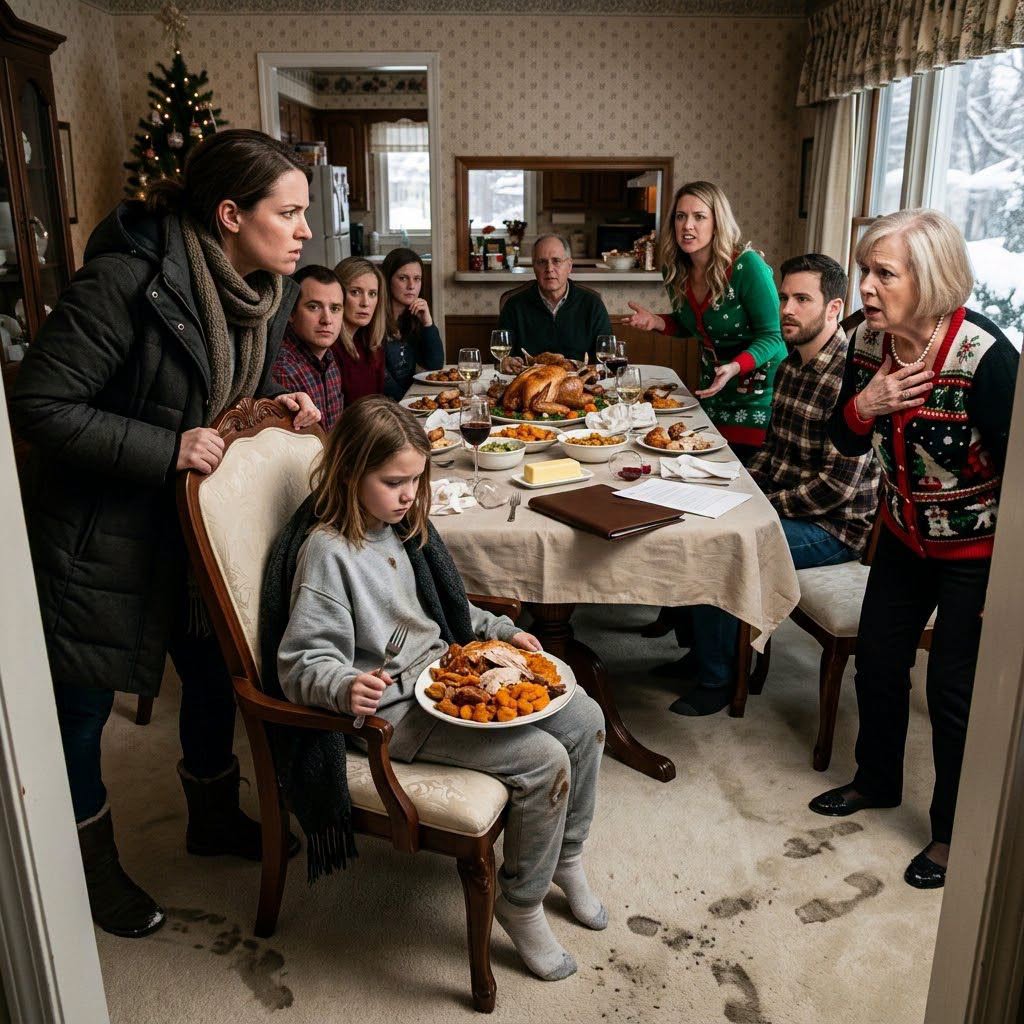
Mi nuera me miró fijamente, rodeada de veintiuna personas dentro de mi propia casa de playa, y anunció que no había sitio para mí.
Durante varios segundos, me quedé parada en el umbral con mi maleta a mis pies, preguntándome si de alguna manera había malinterpretado sus palabras.
—Realmente no hay sitio para ella —repitió Megan, volviéndose hacia mi hijo como si yo fuera una huésped inesperada del hotel.
Tenía setenta años, había enviudado recientemente y me encontraba dentro de la cabaña que mi difunto esposo y yo habíamos construido durante treinta y siete años hasta convertirla en nuestro santuario.
Sin embargo, mi hijo Robert se quedó de pie junto a la isla de la cocina, mirando al suelo en lugar de defender mi derecho a entrar en mi propia casa.
Tan solo veinte minutos antes, conducía por la conocida carretera costera, anhelando una velada llena de recuerdos apacibles.
La luz del sol otoñal se extendía sobre el agua, recordándome innumerables tardes en las que Henry y yo contemplábamos las olas desde nuestra pequeña terraza acristalada.
Regresé un día antes de lo previsto porque mis citas en la ciudad terminaron antes de lo esperado.
Normalmente, habría llamado a Robert antes de llegar, pero nunca imaginé que necesitaría permiso para entrar en una propiedad que legalmente me pertenecía.
La primera señal de alerta apareció cuando entré en nuestro estrecho camino de entrada y descubrí seis vehículos desconocidos apiñados alrededor de la cabaña.
Dos coches estaban aparcados junto a los parterres de flores que Henry mantenía con tanto esmero, mientras que otro bloqueaba el pequeño sendero de grava que conducía a la playa.
Por un momento, me pregunté si algún vecino habría organizado una reunión de emergencia y habría utilizado nuestras plazas de aparcamiento.
Entonces oí a los niños gritar de emoción dentro de la casa.
Me dirigí hacia el porche y vi varias toallas de playa mojadas colgadas en la barandilla de madera que Henry había pintado él mismo.
Desde la ventana del salón, pude ver a adultos desconocidos reunidos alrededor de nuestra mesa del comedor, riendo mientras comían.
Sentí un nudo en el estómago cuando vi que alguien movía el sillón favorito de Henry de su sitio habitual junto a la chimenea.
Esa silla había permanecido intacta desde la noche en que murió mi marido, porque a veces todavía me lo imaginaba sentado allí leyendo.
Abrí la puerta principal y me encontré con una escena que me hizo dudar si había entrado en el edificio equivocado.
Las maletas cubrían el pasillo, los zapatos estaban esparcidos bajo la escalera y una montaña de juguetes infantiles ocupaba la sala de estar.
Un niño pequeño pasó corriendo junto a mí con un cubo de plástico goteando, dejando un rastro de agua de mar en el pulido suelo de madera de Henry.
Someone had placed a portable speaker directly against our framed wedding photograph, and loud music echoed through the rooms.
Three women I had never met were drinking coffee near the kitchen, discussing which bedroom had the best ocean view.
One of them was holding Henry’s chipped navy mug.
I recognized the tiny white mark near its handle immediately, because Henry had accidentally dropped that mug during our twenty-fifth anniversary.
He had refused to replace it, joking that the imperfection made it resemble our marriage because both had survived a few hard knocks.
Watching a stranger casually drink from it felt strangely more painful than seeing the crowded rooms.
Then Megan emerged from the kitchen wearing a white linen outfit and carrying a glass of lemonade.
Her smile disappeared when she recognized me.
“Oh, Margaret, you’re early,” she said, glancing quickly toward the staircase.
I studied her expression, waiting for the warmth or embarrassment I would have expected from someone unexpectedly occupying another person’s home.
Instead, she looked irritated, as though I had interrupted a carefully arranged celebration.
“Where is Robert?” I asked.
She hesitated before calling my son’s name.
Robert appeared from the kitchen carrying a large serving platter, his expression changing immediately when he saw my suitcase.
“Mom, what are you doing here?”
I looked past him toward the strangers occupying my furniture.
“I live here, Robert.”
He rubbed his forehead and glanced toward Megan.
“You weren’t supposed to arrive until tomorrow.”
For a moment, those words hurt more than the chaos surrounding us.
I had raised this man, cared for him through childhood illnesses, helped pay for his education, and comforted him when life disappointed him.
Yet he was speaking to me as though I had broken a promise by returning to my own property.
“Would someone please explain what’s happening?” I asked.
Robert placed the platter on the counter and lowered his voice.
“We invited a few people down for the weekend.”
I looked toward the crowded living room, where another family was carrying luggage upstairs.
“How many people?”
He hesitated.
“Fourteen adults and seven children.”
Twenty-one guests had been invited into my home without anyone asking me.
I felt the blood rushing into my cheeks as I looked around the rooms Henry and I had furnished slowly over decades.
“Where exactly did you expect me to sleep?”
Megan gestured toward the staircase.
“Every bedroom is occupied, and the children are already settled.”
She spoke with the confidence of a hostess explaining an unfortunate scheduling mistake.
Then she said the words that would permanently change our relationship.
“There’s really no room for her.”
I looked at Robert, waiting for him to tell his wife that her behavior was unacceptable.
Instead, he sighed.
“Mom, don’t make this difficult.”
Those six words revealed something I had been refusing to acknowledge for years.
Whenever Robert wanted something, my feelings became the obstacle preventing him from getting it.
When he borrowed money, my questions were unreasonable.
When Megan criticized my cooking, my hurt feelings were an overreaction.
When they canceled family dinners without explanation, I was expected to understand.