That was the one piece of news I held onto.
My home remained mine.
But the damage to my marriage was something no legal document could repair.
Ethan moved out.
Diane stopped contacting me directly.
Richard’s name appeared in several additional records that Rebecca advised me not to discuss publicly while the matter was being reviewed.
I filed for divorce.
It was not a decision I made lightly.
There were nights when I remembered the good moments.
Ethan carrying groceries upstairs.
Ethan making me laugh when I was exhausted.
Ethan holding my hand at my grandmother’s funeral.
Those memories didn’t disappear simply because I had discovered the truth.
But they no longer changed the truth.
One afternoon, Noah came into the kitchen while I was preparing dinner.
He had recovered from the slap, although I knew the memory still bothered him.
He looked at the chicken on the counter.
Then at me.
“Can I ask something?”
“Of course.”
“Are we having chicken?”
I smiled.
“Yes.”
He hesitated.
“Can I take the biggest piece?”
I stopped cutting vegetables.
Then I looked at him.
“Take two.”
He laughed.
“Seriously?”
“Seriously.”
He opened the oven and looked inside.
“Claire?”
“Yes?”
“Do you think Dad would have done all this if he hadn’t married you?”
I considered the question.
“I don’t know.”
“Do you think he would have treated you differently if the house had been his?”
I looked at the kitchen.
The curtains I had chosen were still hanging beside the window.
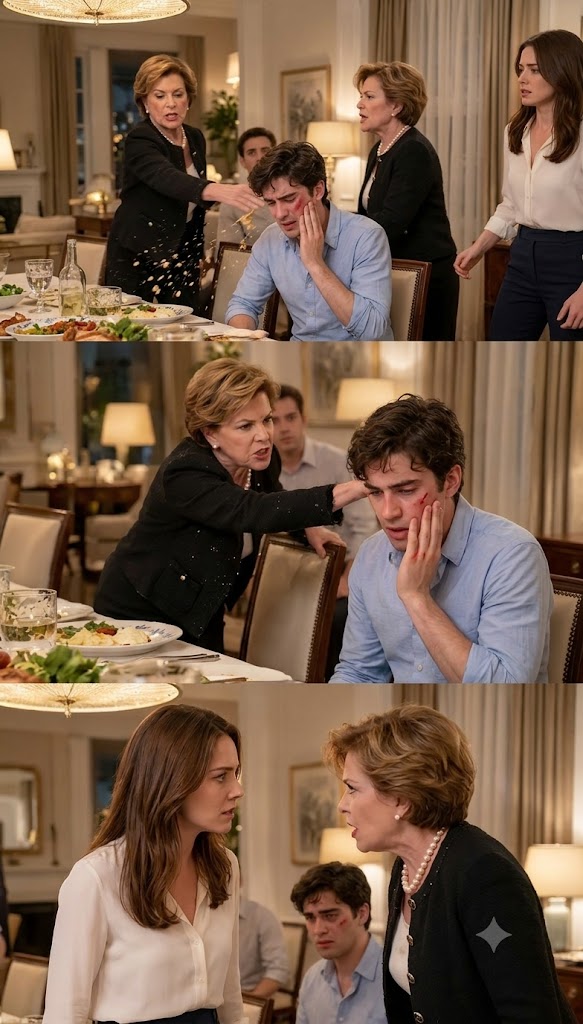
The table was still the same one where Diane had slapped him.
The townhouse was quiet.
Safe.
Mine.
“I think,” I said slowly, “that people reveal who they are when they believe someone trusts them enough not to look too closely.”
Noah nodded.
Then he reached for a plate.
I placed two pieces of chicken on it.
He smiled.
And for the first time in weeks, dinner felt normal again.
Three months later, I received a letter from Rebecca.
The review of the property-related applications had progressed.
The disputed authorization documents had been formally challenged, and the lenders had confirmed that neither application resulted in a completed secured loan against my townhouse.
The financial records had also helped clarify the extent of Ethan’s personal debts and Diane’s business liabilities.
There would still be legal matters to resolve.
The divorce proceedings were ongoing.
But the most important thing was that the property remained protected.
I read the letter twice.
Then I placed it inside the folder marked PROPERTY.
I no longer kept the documents in the kitchen cabinet.
They were stored in a secure location, with copies held by my attorney.
I had learned something important.
Trust didn’t mean handing someone the keys to every part of your life.
And love didn’t require me to ignore warning signs.
A week later, Ethan sent me one final message.
I know you may never forgive me. I hope one day you remember the good things we had. I never wanted to hurt you.
I read it.
Then I put my phone down.
I didn’t reply.
Because forgiveness was not something he could demand simply because he regretted being caught.
And remembering the good things did not mean pretending the bad things hadn’t happened.
That evening, Noah and I sat on the back patio.
He was talking about his classes, his friends, and a summer internship he wanted to apply for.
I listened.
Really listened.
For months, I had been so busy keeping the peace that I had forgotten how peaceful ordinary life could feel.
No screaming.
No criticism.
No one telling me how to arrange my kitchen.
No one making my brother apologize for being hungry.
Just the two of us, sharing dinner.
At one point, Noah looked at me and said:
“Claire, thank you for standing up for me.”
I smiled.
“You never should have needed me to.”
He shook his head.
“No. But you did.”
I reached across the table and squeezed his hand.
“You’re my brother. I will always stand up for you.”
He smiled.
Then he looked at the empty chair across from us.
“Do you think Diane will ever apologize?”
I thought about the question.
I remembered her expression when I told her the house was mine.
I remembered her anger when she realized the security cameras had recorded the slap.
I remembered her tears when she discovered that Ethan had lied to her too.
Perhaps one day she would apologize.
Perhaps she would never admit she had done anything wrong.
But I no longer needed her approval.
“Noah,” I said, “some people only apologize when they realize they’ve lost control. That doesn’t mean they’ve changed.”
He nodded.
We continued eating.
And as the evening light settled over the townhouse, I realized something.