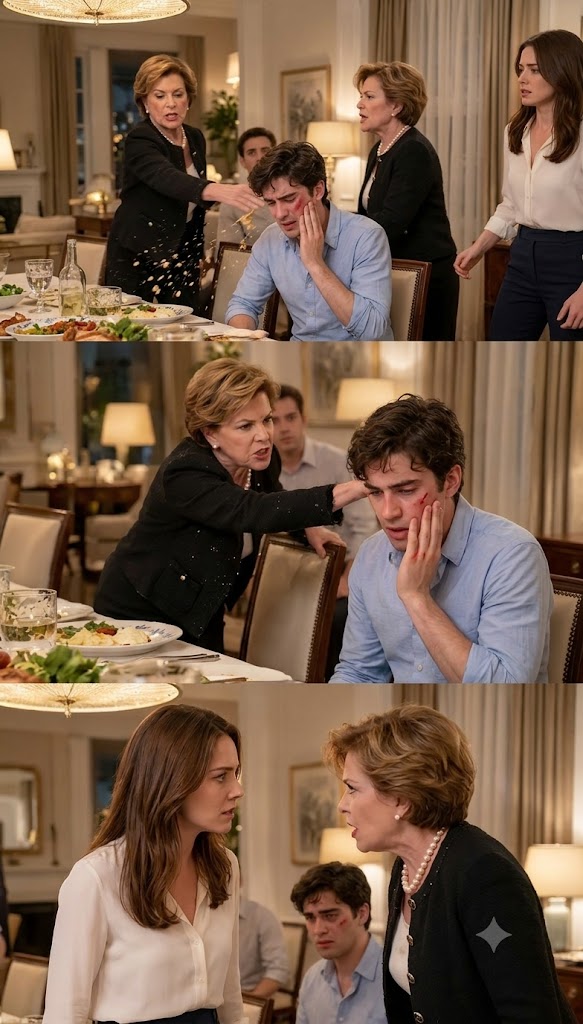
“Why are you so cold, Claire?” Mom would weep, dabbing her eyes with tissue. “You have such a hard heart. Your sister struggles every day just to find the will to get out of bed, and all you care about is money. Money is just paper. Family is forever.”
I became their ghost employee. I was the property manager, the primary breadwinner, the unpaid maid, and the emotional buffer. When Madison threw a plate across the kitchen because her iced matcha was made with dairy milk instead of almond milk, I was the one who swept up the porcelain shards while Dad rubbed Madison’s back and Mom whispered, *Shh, darling, we know you’re sensitive.*
I stayed because they had convinced me that without me, they would drown.
What I didn’t realize until that cold night in October was that they were never drowning. They were floating on an ornate raft made entirely of my bones.
***
Chapter 3 – The Architecture of an Alibi
By noon on the day after my escape, I was parked in the gravel lot of a roadside diner off Route 64 in West Virginia. The air was crisp, pungent with the smell of wet fallen leaves and diesel exhaust. Inside the car, the silence was vast, terrifying, and sweeter than anything I had ever tasted.
I switched on a burner phone I had purchased with cash at a truck stop two hours prior.
I needed to see the carnage. Not out of malice, but out of forensic curiosity. I wanted to understand how long the illusion of their functional existence could survive the removal of its engine.
I logged into my online banking portal.
For four years, my primary checking account had been tied to the “Vance Family Overdraft Protection.” It was a neat little trick Dad had set up through our local credit union when I was nineteen. If his account hit zero, the bank automatically pulled funds from my secondary checking to prevent bounced checks. He had sworn it was an emergency fail-safe. In reality, it was a silent siphon.
Two weeks before my birthday, anticipating this exact departure, I had walked into the branch in person, presented my ID, closed that secondary account entirely, and severed all legal ties between my personal finances and my parents’ accounts. I transferred my life savings—twenty-four thousand dollars, scraped together penny by penny from freelance software debugging gigs they knew nothing about—into a high-yield account at an exclusively digital bank based in Boston.
The notifications on my burner phone told the story with mathematical precision.
*10:14 AM: Transaction DECLINED – Whole Foods Market ($142.87)*
*10:18 AM: Transaction DECLINED – Whole Foods Market ($142.87)*
*10:22 AM: Transaction DECLINED – Whole Foods Market ($18.50)*
I could picture Eleanor at the register. The heavy sterling silver bracelets clinking against her wrist, the impatient tap of her manicured French-tip nails against the plastic payment terminal. She would be sighing loudly, looking at the cashier with that condescending smile that said, *Our banker must be having an IT glitch.*
Then came the messages to my primary phone—which I had left turned on in the glove compartment, connected to the hotspot, observing through a mirrored screen.
Mom (10:35 AM): *Claire! Where are you? Why did the debit card bounce? I’m standing in front of twenty people at the register. Madison is having a sugar crash in the passenger seat! Transfer five hundred dollars immediately!*
Mom (10:48 AM): *Claire Elizabeth Vance! Pick up this phone right now!*
Dad (11:12 AM): *Claire. Your mother is hysterical. The electric company just sent a shut-off notice for thirty-seven dollars past due, and the grocery card was declined. Why aren’t you answering? Did you overdraw the account again with your shopping? Call me.*
*Did you overdraw the account again with your shopping.*
I sat in the front seat of my Civic, holding a warm cup of black diner coffee, and laughed aloud. It was a dry, scraping laugh that startled a crow sitting on a fencepost twenty feet away.
My shopping. In the past three years, my wardrobe consisted of five pairs of black slacks from Target, three white blouses, and one single, glorious blue dress that I had worn for exactly twenty minutes before taking it off in the dark.
I looked into the history of the house, reversing the tape in my mind, searching for when the lie had truly solidified.
It had happened when I was sixteen. Madison had auditioned for the lead in the community theater production of *The Secret Garden*. She didn’t get it. She was cast in the ensemble. She spent forty-eight hours locked in the master bedroom, refusing food, while Eleanor walked through the halls like a mourner at a wake.
I had come home from my debate tournament—where our two-person team had won state finals. I had walked through the front door holding a three-foot golden trophy, my chest bursting with pride, expecting a hug, a high-five, anything.
David had stepped into the foyer, held a finger to his lips, and pointed toward the ceiling.
“Keep it down, Claire,” he had whispered harshly. “Your sister is experiencing a severe depressive episode. Take that thing up to your room and don’t make a racket. And don’t mention theater or acting at dinner. It’ll trigger her.”
I had walked up the stairs, set the heavy golden trophy on my dresser, and sat on the floor. Within an hour, Eleanor had come into my room—not to congratulate me, but to take the trophy.