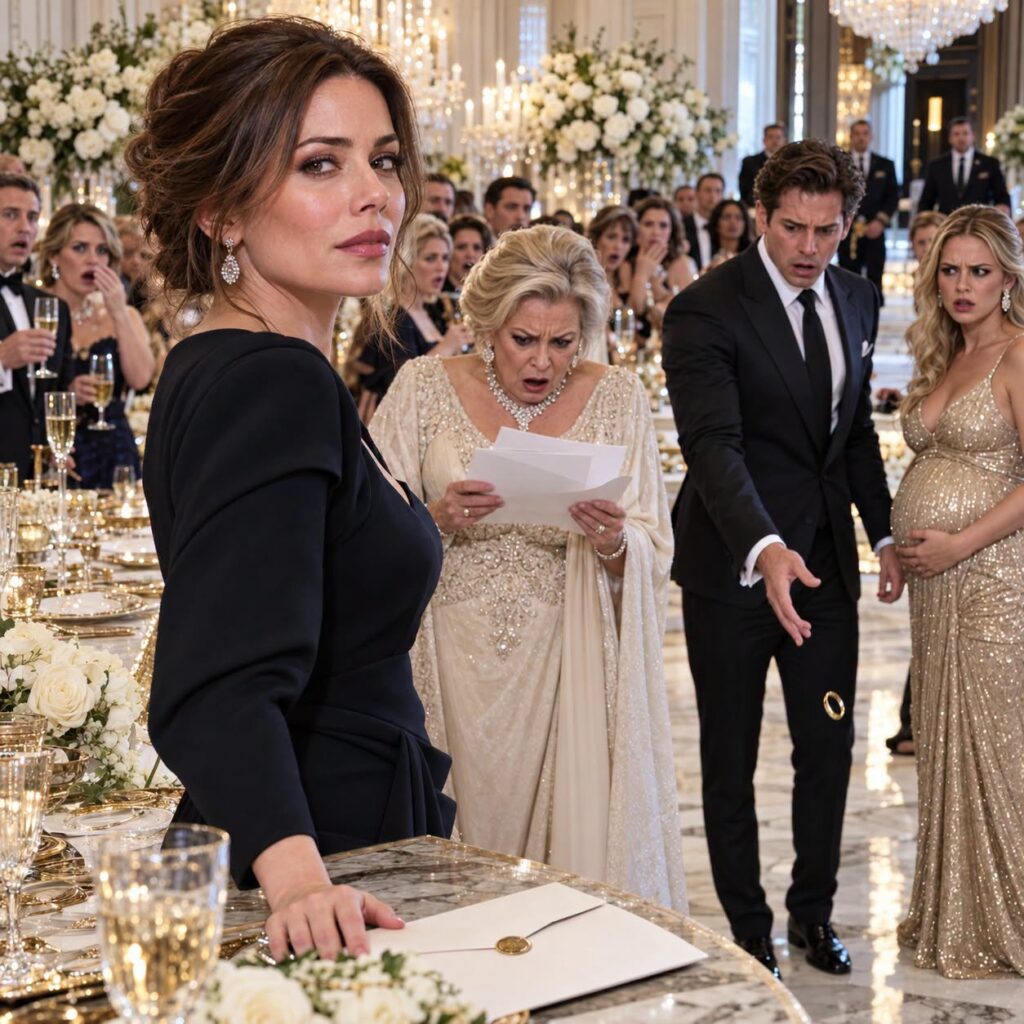
When people marry into generational wealth, they assume the wealth is real. For my first three years with Ethan, I had assumed it too. Ethan drove a vintage Aston Martin; Margaret wore heirlooms reset by Harry Winston; the staff at the house included a butler, two housekeepers, a groundskeeper, and a chef.
It wasn’t until my second miscarriage—when I was lying in a hospital bed in Presbyterian and the billing department informed me that Ethan’s corporate health insurance policy had lapsed due to non-payment—that I began to look behind the wainscoting.
What I found was a horror story of modern aristocratic decay.
The Whitmore fortune hadn’t existed since the 1990s. The family had survived by running a complex shell game: borrowing against the physical assets of the estate to fund the speculative operations of Whitmore Capital, then using the firm’s incoming investor capital to pay the interest on the estate’s mortgages. When the firm’s investments soured, Ethan had quietly approached the private debt market.
He didn’t know that the private debt fund that bought his bad paper was an affiliate of the Vance Trust.
He didn’t know because he had never bothered to learn my family’s real history. To Ethan and Margaret, I was Claire Miller—an orphan from a respectable but unremarkable family in Connecticut, whose modest inheritance they assumed had been absorbed into their household expenses. They had never realized that the Miller name was only one branch of the Vance family tree. My grandfather had deliberately separated his industrial holdings from the social registries to keep our family out of the tabloids that Margaret read like scripture.
They had treated me like a stray they had taken in out of charity.
The front door of the main house creaked open.
Margaret Whitmore stepped onto the porch. She had not changed her clothes from the night before. The cream silk gown was rumpled, stained with champagne along the hem, and her makeup was smeared beneath her eyes in dark, bruised rings. She looked seventy-five years old.
Behind her walked Ethan. He was wearing jeans and a wrinkled oxford shirt, his hair uncombed, his eyes sunken. He was carrying two leather weekend bags.
“The trucks are here, Margaret,” I said, walking toward the base of the stairs.
Margaret looked at the moving vans, then at the two uniformed deputies who had stepped out of their vehicles and were standing with their thumbs tucked into their belts.
“You won’t get away with this,” Margaret rasped. Her voice was shredded from a night of screaming into the telephone. “I will take this to the state supreme court. I will expose you for what you are. A manipulative, deceitful little snake who wormed her way into my son’s life to steal his birthright!”
“His birthright?” I stopped five feet from her. “Margaret, Ethan’s birthright was eight million dollars in unsecured debt, an estate with three tax liens, and a company under federal investigation for securities fraud.”
Ethan dropped the weekend bags. They hit the gravel with a soft thud.
“What did you say?” Ethan whispered.
Julian Vance stepped forward, opening the black folder. “At eight o’clock this morning, Vance Holdings delivered a complete dossier of Whitmore Capital’s accounting irregularities to the Securities and Exchange Commission and the United States Attorney for the Southern District of New York. The unauthorized transfer of client funds into offshore accounts to cover margin calls in November was particularly poorly disguised, Ethan. Your chief financial officer, Mr. Aris, signed a cooperation agreement with our attorneys three weeks ago.”
Ethan fell against the white balustrade of the porch. His mouth opened, his breathing shallow and rapid. “Aris? Aris wouldn’t do that. He’s been with my father for twenty years.”
“Aris has a daughter starting college at Stanford,” Julian said evenly. “He preferred that she visit him at home rather than at the federal correctional facility in Otisville.”
“You… you destroyed the company?” Ethan’s voice was barely a squeak. “You destroyed my father’s life’s work?”
“Your father destroyed it, Ethan. You just buried the corpse,” I told him. “And you tried to use me to pay for the shovel.”
I signaled to Eleanor Rigby, the appraiser. She nodded and waved her hand at the six movers who were waiting near the back of the first truck.
“Wait!” Margaret shrieked, throwing herself in front of the front door. “You cannot touch the furnishings! The portraits! The silver! That silver was presented to Governor Whitmore in 1842!”
“The 1842 silver was sold at Sotheby’s four years ago, Margaret,” I said calmly. “I know, because I bought it through an anonymous agent. It’s been sitting in a climate-controlled vault in Delaware for forty-eight months. The set you’ve been using for your dinner parties is electroplated nickel that I bought from an estate sale in New Jersey so you wouldn’t notice the difference.”