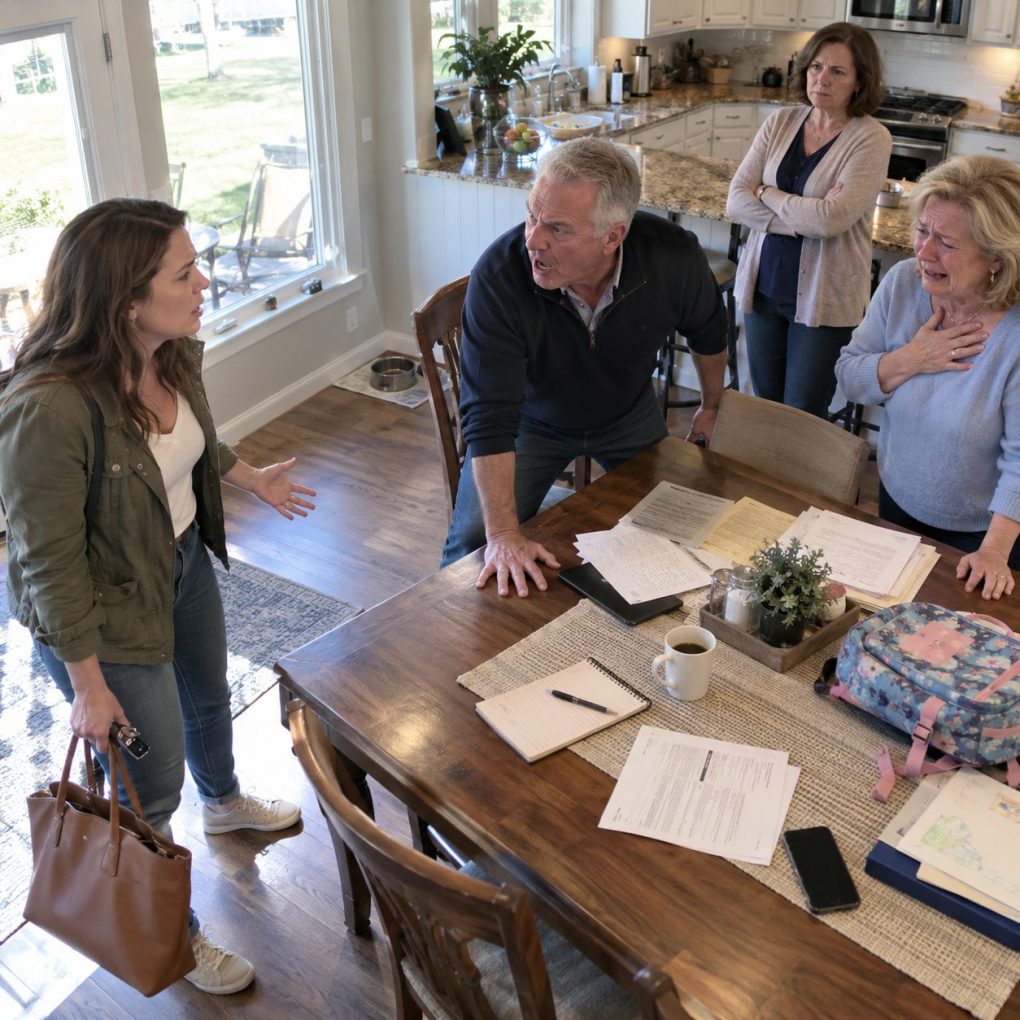
El día que dije: «No voy a criar al hijo de mi hermano», mi madre me miró como si hubiera traicionado a alguien que ya había muerto. Mi hermano Daniel había fallecido doce días antes en un accidente de tráfico cerca de Denver, y su hija de siete años, Sophie, seguía despertándose preguntando cuándo volvería su padre a casa.
Todos ya habían decidido qué pasaría después antes de siquiera preguntarme. Tenía treinta y cuatro años, era soltero, tenía una buena situación económica y era el único hermano de Daniel, así que mis padres asumieron que Sophie simplemente se mudaría a mi apartamento y yo reorganizaría el resto de mi vida en torno a ella.
—La quiero —dije con cuidado—. Siempre seré su tía y la ayudaré. Pero no me convertiré en su madre.
El rostro de mi madre se endureció. “Daniel está muerto, Sarah, y aun así sigues pensando en ti misma”.
La frase me impactó más de lo que esperaba.
Mi padre golpeó la mesa de la cocina con la palma de la mano. Mi tía me llamó egoísta, mientras mi madre lloraba y preguntaba qué clase de mujer podía mirar a una niña huérfana y decirle que no. A nadie parecía interesarle que yo viajaba constantemente por trabajo, vivía en un apartamento de una habitación, nunca había querido tener hijos y creía que Sophie merecía un tutor que realmente quisiera criarla.
Finalmente, mis padres solicitaron la tutela y yo los apoyé. Durante los siguientes once meses, pagué la ropa de Sophie, los útiles escolares, el campamento de verano, dos facturas del dentista y la comida cada vez que mis padres decían que tenían dificultades económicas.
Entonces, “ayudar” dejó de ser voluntario.
Mi madre empezó a enviarme por correo electrónico hojas de cálculo tituladas ” La parte de Sophie “, donde detallaba la mitad del aumento de la hipoteca, los servicios públicos, la comida, la gasolina, las actividades extracurriculares e incluso parte de unas vacaciones familiares que, según decían, eran “para la recuperación emocional de Sophie”. Según sus cálculos, a finales de año les debía supuestamente 48.360 dólares.
Me reí la primera vez que vi el número.
Entonces mi madre escribió: “Elegiste no criarla. Esto es lo mínimo que puedes hacer”.
Dejé de enviarle dinero en efectivo tras descubrir que Sophie ya recibía la prestación de sobreviviente de la Seguridad Social y que tenía una cuenta de custodia que Daniel había creado años atrás. Seguí comprándole cosas directamente, pero me negué a mantener a mis padres.
Tres meses después, un agente judicial entró en mi oficina.
Mis padres me habían demandado.
En la primera audiencia, su abogado le dijo al juez que yo había prometido mantener económicamente a Sophie si mis padres aceptaban la tutela, y que luego “abandonó esa obligación” cuando surgieron tensiones familiares.
No tenía abogado.
Al otro lado de la sala del tribunal, mi madre ni siquiera me miraba.
When the judge finally said, “Ms. Mitchell, you may respond,” I stood with a folder in my hands.
“Thank you, Your Honor,” I said. “I’d like to begin with the part of my messages they removed.”
Their attorney had submitted screenshots showing me writing, “I’ll help with Sophie’s expenses.” What he did not submit was the rest of the message: “when I can. I am not agreeing to a fixed monthly payment, and I am not assuming permanent financial responsibility.” My mother’s reply underneath was still there.
Anything helps. We understand.
The judge read the complete thread twice.
Then she asked my parents’ attorney whether he had been given the entire conversation.
He glanced toward my parents. “No, Your Honor.”
I placed my bank records on the clerk’s desk. In eleven months, I had voluntarily spent more than $14,000 on Sophie, and nearly every transfer had been followed by messages from my mother saying things like, “Thank you for helping,” or, “This means a lot.”
Not once did she call those payments part of a debt.
Then I showed the spreadsheets.
My parents had taken their household costs, chosen percentages they believed I should pay, and retroactively transformed ordinary expenses into money I supposedly owed. One line charged me $6,200 for “housing contribution” because they had converted their home office into Sophie’s bedroom.
My father suddenly spoke. “We wouldn’t have had to change our lives if she had done what she was supposed to do.”
The judge stopped him immediately.
I looked at him anyway.
“What exactly was I supposed to do, Dad? Become a mother because everyone else decided my life was easier to sacrifice?”
His face went red.
Their attorney argued that my conduct still showed an implied commitment, but then the judge asked why I had stopped making cash payments.
That was the question I had been waiting for.
I explained that I had learned Sophie was receiving survivor benefits and that Daniel had left money in a custodial savings account. I was not accusing my parents of misusing either source, but for nearly a year they had repeatedly told me Sophie had “nothing” while demanding increasingly larger payments from me.
My mother stared down at the table.
I reached into the last section of my folder.
“There’s one more thing.”
Six months earlier, my mother had accidentally copied me on an email she sent to my aunt. I had never confronted her about it because, until that morning, I still wanted to believe anger had made my family say things they did not truly mean.
The judge gave me permission to read it.
My mother whispered urgently to her attorney.
I unfolded the page.
The first sentence made my hands shake.
Don’t tell Sarah what Sophie’s survivor checks actually cover. If she knows we’re managing, she’ll stop feeling guilty.
I paused.
Then I looked directly at my mother.
There was another sentence underneath.
And that was the sentence I had come to court to say out loud.
I looked back at the email and continued.
