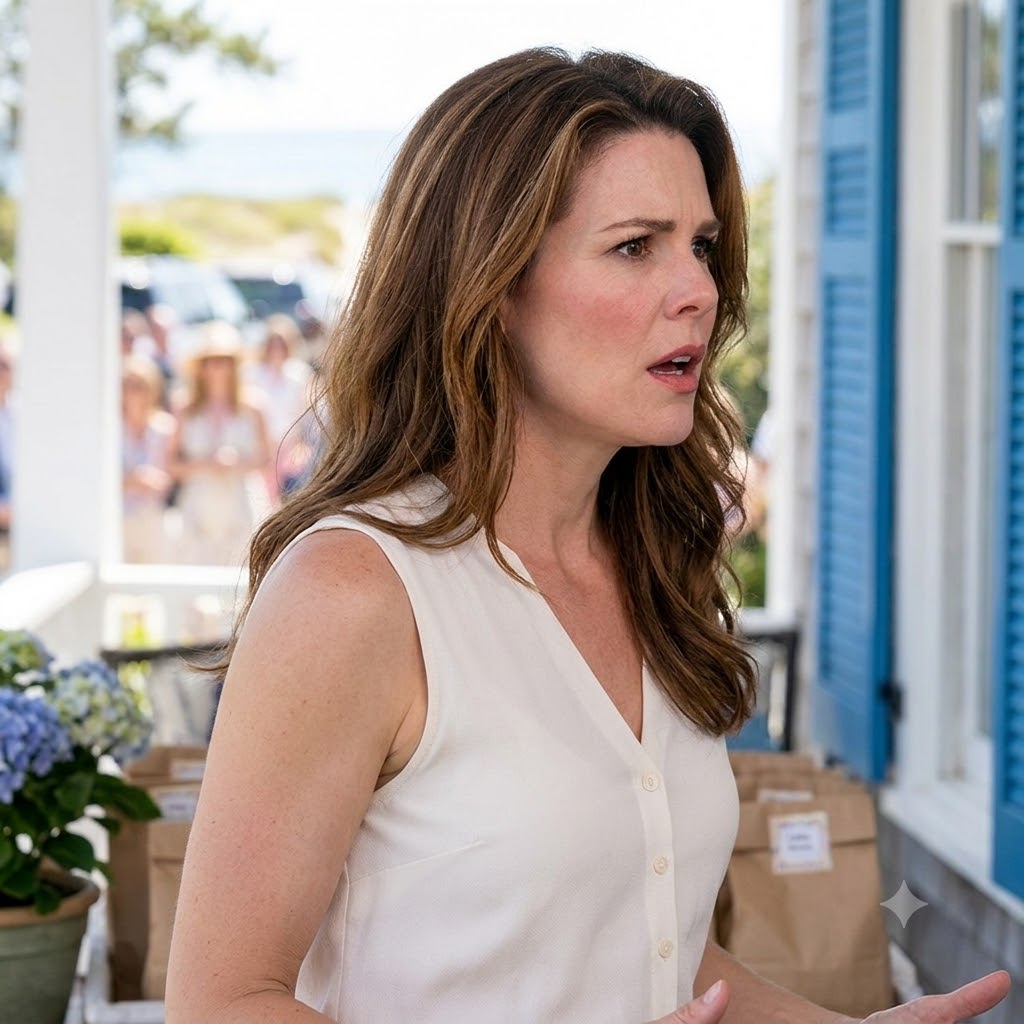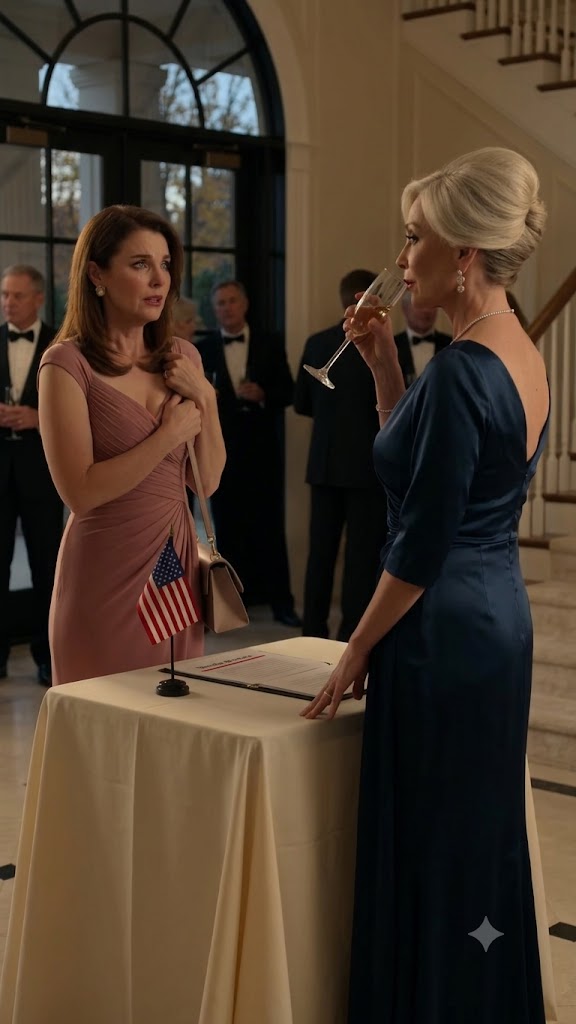
The wedding coordinator looked almost as embarrassed as I felt. On the table between us lay a printed guest list, with my name crossed out in thick red marker.
Wendy Meyers. Table Seven.
I had come to celebrate my younger sister’s wedding. Instead, my own mother stood behind me holding champagne, ready to explain why I wasn’t welcome.
“Why would we invite someone who isn’t really family?” Eleanor asked.
Several guests stopped talking. The coordinator lowered her eyes.
I was thirty-four years old, and my mother had just publicly reminded everyone that I was adopted. What those guests didn’t know was that I had personally funded the wedding’s approved expenses and guaranteed the venue. There was also a $45,000 balance for upgrades Eleanor had ordered without my written approval.
“Mom, why did you remove my name?” I asked.
She glanced at my dusty rose dress, then at the people watching us. Her little smile told me this wasn’t a misunderstanding.
I looked at the red line through my name and made a decision.
“Then today is the last time you’ll ever see me as family.”
I turned around and walked outside.
To understand why that moment mattered, you need to know about my father.
Richard Meyers adopted me when I was five. One of my earliest memories was waking from a nightmare and finding him sitting outside my bedroom, telling a ridiculous story until I felt safe enough to open the door.
When my parents later had Khloe, Dad never treated us differently. We were his daughters. Both of us.
Eleanor was different. Khloe deserved everything because she was her biological child. I was supposed to appreciate whatever I received because someone had given me a home.
Dad challenged that attitude whenever he heard it.
But four years before the wedding, he passed away.
I handled the insurance, property records, tax documents, and all the financial arrangements Eleanor claimed she couldn’t bear to face.
Dad’s trust gave Khloe and me equal protected inheritances. Eleanor received the townhome, investment income, and most household property.
That equality bothered her.
She started talking about keeping property “in the bloodline.” Yet whenever she needed money, she remembered I was her daughter.
I owned a growing corporate consulting firm. I could afford to help, so I paid off two high-interest credit cards, covered expensive townhome repairs, and guaranteed her replacement car lease.
She thanked me whenever a payment cleared. Then she found another reason to call.
When Khloe got engaged to Daniel Brooks, she asked me to stand beside her at the wedding. I promised I would.
Then Eleanor took over the planning.
She chose Grand Oaks Manor, an expensive estate near the South Carolina coast. The venue required a large deposit, catering guarantees, and credit authorizations that Eleanor couldn’t provide.
My firm had an events division and a corporate purchasing account. I agreed to guarantee the venue and pay several approved wedding expenses as my gift to Khloe.
The contract contained spending limits. Additional major charges required my written approval.
Eleanor was listed as an authorized event representative.
For six months, she ordered upgrades.
Premium champagne. Elaborate flowers. An upgraded bar. Private hospitality services.
When the revised balance reached $45,000 for those additional services, I told her the extras were her responsibility.
“After everything your father and I did for you, you’re counting pennies at your sister’s wedding?” she demanded.
I explained that I would honor every expense I’d approved, but she needed to pay for the additions herself.
The venue’s finance director, Michael Kent, confirmed the arrangement by email. Eleanor received a copy.
I thought the matter was settled.
Two weeks later, she removed me from the guest list.
Sitting in my car outside Grand Oaks Manor, I watched guests walk past the white lilies and enter the celebration I had helped make possible.
My hands were trembling. I wanted to call Khloe, but I couldn’t bring myself to explain why I had missed her entrance.
Instead, I drove to a coffee shop overlooking the bay.
I opened my tablet and reviewed the wedding account.
The venue deposit was paid. The approved catering, flowers, and transportation were covered. Those commitments were complete.
But the premium bar, expanded floral installations, champagne lounge, and luxury exit vehicle still required payment authorization.
I opened the authorized-user settings.
Eleanor’s purchasing privileges were active under my corporate account.
I revoked them.
Then I called Marcus Bell, my account manager, and instructed him to decline all pending charges outside the original approved contract. He confirmed that the completed payments would remain untouched.
I wasn’t canceling my sister’s wedding.
I was refusing to fund my mother’s unapproved spending.
Next, I called Michael at Grand Oaks Manor.
“The ceremony and approved reception are fully paid,” I explained. “The additional services need to be charged directly to Eleanor.”