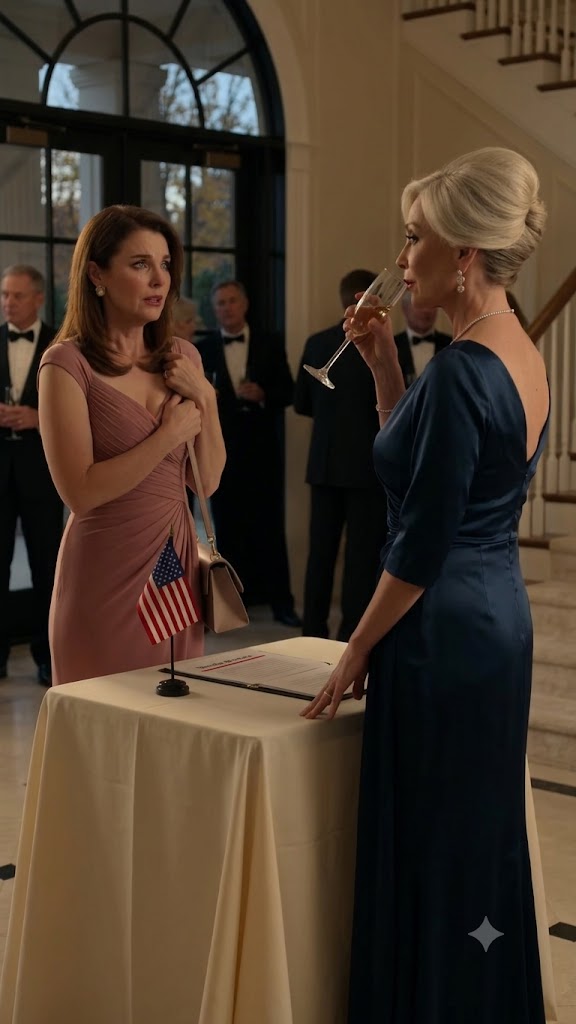
I could have argued. I could have asked to see Khloe. I could have demanded that the coordinator contact the bride or insisted that security explain why a woman who had guaranteed most of the event’s expenses was not allowed through the doors. Eleanor expected one of those reactions. She expected tears, pleading, or anger large enough to let her call me unstable. Instead, I took one slow breath. I looked directly into her eyes.
“Then today is the last time you’ll ever see me as family.”
Her smile flickered. Only once. I turned away from the reception table and walked through the glass doors into the bright October morning. My name is Wendy Meyers. I was thirty-four years old when my mother removed me from my sister’s wedding, and until that moment, I had spent most of my life believing love could be earned through usefulness.
By the time I reached the parking lot, I could still hear the faint music through the open doors. For a moment, I stood beside the car rather than getting in. I had chosen my dress with Khloe in mind. She had once told me that dusty rose looked good on me, and I had imagined us taking photographs together before she went down the aisle. Instead, I was trying to keep my face steady while strangers arrived for a celebration I had helped pay for. The contrast felt impossible to explain, even to myself.
I had been adopted when I was five. My earliest clear memory of my father, Richard Meyers, was not the day he and Eleanor brought me home. It was three weeks later, when I woke from a nightmare and found him sitting on the hallway floor outside my bedroom. He did not enter without asking. He stayed on the other side of the door and told me a ridiculous story about a squirrel who wanted to become a mail carrier. He kept talking until I opened the door.
Even now, I remember how little he asked of me in those first weeks. I had arrived in a new home with unfamiliar voices, a bedroom that smelled of clean sheets, and an uneasy habit of listening for footsteps. Richard never demanded that I call him Dad before I was ready. He made ordinary days feel dependable: breakfast at the same table, a light left on in the hallway, and a question before entering my room. I did not have the language for it then, but he was teaching me that security did not need to be purchased with obedience.
When I finally did, he held out his hand.
“Would you like me to sit inside instead?”
That was Richard. He never assumed that love gave him the right to cross a boundary. He waited until I invited him in. A year after the adoption was finalized, Eleanor became pregnant. Khloe was born on a rainy Sunday morning, red-faced and furious at the world. I stood beside the hospital bassinet wearing a shirt that said BIG SISTER in crooked glitter letters Dad had made himself. For most of our childhood, I never doubted that she was my sister.
Khloe followed me everywhere. She slept on the floor of my room during thunderstorms, borrowed my clothes without permission, and cried when I left for college. I helped her with homework and drove her to dance rehearsals after I got my first car.
Those memories mattered on the morning of the wedding. I had watched her practice dance steps in socks on the kitchen floor and sat through performances where she spent more time looking toward our seats than toward the audience. When she was frightened, she came to me. When something wonderful happened, she wanted to tell me first. That was why I could not simply assume she had agreed with our mother. The line through my name reflected Eleanor’s decision, but the person walking down the aisle was still the little sister who had trusted me all her life.
Dad never used words like adopted or biological when describing us. He called us his girls. Eleanor was more complicated. She did not openly reject me while Richard was alive. She attended school conferences, bought birthday cakes, and introduced me as her daughter. But there was a subtle difference in the way she spoke to Khloe.
Khloe was cherished.
I was expected to be grateful.
If Khloe received something expensive, Eleanor said she deserved it. If I asked for the same, she reminded me how fortunate I was to have been given a home. Dad usually corrected her.
“She didn’t win a charity contest,” he once said after Eleanor described my college tuition as another thing we had done for me. “She’s our daughter.”