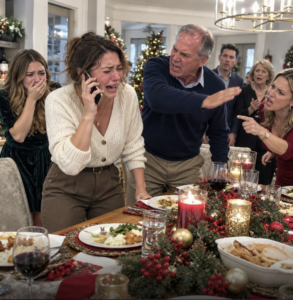
 Mein Vater hat mich beim Weihnachtsessen fünfmal geschlagen, weil ich meine Schwester gebeten hatte, sich bei meiner Tochter zu entschuldigen.
Der erste Schlag beförderte meine Brille in den Kartoffelbrei. Beim fünften Schlag weinte meine einundzwanzigjährige Tochter Avery, und meine Tante Carol stellte sich zwischen uns.
„Du bist Abschaum!“, schrie Dad. „Brooke hat sich etwas aufgebaut. Du bist nur ein Parasit.“
Zehn Minuten zuvor hatte Brooke ihr Weinglas auf Avery erhoben und verkündet: „Auf das Community College! Irgendjemand muss wohl den einfachen Weg gehen.“
Avery studierte dank eines Stipendiums Krankenpflege. Außerdem arbeitete sie am Wochenende in einem Supermarkt. Ich forderte Brooke auf, sich zu entschuldigen. Sie lachte. Mein Vater befahl mir, mich hinzusetzen. Ich weigerte mich.
Ich bin Rachel Hayes, 44 Jahre alt und Krankenpflegerin in Dayton, Ohio. Drei Jahre lang habe ich im Stillen meinen Eltern geholfen, in diesem Haus zu bleiben. Als meine Mutter erzählte, dass die reduzierte Arbeitszeit meines Vaters sie in finanzielle Schwierigkeiten gebracht hatte, vereinbarte ich regelmäßige Zahlungen von 2.180 Dollar für ihre Hypothek und etwa 360 Dollar für ihre Nebenkosten. Um das aufbringen zu können, übernahm ich zusätzliche Schichten. Avery fuhr ein Auto mit kaputter Heizung, während Brooke zu Weihnachten in einem neuen Mercedes ankam.
Ich hatte die Hilfe geheim gehalten, weil Mama sagte, Papa wäre beschämt, wenn er es wüsste.
Doch während ich ihn mit glühenden Wangen über den Tisch hinweg anstarrte, ergriff Avery meine Hand und flüsterte: „Mama, wir können gehen.“ Sie hatte Angst, aber sie fragte nicht für sich selbst. Sie fragte für mich. Bis zu diesem Moment hätte ich mir nie vorstellen können, dass meine Tochter mir beibringen müsste, wann ich gehen sollte.
Etwas fühlte sich schließlich noch erniedrigender an als die Wahrheit zu sagen: sie in dem Glauben zu lassen, dass dies die Art sei, wie Liebe es erfordere.
Ich rief die 24-Stunden-Hotline meiner Bank an, bestätigte meine Identität und bat die Mitarbeiterin, die Daueraufträge für die Hypothek und die Nebenkosten meiner Eltern zu stornieren. Sie bestätigte, dass zukünftige Überweisungen gestoppt würden; bereits getätigte Zahlungen würden nicht rückgängig gemacht.
Mein Vater lachte scharf auf. „Was willst du denn hier absagen?“
„Die 2.540 Dollar, die ich jeden Monat hierher überweise.“
Sein Gesichtsausdruck veränderte sich. Brooke stellte ihr Glas ab.
„Das kannst du nicht tun“, sagte Papa.
„Schau mir zu.“
Mamas Hände zitterten. „Rachel, bitte. Nicht heute Abend.“
„Warum? Damit Sie mir weiterhin erzählen können, dass er es nicht weiß?“
Dad sah sie an, und ich sah etwas zwischen ihnen vorgehen, was mir vorher nie aufgefallen war: keine Überraschung, sondern eine Warnung.
Mama fing an zu weinen.
„Er weiß es“, flüsterte sie. „Er wusste es schon immer. Und das ist nicht das Einzige, wofür dein Geld ausgegeben wurde.“
I didn’t stay to find out. Avery was trembling beside the front door, and Dad was still shouting that I had ruined Christmas. Carol helped us into the car and told me she’d witnessed every slap. At urgent care, a clinician documented the swelling on my face. I made a police report that night.
On the drive home, Avery stared out the window. “Mom, I thought Grandpa loved us.”
“He should have shown it better,” I said.
She shook her head. “I mean, I thought if I got the scholarship, they’d finally be proud of me.”
That hurt worse than my cheek.
The next morning, Mom asked to meet at Carol’s house. Carol stayed in the kitchen while we talked. Mom brought the mortgage statements I’d never been allowed to see.
Three years earlier, Dad really had lost overtime at his warehouse job. The mortgage had been tight. But after my payments began, the danger passed. Rather than tell me, Dad and Mom opened an $86,000 home-equity loan. They gave most of it to Brooke to settle business debts and used the rest for taxes and overdue bills.
The monthly payments on that second loan came out of Dad’s paycheck and savings. My transfers covered their original mortgage and utilities, freeing their income to service Brooke’s debt. They had turned my help into the foundation of another loan without ever asking whether I agreed.
When Avery was sixteen, she needed a laptop for school. I told her to use the library computers another semester because Grandma and Grandpa were struggling. Now I understood what that sacrifice had protected: not their home, but Brooke’s reputation. Mom admitted they had let relatives believe Brooke was the one supporting them.
“And Dad knew all along?” I asked.
Mom nodded. “He said you’d stop if he thanked you. He said you liked being needed.”
Brooke hadn’t been rescuing anyone. Her agency’s expensive office and awards dinners had concealed months of overdue invoices. She had promised to repay our parents but made only two payments.
“Why let him call me a parasite?”
“Because Brooke was there,” Mom said. “Your father didn’t want her embarrassed.”
I waited, thinking she would hear what she’d said. Instead, she added, “If you could cover just three more months, we might be able to sell Brooke’s equipment and get ahead.”
I stood up. “You watched him hit me five times. And you came here to ask for another three months?”
Mom’s face crumpled. “I don’t know what else to do.”
“Tell him to stop. Tell Brooke the truth. Sell the house if you have to. Those are choices. Using me isn’t one.”
That afternoon, Brooke called me. She said I had always been jealous because her life looked better than mine. When I mentioned the loan, her voice turned brittle.
“You make good money,” she said. “What was I supposed to do, let my business collapse?”
“You could have let me decide what I was willing to give.”
Then she said something I couldn’t forget: “Dad told me you’d never say no to Mom.”
He was right about who I had been. But my daughter had watched me stand there and take five slaps. I couldn’t let her watch me take another five years of the same bargain.
