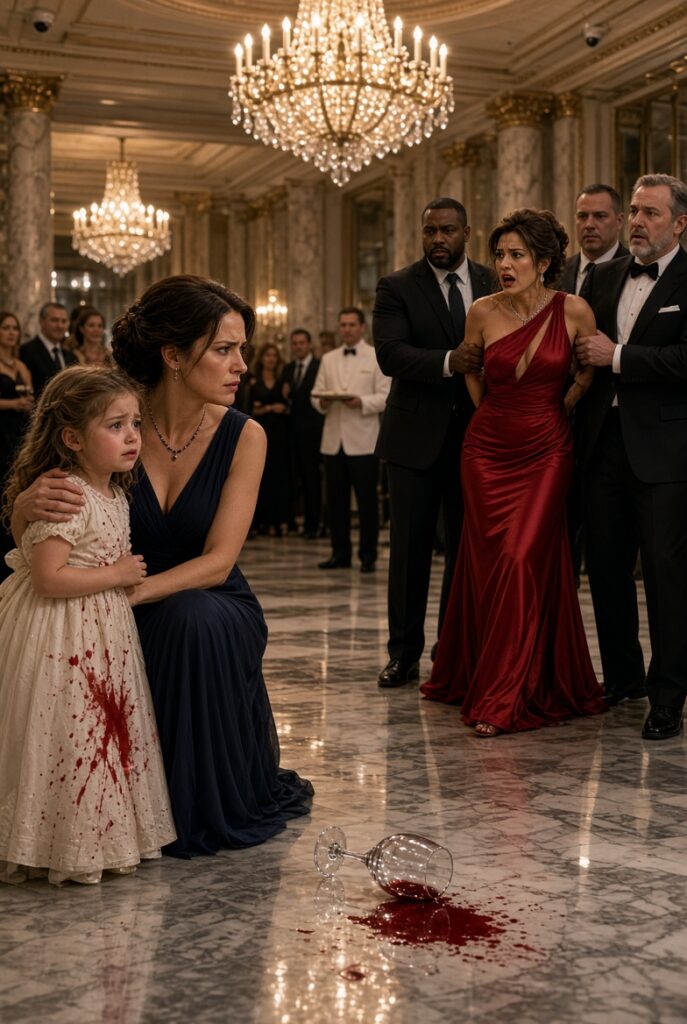
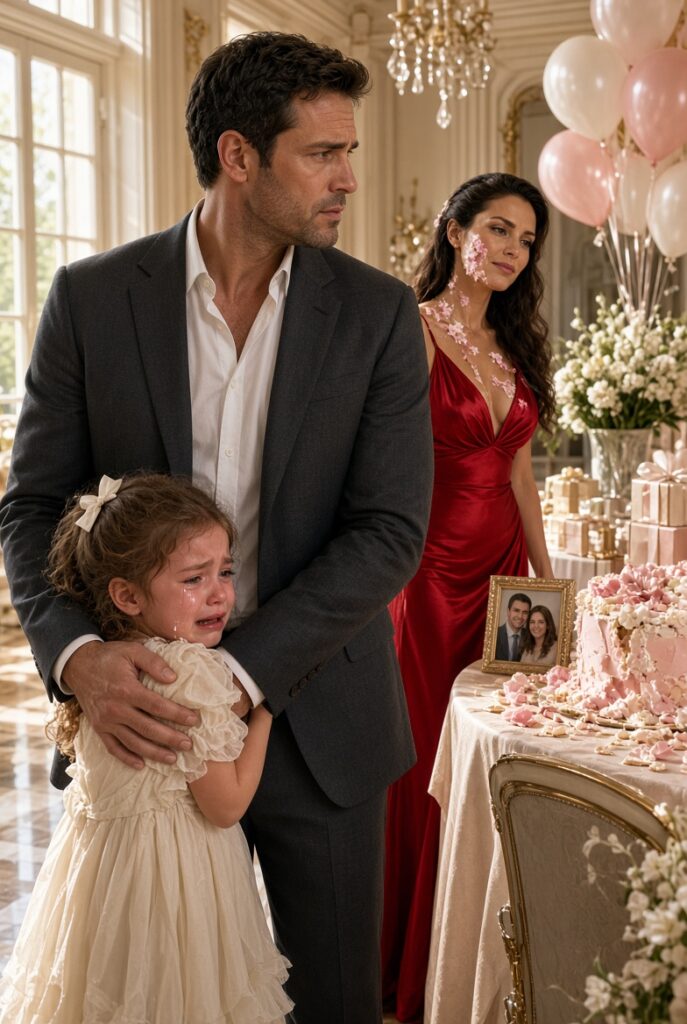
He had been thinking of her as the mother of the groom all morning. She had dressed for that role, traveled for it, endured instructions for it. Yet she was also a woman who read mysteries on Tuesdays and disliked losing umbrellas. He wondered how often he had mistaken knowing her place in his life for knowing her.
“What book are you reading?” he asked.
She blinked at him. “What?”
“At the club.”
“A mystery. A man disappears from a train. Everyone says it’s very clever. I think his sister did it.”
“Are you meant to have worked that out already?”
“No idea. I’m only on page forty.”
He smiled. She did not, quite, but something in her shoulders eased.
He did not try to make the conversation continue. When she was ready, she put the umbrella between the seat and the door. He checked that her belt was comfortable, then drove toward the clinic.
The responder had recommended a fuller assessment because of Martha’s age and the force of the blow. They went to an urgent care clinic, where Caleb removed his bow tie in the parking lot and put it in his pocket. A boy in a soccer uniform stared at his tuxedo. The boy’s father gently turned him toward a television.
Martha filled in her own form. When she reached the line for emergency contact, she wrote Caleb’s name without hesitation. He watched the pen travel across the paper and had to look away.
There was no serious injury apparent on examination, but the clinician gave them instructions about symptoms to watch for and follow-up care. Martha listened, asked one practical question, and accepted the cold pack. When they were alone, she said she wanted to make the report.
“All right.”
“Not because I want a spectacle.”
“I know.”
“Because if I leave it as a misunderstanding, it becomes something I agreed to misunderstand.”
He nodded. The words belonged to her. He did not improve them or turn them into a plan.
An officer met them after the clinic visit and took her account. Caleb gave his own separately. The questions were ordinary and careful. What had he actually seen? Where had he been standing? Had he heard the exchange before the slap? He said he had not. It embarrassed him, somehow, to discover that loving his mother did not entitle him to fill in what he had missed.
He gave Nina’s contact details with her permission. There would be follow-up. No one promised him an outcome because of his name.
By the time they drove toward Bellford, the sky had begun to turn the color of old pewter. Martha sat in the passenger seat with the cold pack wrapped in a towel. She had asked to go to her own house.
“You could stay with me,” he had offered.
“I know where the cups are in my kitchen.”
It was not a rebuke. That made it harder to hear.
His phone stayed silent in the console, not because people had stopped calling but because he had switched off the sound. The screen brightened at intervals. Juliet. Graham. His publicist. Two board members. A cousin who had already posted a picture of the flowers and now wanted to know whether to take it down.
Martha watched the road.
“I put the shawl on because the room was cold,” she said at last.
“You don’t have to explain why you wore it.”
“I would like to.”
He eased his foot off the accelerator. “I’m listening.”
“She said it would spoil the photographs. I told her I could take it off for those. Then she said I wasn’t supposed to be standing where I was.”
He waited.
“I had gone to look at the flowers. Your father would have complained about the cost and then asked the gardener what every last one was called.”
Caleb smiled faintly. “He would.”
“She said the front of the room was for family.”
The tires hummed on the highway. A truck passed them, trailing rain from somewhere farther north.
“I said I was your family.”
Her voice did not change. She had reached the hardest part and was walking through it carefully.
“She took the shawl. I asked her to give it back. And then she said being paid to look after a child didn’t make a person his mother.”
Caleb’s hands tightened on the wheel.
For the first months after he came to the Rowans, there had been a foster placement, visits, forms, adults discussing what would happen next. By the time his adoption was finalized, he had already been calling Martha Mom for almost a year. None of that had ever been a secret. Juliet knew. He had told her on their fourth date because he had been talking about his family, and that was part of it.
“I said she could ask you what it made me,” Martha continued. “That’s when she hit me.”
He pulled into a rest area.
“Caleb?”
“I need a minute.”
He parked, switched off the engine, and sat with his hands open on his knees. The anger was so large that it had become almost useless. He could imagine shouting, breaking something, going back. None of those things would change what his mother had heard in a room where he had promised she would be welcome.
“You are my mother,” he said.
“I know.”
“I should have—”
“You came.”
He turned to her.
“I’m glad you came,” she said. “That is true. Other things can be true as well.”
He understood that she was not absolving him. She was giving him somewhere solid to stand while he began to look at what had happened.
After a while he started the engine again.
*
The porch light was on at the house on Orchard Street.