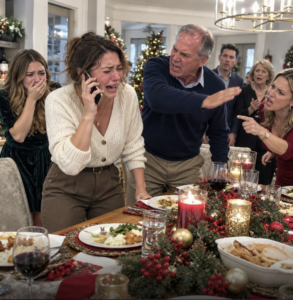
 Mi padre me abofeteó cinco veces en la cena de Navidad porque le pedí a mi hermana que se disculpara con mi hija.
La primera bofetada me mandó las gafas al puré de patatas. A la quinta, mi hija Avery, de veintiún años, estaba llorando, y mi tía Carol se interpuso entre nosotras.
—Eres una basura —gritó papá—. Brooke construyó algo con su vida. Tú solo eres un parásito.
Diez minutos antes, Brooke había alzado su copa de vino hacia Avery y había anunciado: “Brindemos por la universidad comunitaria. Supongo que alguien tiene que tomar el camino fácil”.
Avery estudiaba enfermería con una beca. También trabajaba los fines de semana en un supermercado. Le dije a Brooke que se disculpara. Ella se rió. Papá me ordenó que me sentara. Me negué.
Soy Rachel Hayes, tengo cuarenta y cuatro años y soy enfermera practicante en Dayton, Ohio. Pasé tres años ayudando discretamente a mis padres a permanecer en esa misma casa. Cuando mamá me dijo que la reducción de horas de trabajo de papá les estaba causando dificultades económicas, organicé pagos recurrentes de $2,180 para la hipoteca y unos $360 para los servicios públicos. Hice turnos extra para poder pagarlo. Avery conducía un auto con la calefacción averiada, mientras que Brooke llegó en Navidad en un Mercedes nuevo.
Mantuve en secreto la ayuda porque mamá dijo que papá se sentiría humillado si se enteraba.
Pero mientras lo miraba fijamente al otro lado de la mesa, con las mejillas ardiendo, Avery me tomó de la mano y susurró: «Mamá, podemos irnos». Estaba asustada, pero no lo pedía por sí misma. Lo pedía por mí. Hasta ese momento, jamás imaginé que mi hija tendría que enseñarme cuándo debía alejarme.
Finalmente, algo me pareció más humillante que decir la verdad: dejarla creer que eso era lo que requería el amor.
Llamé a la línea de atención al cliente de mi banco, disponible las 24 horas, verifiqué mi identidad y le pedí a la representante que cancelara los pagos recurrentes que había programado para la hipoteca y los servicios públicos de mis padres. Ella confirmó que las transferencias futuras quedaban suspendidas; los pagos ya procesados no se reembolsarían.
Papá soltó una carcajada. “¿Qué pretendes cancelar?”
“Los 2.540 dólares que envío aquí cada mes.”
Su rostro cambió. Brooke dejó su vaso.
—No puedes hacer eso —dijo papá.
“Mírame.”
Las manos de mamá temblaban. “Rachel, por favor. Esta noche no.”
“¿Por qué? ¿Para que puedas seguir diciéndome que no lo sabe?”
Mi padre la miró, y vi pasar algo entre ellos que nunca antes había notado: no sorpresa, sino advertencia.
Mamá comenzó a llorar.
—Él lo sabe —susurró ella—. Siempre lo supo. Y eso no es lo único que tu dinero ha estado pagando.
I didn’t stay to find out. Avery was trembling beside the front door, and Dad was still shouting that I had ruined Christmas. Carol helped us into the car and told me she’d witnessed every slap. At urgent care, a clinician documented the swelling on my face. I made a police report that night.
On the drive home, Avery stared out the window. “Mom, I thought Grandpa loved us.”
“He should have shown it better,” I said.
She shook her head. “I mean, I thought if I got the scholarship, they’d finally be proud of me.”
That hurt worse than my cheek.
The next morning, Mom asked to meet at Carol’s house. Carol stayed in the kitchen while we talked. Mom brought the mortgage statements I’d never been allowed to see.
Three years earlier, Dad really had lost overtime at his warehouse job. The mortgage had been tight. But after my payments began, the danger passed. Rather than tell me, Dad and Mom opened an $86,000 home-equity loan. They gave most of it to Brooke to settle business debts and used the rest for taxes and overdue bills.
The monthly payments on that second loan came out of Dad’s paycheck and savings. My transfers covered their original mortgage and utilities, freeing their income to service Brooke’s debt. They had turned my help into the foundation of another loan without ever asking whether I agreed.
When Avery was sixteen, she needed a laptop for school. I told her to use the library computers another semester because Grandma and Grandpa were struggling. Now I understood what that sacrifice had protected: not their home, but Brooke’s reputation. Mom admitted they had let relatives believe Brooke was the one supporting them.
“And Dad knew all along?” I asked.
Mom nodded. “He said you’d stop if he thanked you. He said you liked being needed.”
Brooke hadn’t been rescuing anyone. Her agency’s expensive office and awards dinners had concealed months of overdue invoices. She had promised to repay our parents but made only two payments.
“Why let him call me a parasite?”
“Because Brooke was there,” Mom said. “Your father didn’t want her embarrassed.”
I waited, thinking she would hear what she’d said. Instead, she added, “If you could cover just three more months, we might be able to sell Brooke’s equipment and get ahead.”
I stood up. “You watched him hit me five times. And you came here to ask for another three months?”
Mom’s face crumpled. “I don’t know what else to do.”
“Tell him to stop. Tell Brooke the truth. Sell the house if you have to. Those are choices. Using me isn’t one.”
That afternoon, Brooke called me. She said I had always been jealous because her life looked better than mine. When I mentioned the loan, her voice turned brittle.
“You make good money,” she said. “What was I supposed to do, let my business collapse?”
“You could have let me decide what I was willing to give.”
Then she said something I couldn’t forget: “Dad told me you’d never say no to Mom.”
