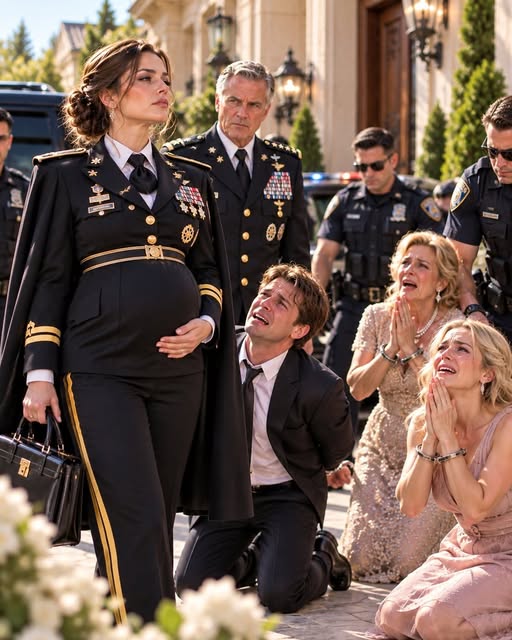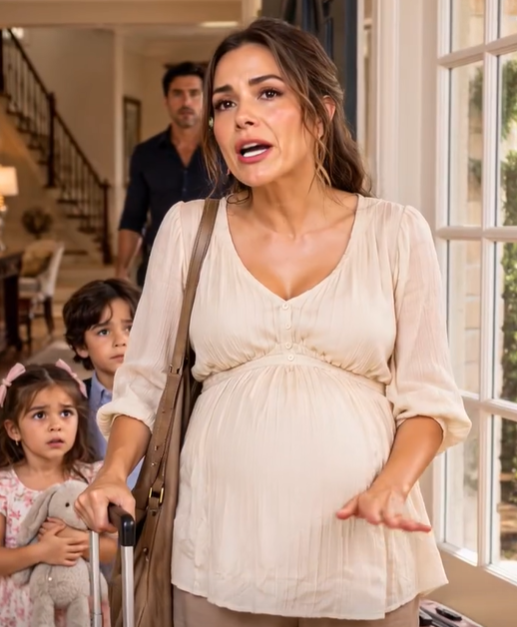
Bianca had told the practitioner that she consented to their presence. That mattered. A doctor does not disclose private health information merely because a wealthy family demands a performance. But Bianca wanted the audience. She believed the room would protect the story she had told, or at least delay its collapse.
It did neither.
The scan found no developing pregnancy. A second clinician reviewed the images and recommended appropriate follow-up to clarify Bianca’s medical history. No one could establish from that single visit whether there had been an earlier pregnancy; that required records and information Bianca was not ready to supply. But the present fact was clear.
“There is no current pregnancy,” the physician said.
Eleanor later told me Victoria’s first response had not been grief. It had been irritation.
“That cannot be correct.”
The doctor kept her voice calm. “Ms. Vale, would you like to speak to me privately?”
Bianca sat very still. Her hands were in her lap. Julian stared at her, then at the physician, as if a more obedient image might appear on the screen if he waited.
“You said you felt the baby moving,” he told Bianca.
“I said I thought I did.”
“At twelve weeks?”
“Julian, please.”
Victoria intervened. “Perhaps the machine is faulty.”
The doctor did not debate. She explained that the clinical findings were consistent between examinations, that Bianca deserved privacy, and that the group needed to give her space. Eleanor wheeled herself toward the door without assistance.
Once they reached the corridor, Charles called his lawyer. Grant called the bank. Miles called a communications consultant. Celeste put her arms around Bianca, who burst into tears. Evelyn told everyone to lower their voices.
And Victoria called me.
It was almost comic, how quickly the family’s faith in Bianca’s pregnancy turned into certainty that I had arranged its absence.
There had been a time when I believed proximity to the Whitmores would protect me from the ugliness of the world. At twenty-three, newly engaged, I attended a charity luncheon with Victoria in a ballroom full of white roses. A waiter spilled a few drops of coffee on the edge of her program. She did not raise her voice. She simply asked his supervisor whether the staff had been trained to respect the guests. By the end of the afternoon, the young man had been sent home.
I caught him beside the elevators and apologized. He said he was working two jobs, that he hadn’t meant to spill anything, and that he hoped his manager would let him come back. I went to Victoria and asked whether she would call the supervisor. She looked astonished that I’d interrupted her conversation about the opera.
“Claire, you mustn’t involve yourself in staffing issues,” she said. “It encourages familiarity.”
I did call the supervisor myself. I learned the waiter had not been dismissed, though he lost that afternoon’s wages. At dinner that night, Julian told me I was kind but naive. He said his mother wasn’t cruel; she had standards. I accepted the distinction because I wanted the life ahead of us to be beautiful.
Thinking back on the clinic, I understood that Victoria’s standard had never been truth or care. It was the preservation of a room in which she could give commands without receiving questions. A doctor had interrupted that arrangement with a single clinical fact. The outrage that followed wasn’t solely about Bianca or a baby. It was about the astonishing experience of not being able to purchase a different answer. I was thousands of miles away. Yet somehow, to Victoria, the only explanation for a fact she disliked was that I had manufactured it.
I remembered another medical appointment, six years earlier. Lily had been born two weeks ahead of schedule. Julian was at a real estate conference in Miami. Victoria visited the hospital carrying pink flowers, took one look at the baby, and said, “Well, next time we’ll have better luck.”
I had spent that night watching Lily breathe. The nurses came and went. My child was warm against my chest, completely unaware that an elderly woman in pearls believed her sex was a family disappointment. I promised myself Lily would never have to earn her welcome.
Four years later Noah was born. I thought his arrival might soften them. Instead Victoria began speaking about “the proper Whitmore line,” as though children came from a factory and could be graded for authenticity. She claimed Noah was too fragile, too attached to me, too quiet to become a man of consequence. Julian laughed rather than defend him. Noah was a son, of course. When Victoria said I had given the family no “real sons,” she was declaring that a sensitive little boy did not count.