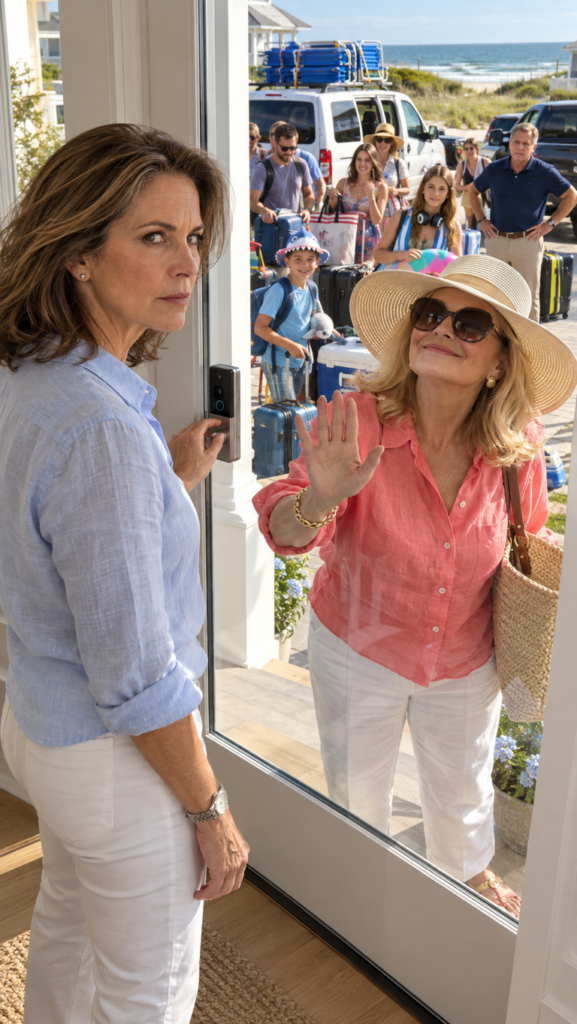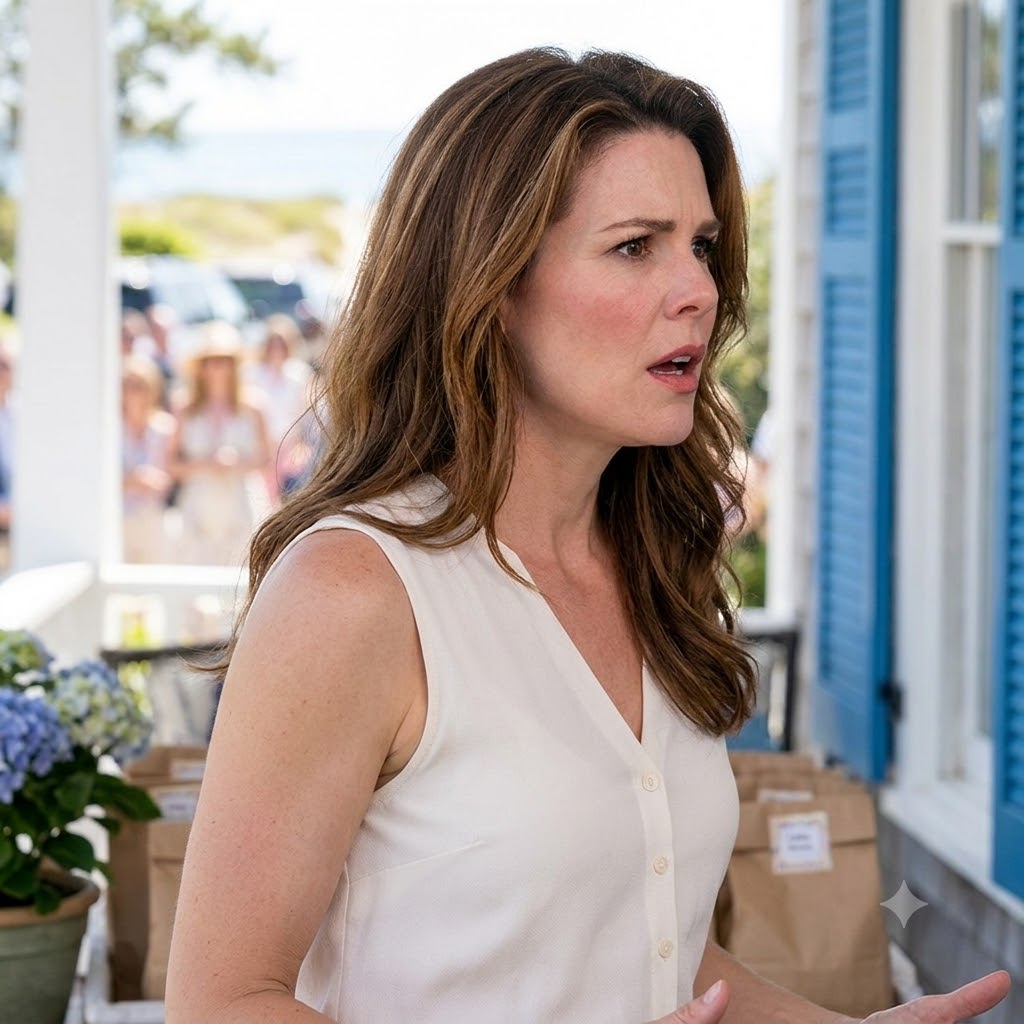
Behind her, I saw grocery bags covering nearly every inch of the counter.
Someone had put a family-sized cereal box where my coffee grinder normally sat.
A child’s drawing had been taped to my refrigerator.
I looked toward the living room.
Then toward the patio.
Then back at Lauren.
“Why are there twelve people in my house?”
She laughed.
Actually laughed.
“Don’t look so horrified.”
“Lauren.”
“My parents came for the summer.”
I stared at her.
She said it so casually that for a second I wondered whether I had missed an entire conversation before my trip.
“For the summer?”
“And Melissa brought the kids.”
She gestured toward the backyard.
“You know how crowded their apartment is. They never get to do anything like this.”
I glanced at the patio again.
A teenage boy ran past the doors carrying one of my pool towels around his waist.
“Do anything like what?”
Lauren frowned.
“Have a vacation.”
“At my house?”
Her expression shifted slightly.
Not guilt.
I would have recognized guilt.
It was irritation.
As though I were being difficult.
“It’s only temporary.”
Temporary.
That word.
People use it when they want you to tolerate something they know you would never agree to permanently.
A temporary inconvenience.
A temporary arrangement.
A temporary invasion of your home.
Before I could answer, Frank called from the living room.
“Lauren, we’re out of ice!”
Then he saw me.
He lifted one hand.
“Hey, Margaret! Great place you’ve got here.”
I looked at his feet on my table.
“Yes,” I said quietly. “I know.”
He smiled as though we were sharing a joke.
Lauren opened the freezer.
“We bought more. It’s in the garage.”
We.
I turned toward her.
“Where’s Daniel?”
“At the hardware store.”
“Why?”
“Something with the downstairs shower.”
My downstairs shower had worked perfectly when I left.
But I no longer trusted myself to speak.
I had learned something during thirty-eight years of marriage, twenty-seven years of motherhood, and a lifetime of watching people reveal themselves when they thought they had the advantage.
Anger can be useful.
But only if you don’t hand it to the other person too quickly.
So I said nothing.
I walked back outside, opened the trunk, removed my suitcase, and carried it upstairs.
I made it halfway down the hall before stopping.
My bedroom door was open.
My bedspread had been replaced with a gray comforter I had never seen before.
Two large suitcases were open on the floor.
A man’s belt hung over the chair.
Women’s cosmetics covered my dresser.
My jewelry box was gone.
I dropped the handle of my suitcase.
For several seconds, I couldn’t move.
Then I stepped inside.
My photographs were missing.
Every framed photograph.
Robert standing beside our first sailboat.
Daniel on his graduation day.
My mother holding him as a baby.
My wedding photograph.
Gone.
My books had been stacked against the far wall.
The antique reading lamp had been moved.
Someone had placed a portable fan where Robert’s photograph normally sat.
I opened the closet.
Half my clothes were gone.
The other half had been shoved toward one end.
Men’s shirts occupied the remaining space.
My heart started pounding.
Not because I was frightened.
Because I finally understood.
This wasn’t a visit.
Nobody had simply invited relatives over for a weekend barbecue.
They had moved in.
I walked down the hall.
The second bedroom contained bunk beds, children’s clothes, toys, and two inflatable mattresses.
The third bedroom had suitcases lined beneath the window.
Then I reached the smallest room.
The guest room.
My dresses hung from a temporary rack.
My shoes had been stacked beneath the desk.
My toiletries were arranged in a plastic basket beside the bathroom door.
Two cardboard boxes contained my books.
My framed photographs were wrapped in towels and placed inside another box.
On top was a yellow sticky note.
MOM’S STUFF.
I stood there staring at those two words.
Not Margaret’s belongings.
Not fragile.
Not personal.
Mom’s stuff.
As though I were a college student returning home for a weekend.
As though the house belonged to someone else.
I went downstairs.
Lauren was waiting near the kitchen.
Maybe she had heard me opening doors.
Maybe she knew exactly what I had just found.
She held something in her palm.
A key.
“We left you the guest room.”
I looked at the key.
Then at her.
“You left me?”
Her smile tightened.
“Don’t make this dramatic.”
I almost laughed.
“My belongings are in boxes.”
“We needed the larger bedrooms.”
“You moved my photographs.”
“They were taking up space.”
“In my bedroom?”
“Mom and Dad need privacy.”
The ease with which she said it stunned me more than the words themselves.
“Your parents are sleeping in my bedroom?”
“It’s the master suite. They need the bathroom.”