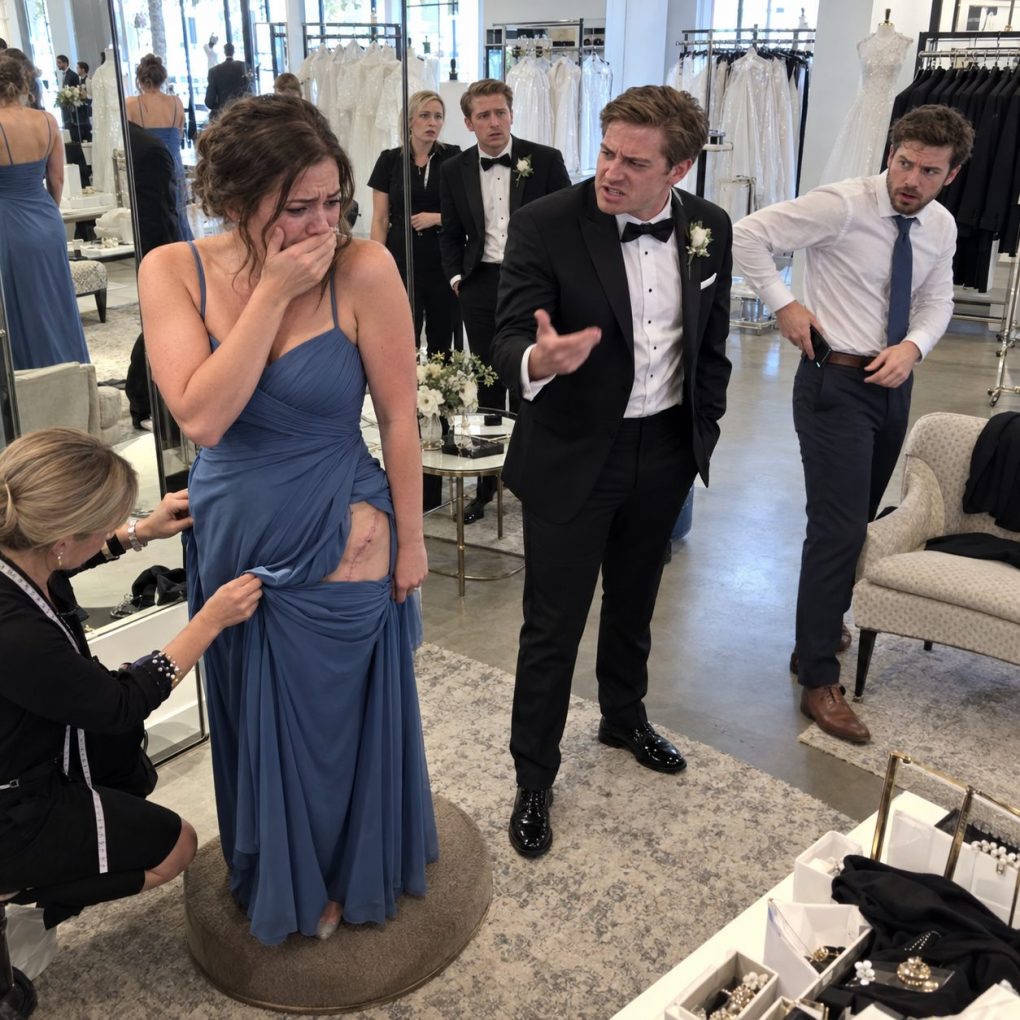
—Ignoren a mi hermana. No es más que una carga —anunció mi hermano Grant mientras un sastre le ajustaba la chaqueta de boda. Yo estaba a dos metros de distancia, con un vestido de dama de honor que había comprado con el dinero de las horas extras. Tres hombres rieron con incomodidad. Grant sonrió al verse reflejado. —Rachel solo la invitó porque le da lástima. Créanme, Hannah siempre ha necesitado que alguien la rescate.
Solo había venido porque Rachel me pidió que fuera su dama de honor, y quería creer que podíamos volver a ser una familia. Guardé silencio. A los treinta y tres años, tenía trabajo, mi propio apartamento y un riñón. El otro estaba dentro de Grant. Cinco años antes, cuando sus riñones fallaron, me ofrecí como voluntaria para hacerme las pruebas. Era compatible. Me rogó que no le contara a nadie sobre el trasplante porque odiaba que lo vieran como enfermo. Lo quería lo suficiente como para respetar eso. Al parecer, él amaba aún más el silencio.
La costurera levantó la costura lateral de mi vestido para ajustar la cintura. La tela se movió, dejando al descubierto la pálida cicatriz en la parte baja de mi abdomen. Owen, el padrino de Grant, se detuvo a mitad de la frase. Se quedó mirando un segundo y luego preguntó: «Hannah, ¿donaste un riñón?». Bajé la tela. «Sí». Su expresión cambió. «Yo le doné uno a mi padre. Conozco ese tipo de cicatriz». Grant espetó: «¿Podemos terminar la prueba?».
Pero Owen ya lo estaba mirando. —Me dijiste que le donaste un riñón a Hannah. —El sastre bajó la cinta métrica. Grant se rió demasiado fuerte—. Es complicado. —Owen negó con la cabeza—. No. ¿Quién de ustedes fue el donante? —Mi hermano agarró el brazo de Owen, pero Owen se apartó y buscó su teléfono.
Llamó a Rachel por altavoz. Ella contestó alegremente, preguntando si el esmoquin le quedaba bien. Owen dijo: «Antes de casarte con Grant, pregúntale quién donó un riñón a quién». El silencio en la línea fue tan largo que pensé que se había cortado la llamada. Entonces Rachel susurró: «Grant me dijo que Hannah fue la que casi muere».
Sentí como si me hubieran abofeteado. Grant había dejado que su propia prometida creyera que me había salvado la vida. Rachel rompió a llorar. «Por eso mis padres ayudaron con la colecta de fondos para gastos médicos», dijo. Me aferré al borde de la plataforma. «¿Qué colecta de fondos?». Owen giró su teléfono hacia mí. Allí estaba mi fotografía en una cama de hospital, bajo un titular que elogiaba a Grant por salvar a su hermana, que estaba pasando por un mal momento.
Debajo había un número: 58.420 dólares recaudados. Antes de que nadie volviera a hablar, Rachel dijo: «Hannah, por favor, dime que lo sabías. Mis padres depositaron veinte mil dólares en esa cuenta».
Rachel arrived at the bridal shop carrying her wedding binder, still wearing the pearl earrings Grant had given her. She looked first at my scar and then at my brother. “Tell me the truth, once,” she said. Grant answered, “Hannah likes attention.” It was such a familiar line that, for a moment, I almost lowered my eyes. Instead, I opened the discharge summary on my phone. It identified me as a living kidney donor. The surgery date matched Grant’s transplant.
I told Rachel what those pages couldn’t show: the months of pain, the missed promotion, the nights I slept sitting up because lying flat hurt. Grant had held my hand before surgery and promised he would never forget. Later, whenever I asked him to repay the travel expenses he’d offered to cover, he called me selfish. Rachel read the document without interrupting. Owen stood beside her, silent and furious.
Then she opened the fundraiser. Grant had described me as unemployed, addicted to prescription painkillers, and struggling after a transplant he claimed he’d given me. He had used a photograph he took while I was waking up from my own donor surgery. Strangers had written messages saying I was lucky to have such a devoted brother. Grant had thanked them publicly for helping him “keep Hannah alive.”
“That money was for hospital bills,” Rachel said. “You told me she needed another operation.” I shook my head. “I haven’t been hospitalized since the donation.” Grant began shouting that I misunderstood everything, but Rachel showed him the messages he’d sent donors asking them to share the campaign before the wedding. He had even planned a special appeal at the rehearsal dinner, with me brought onto the stage to thank him.
I stared at the printed program inside her binder. It called Grant “a hero who gave his sister a second chance.” Under my name, someone had written a speech in the first person. “My brother sacrificed part of himself so I could live.” I had never seen those words. “You expected me to read this?” I asked. Grant stepped close enough for me to smell his cologne. “After everything I’ve done for you, you owe me one night,” he hissed.
Rachel pulled up the campaign dashboard. She had been added as a co-organizer to answer donor questions, but Grant handled all payouts. She opened the payment details, frowned, and enlarged the screen. The receiving account was registered under my full name and old address. I had never opened it. The money had already been withdrawn.
I looked at Grant. For the first time, he seemed frightened. The account wasn’t merely a way to take donations. It was a way to make the theft look like mine.
I wanted to scream. Instead, I asked Rachel to send me every screenshot before Grant could change the account. Owen photographed the printed program. The seamstress, who had heard the argument, quietly gave us her business card and said she would tell investigators what she’d witnessed. Grant called us dramatic and demanded that Owen delete the photographs. Nobody moved.
