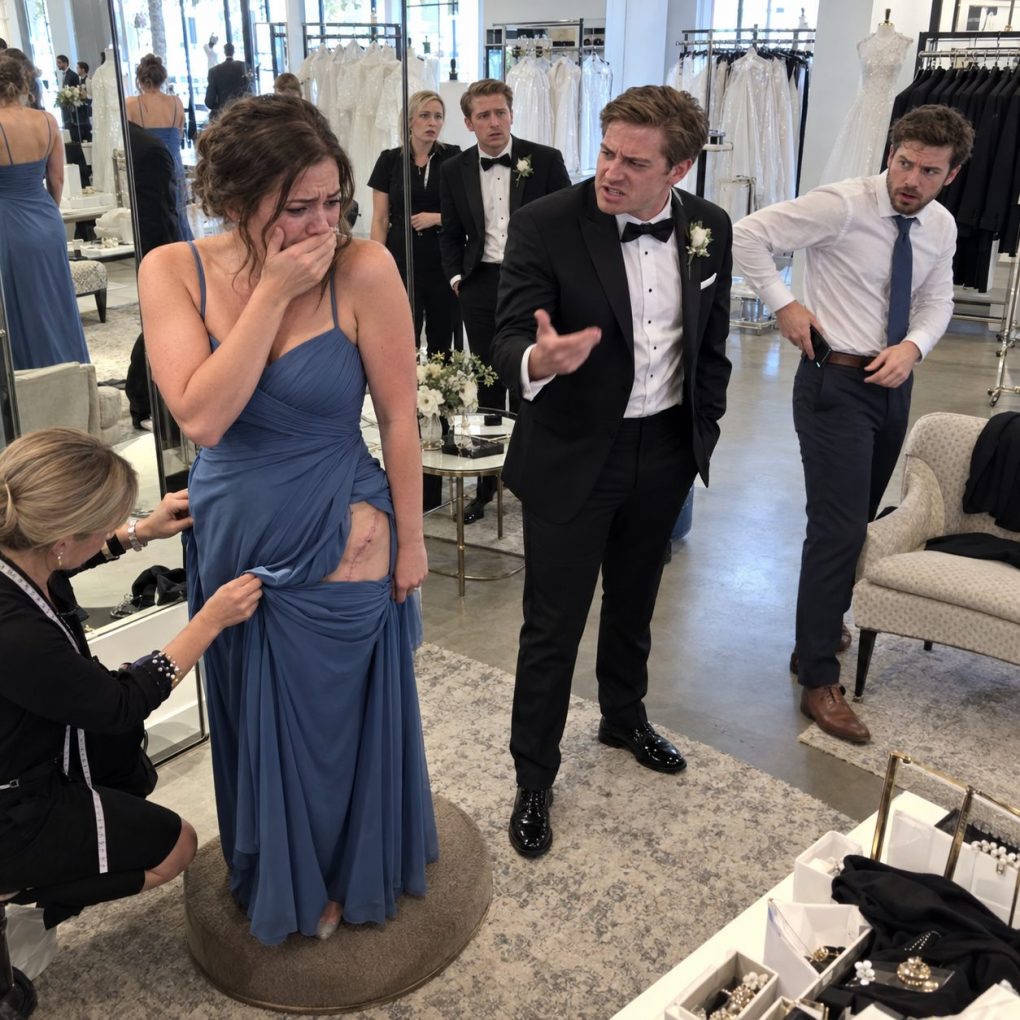
« Ignorez ma sœur. Elle n’est qu’un fardeau », annonça mon frère Grant tandis qu’un tailleur ajustait sa veste de mariage. J’étais à deux mètres de là, vêtue d’une robe de demoiselle d’honneur que j’avais achetée avec mes heures supplémentaires. Trois hommes rirent nerveusement. Grant sourit à son reflet. « Rachel ne l’a invitée que par pitié. Croyez-moi, Hannah a toujours eu besoin de quelqu’un pour la sauver. »
Je n’étais venue que parce que Rachel m’avait demandé d’être demoiselle d’honneur, et je voulais croire que nous pourrions à nouveau former une famille. Je suis restée silencieuse. À trente-trois ans, j’avais un travail, mon propre appartement et un rein. L’autre était dans le rein de Grant. Cinq ans plus tôt, lorsque ses reins avaient lâché, je m’étais portée volontaire pour les tests. J’étais compatible. Il m’avait suppliée de ne parler de la greffe à personne, car il détestait être vu comme malade. Je l’aimais suffisamment pour respecter cela. Apparemment, il aimait encore plus le silence.
La couturière souleva la couture latérale de ma robe pour ajuster la taille. Le tissu bougea, dévoilant la cicatrice pâle qui barrait le bas de mon ventre. Owen, le témoin de Grant, s’interrompit en plein milieu de sa phrase. Il me fixa un instant, puis demanda : « Hannah, tu as fait don d’un rein ? » Je rabattis le tissu. « Oui. » Son visage se figea. « J’en ai donné un à mon père. Je connais ce genre de cicatrice. » Grant rétorqua sèchement : « On peut finir l’essayage ? »
Mais Owen le regardait déjà. « Tu m’as dit que tu avais donné un rein à Hannah. » Le tailleur baissa son mètre ruban. Grant éclata de rire. « C’est compliqué. » Owen secoua la tête. « Non. Lequel de vous deux était le donneur ? » Mon frère attrapa le bras d’Owen, mais celui-ci recula et prit son téléphone.
Il appela Rachel sur haut-parleur. Elle répondit gaiement, lui demandant si le smoking lui allait bien. Owen dit : « Avant d’épouser Grant, demande-lui qui a donné un rein à qui. » Le silence au bout du fil dura si longtemps que je crus que la communication avait été coupée. Puis Rachel murmura : « Grant m’a dit que c’était Hannah qui avait failli mourir. »
J’ai eu l’impression d’avoir reçu une gifle. Grant avait laissé croire à sa propre fiancée qu’il m’avait sauvé la vie. Rachel s’est mise à pleurer. « C’est pour ça que mes parents ont aidé à organiser la collecte de fonds pour les soins médicaux », a-t-elle dit. Je me suis agrippée au bord de l’estrade. « Quelle collecte de fonds ? » Owen a tourné son téléphone vers moi. Ma photo apparaissait sur un lit d’hôpital, sous un titre qui félicitait Grant d’avoir sauvé sa sœur en difficulté.
En dessous, un chiffre : 58 420 $ récoltés. Avant que quiconque ne reprenne la parole, Rachel dit : « Hannah, dis-moi que tu étais au courant. Mes parents ont déposé vingt mille dollars sur ce compte. »
Rachel arrived at the bridal shop carrying her wedding binder, still wearing the pearl earrings Grant had given her. She looked first at my scar and then at my brother. “Tell me the truth, once,” she said. Grant answered, “Hannah likes attention.” It was such a familiar line that, for a moment, I almost lowered my eyes. Instead, I opened the discharge summary on my phone. It identified me as a living kidney donor. The surgery date matched Grant’s transplant.
I told Rachel what those pages couldn’t show: the months of pain, the missed promotion, the nights I slept sitting up because lying flat hurt. Grant had held my hand before surgery and promised he would never forget. Later, whenever I asked him to repay the travel expenses he’d offered to cover, he called me selfish. Rachel read the document without interrupting. Owen stood beside her, silent and furious.
Then she opened the fundraiser. Grant had described me as unemployed, addicted to prescription painkillers, and struggling after a transplant he claimed he’d given me. He had used a photograph he took while I was waking up from my own donor surgery. Strangers had written messages saying I was lucky to have such a devoted brother. Grant had thanked them publicly for helping him “keep Hannah alive.”
“That money was for hospital bills,” Rachel said. “You told me she needed another operation.” I shook my head. “I haven’t been hospitalized since the donation.” Grant began shouting that I misunderstood everything, but Rachel showed him the messages he’d sent donors asking them to share the campaign before the wedding. He had even planned a special appeal at the rehearsal dinner, with me brought onto the stage to thank him.
I stared at the printed program inside her binder. It called Grant “a hero who gave his sister a second chance.” Under my name, someone had written a speech in the first person. “My brother sacrificed part of himself so I could live.” I had never seen those words. “You expected me to read this?” I asked. Grant stepped close enough for me to smell his cologne. “After everything I’ve done for you, you owe me one night,” he hissed.
Rachel pulled up the campaign dashboard. She had been added as a co-organizer to answer donor questions, but Grant handled all payouts. She opened the payment details, frowned, and enlarged the screen. The receiving account was registered under my full name and old address. I had never opened it. The money had already been withdrawn.
I looked at Grant. For the first time, he seemed frightened. The account wasn’t merely a way to take donations. It was a way to make the theft look like mine.
