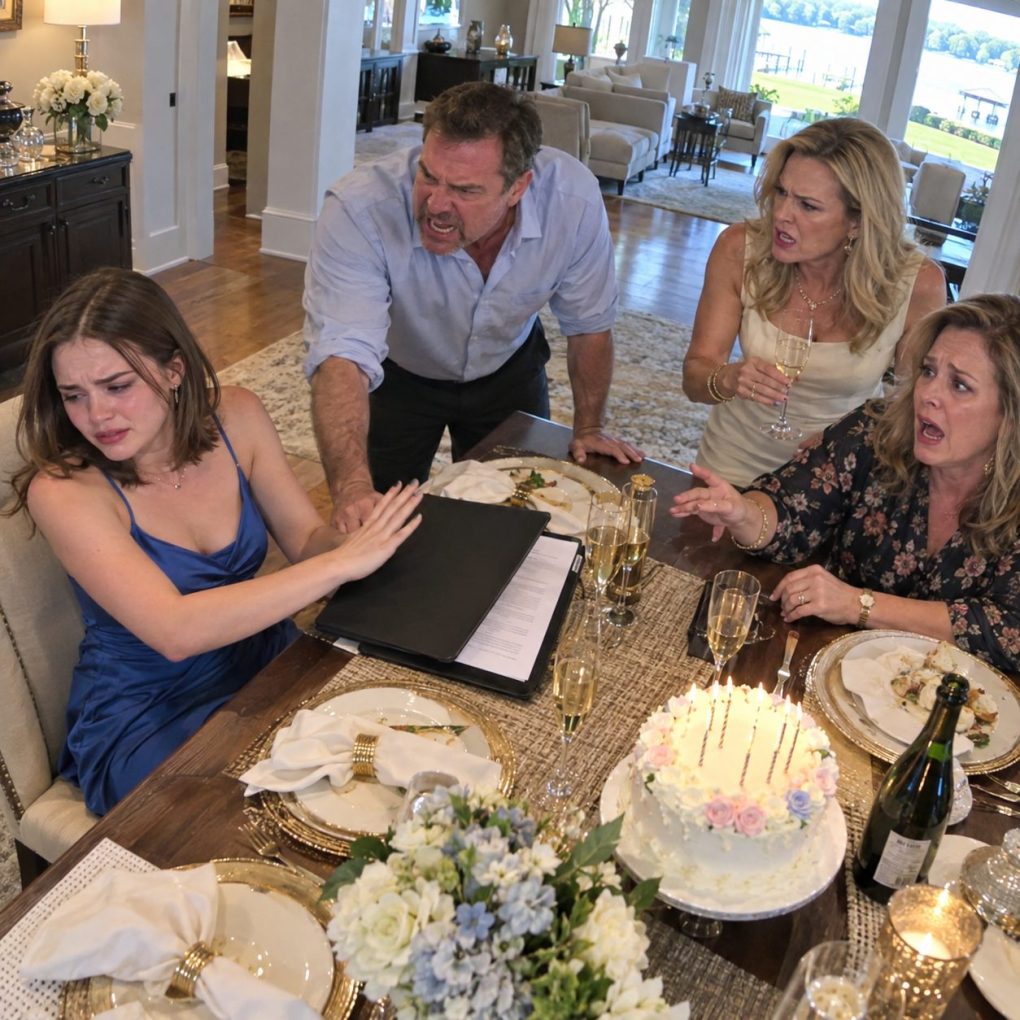
La noche que cumplí dieciocho años, mi padre alzó una copa de champán y les dijo a todos: «Por Emily, que por fin tiene edad suficiente para tomar las riendas de su futuro». Mi tía Melissa sonrió tan ampliamente que parecía doloroso, y mi madrastra, Karen, me apretó el hombro como si de repente fuéramos mejores amigas. Creían que los 3,5 millones de dólares que me había dejado mi difunta abuela serían míos a medianoche y, de alguna manera, suyos para el desayuno. Les devolví la sonrisa porque no tenían ni idea de que ese dinero ya estaba fuera de su alcance.
Lo que no sabían era que había pasado las tres semanas anteriores reuniéndome discretamente con Daniel Mercer, el abogado que había redactado el testamento de mi abuela. Dos meses antes, había visto por casualidad un correo electrónico en el portátil de mi padre con el asunto: «Los fondos de Emily después de los 18». En él se hablaba de pagar su hipoteca, invertir en el salón de belleza de Melissa, que estaba en quiebra, y poner a Karen a cargo del acceso a mis cuentas. Mi nombre aparecía seis veces, pero nadie había escrito ni una sola frase sobre lo que yo quería.
Esa mañana, después de alcanzar la mayoría de edad legal, Daniel me ayudó a transferir la herencia a un fideicomiso administrado profesionalmente con un administrador independiente. Seguí siendo la beneficiaria, pero ningún familiar podía retirar dinero, pedir préstamos con cargo a él ni presionar a un empleado del banco para que les diera acceso. Guardé lo suficiente en una cuenta corriente aparte para los gastos de la universidad y para imprevistos. Luego volví a casa, me puse el vestido azul que Karen me había comprado y actué como si no supiera nada.
Durante la cena, papá deslizó una carpeta negra por la mesa, entre el pastel de cumpleaños y las copas de vino. «Solo papeleo», dijo con naturalidad. Dentro había un amplio poder notarial financiero que lo designaba como mi representante, además de otra página que autorizaba a Karen a hablar con los bancos en mi nombre. Melissa se inclinó hacia adelante y dijo: «Es más prudente que los adultos se encarguen de este tipo de dinero». Cuando pregunté por qué habían preparado los papeles antes de mi cumpleaños, nadie respondió.
Los miré a los tres y sentí un escalofrío. —Lo leeré mañana —dije. La sonrisa de papá desapareció. —No hay nada que leer. Cerré la carpeta y la empujé de nuevo sobre la mesa. —Entonces no hay nada que firmar.
Durante varios segundos, nadie habló. Karen apretó con fuerza su vaso y Melissa miró a mi padre con un destello de pánico que no pudo disimular. Esa breve mirada entre ellos me lo dijo todo. Por la mañana, descubrirían que la fortuna que ya habían repartido mentalmente no estaba donde esperaban.
At 7:12 the next morning, someone pounded on my bedroom door hard enough to shake the frame. My father walked in without waiting, holding his phone in one hand and a printed bank statement in the other. His face was red. “What did you do?” he demanded.
I sat up slowly, already dressed because I had barely slept. He threw the statement onto my bed; the account that had held my grandmother’s inheritance showed a transfer balance of zero. Karen stood behind him in the hallway, whispering that I was “panicking over nothing,” while Melissa was downstairs on speakerphone with the bank. Nobody asked whether I was okay.
Dad ordered me to call Daniel and reverse the transfer. When I refused, his anger changed direction. He said my grandmother had trusted him to guide me, that I was too young to understand taxes, investments, property, or “how families survive.” Then he admitted he had already promised a contractor a deposit for a lake house renovation because he believed I would “help the family” after my birthday.
I stared at him. “You spent money you didn’t have because you assumed I would give you mine?” He called that selfish; Karen called it cruel. Melissa came upstairs crying, saying her salon would close without $80,000 and that Grandma would have wanted me to help her. That was when I understood none of them were asking what I wanted—they were explaining why my refusal made me a bad person.
At 9:03, Daniel called. My father tried to take the phone from my hand, so I put the call on speaker. Daniel calmly explained that the transfer had been completed lawfully after I turned eighteen, that the trustee was independent, and that no family member could access the trust. My father asked whether he could challenge it, and Daniel simply replied, “You are free to speak with your own attorney.”
The house changed after that sentence. Nobody shouted anymore; they became careful. That afternoon, I packed a suitcase and moved into my best friend Ava’s parents’ guest room until college orientation. Before I left, Dad stood by the front door and said, “If you walk out, don’t expect this family to be waiting when you come back.”
I wanted to tell him that family should never make love conditional on account access, but I only said, “Then I guess I’ll find out what was real.” Driving away, I felt terrified, guilty, and strangely light. Protecting the money had been the easy part. The harder truth was realizing that sometimes the moment you finally gain control of your life is the same moment you learn who only loved you when they believed they could control it.
For the first two weeks, my father did not call. Karen sent messages about “respect,” Melissa posted vague quotes about ungrateful children, and relatives I barely knew began texting that money should never come before family. I stopped defending myself. Daniel advised me to save every message, keep financial records private, and let the trustee handle any request involving the inheritance.
