I took the green sweater—the one he had picked out from the Target clearance rack because he said it looked like the evergreen trees along the Northern Pacific rail line—and dropped it into cold water. A milky, brownish film immediately bloomed across the surface, smelling of sage, cheap beef bouillon, and rendered fat. I reached for the dish soap and began kneading the wool between my knuckles, pressing the heels of my hands together until the suds turned gray.
In the tub, Micah sank down until the water reached his chin. He blew a tiny raft of bubbles across the surface, watching them pop against the porcelain edge.
“Mom?”
“Yeah, sweetie?”
“Grandma said I talked back.”
I stopped scrubbing. My hands were deep in the warm, greasy suds, my knuckles red from the friction. I looked over my shoulder at him. The steam had pinked his cheeks, but the shadow under his eyes was dark and bruised-looking.
“Did you talk back?” I asked gently.
“Ross said trains were stupid. He said only weird kids who don’t have friends memorize engine numbers. I just told him that engines are historical. I said the Big Boy 4014 could pull three thousand tons over Sherman Hill, and that’s not stupid, that’s just engineering.” He swallowed, his throat bobbing above the waterline. “Was that talking back?”
I turned back to the sink, shut off the tap with an elbow, and wrung out the green wool with so much force my wrist tendons creaked.
“No, Micah,” I said, my voice vibrating with a fury so pure and concentrated it felt like cold steel in my ribs. “That was not talking back. That was you telling the truth about something you love. Ross was being mean because he is small, and he is lazy, and he doesn’t know how to build anything.”
“Grandma got mad because of the Big Boy?”
“Grandma got mad because she is Grandma,” I said, pulling the drain plug on the sink and watching the dirty water swirl down the brass pipe. “And because she thinks she is allowed to hurt people if they don’t sit there and let her family pretend they’re royalty. But she isn’t allowed to hurt you. Not ever again.”
I washed his hair three times with apple-scented shampoo, scrubbing the scalp with the pads of my fingers until the grease smell was entirely gone, replaced by the clean, sharp scent of fruit. When he was clean, I wrapped him in the heavy navy-blue bath sheet I had warmed on the radiator, carried him into his bedroom, and tucked him into bed with his flannel sheets and his three favorite die-cast locomotives lined up on the nightstand.
He was asleep before I could finish the first page of the library book about the transcontinental railroad. His breathing smoothed out into that soft, rhythmic whistle that had been my only steady comfort through nine years of single motherhood, nine years of shift-work promotions, nine years of late-night grocery runs and budget reconciliations.
I went into the kitchen, turned on the small desk lamp in the corner, and pulled out my work laptop.
It was 9:42 PM.
My phone, lying face down on the butcher block counter, began to vibrate again. It didn’t stop. It buzzed three times, paused for the voicemail system to kick in, and then immediately began to buzz again.
I didn’t answer. I picked up the landline phone—the cheap, corded receiver I kept plugged into the wall for emergencies—and dialed Dawn’s personal cell.
Dawn Miller had been my best friend since our freshman year at Ohio State, when we both worked forty hours a week at the campus credit union while carrying eighteen credit hours of logistics and finance classes. Today, she was the regional vice president of risk management for a mid-tier commercial bank in Worthington. She was also the only person on earth who had ever seen me cry about my father’s tax liens.
The phone rang twice before she picked up. The background noise was full of clinking glasses, children shouting, and the muffled brass chorus of a Nat King Cole Christmas record.
“Claire?” she said, her voice dropping into that instant, sharp alertness she reserved for liquidity crises and late-night calls from friends in trouble. “Where are you? Aren’t you supposed to be at the Vance ancestral estate suffering through your mother’s overcooked roast?”
“I left,” I said. “About an hour ago.”
“Good for you. Did Ross make another comment about your child support?”
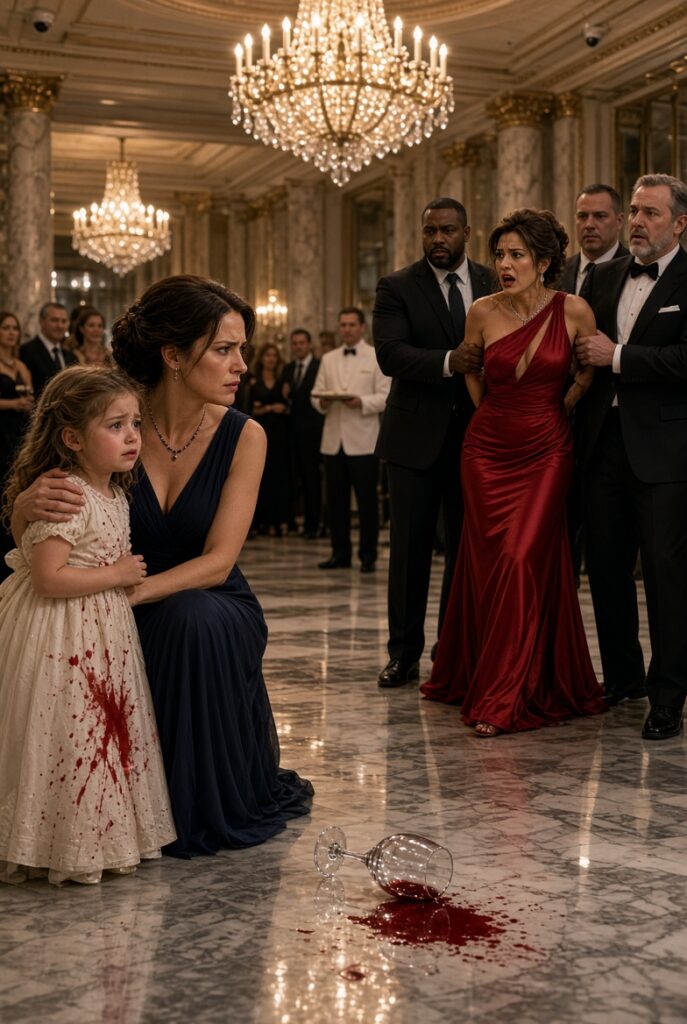
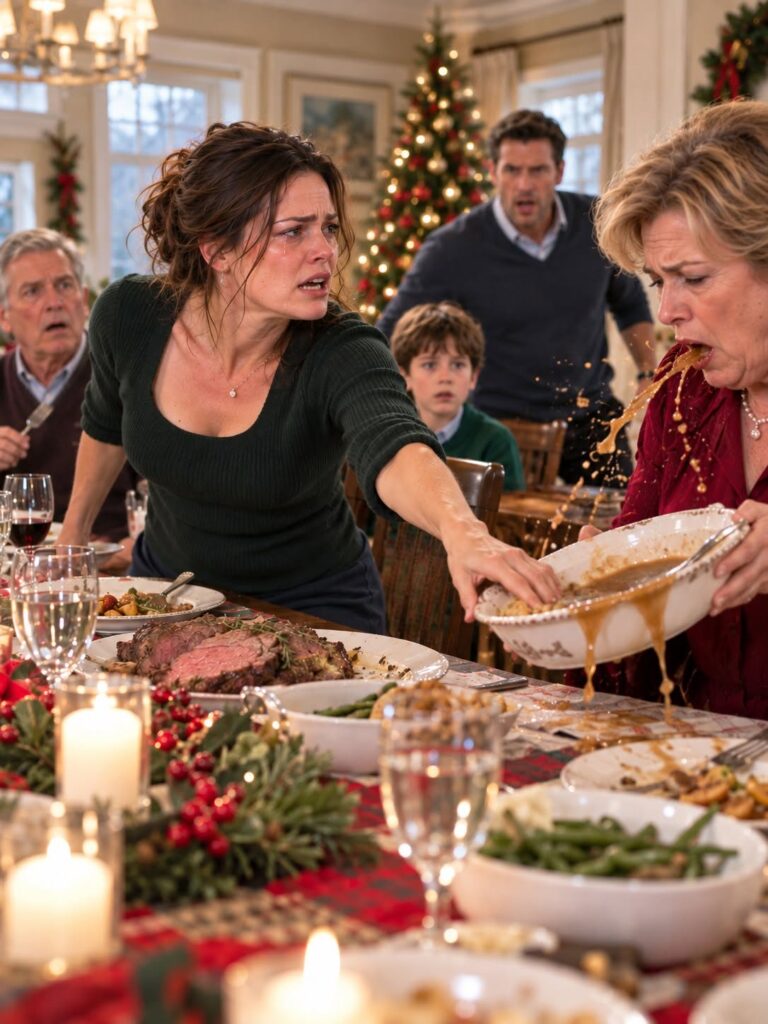
“Evelyn dumped the entire serving dish of pot roast over Micah’s head.”
The line went completely dead. The Nat King Cole record seemed to fade into nothingness as Dawn moved away from her family gathering, the heavy thud of a closing door cutting off the holiday chatter.
“She did what?” Dawn’s voice wasn’t loud. It had that flat, terrifying quietness of an auditor who has just found an unauthorized five-figure withdrawal in an executive’s personal account.
“She tipped it over him. Gravy, meat, carrots. Right onto his hair. Because he defended his model trains to Ross.”
“Is Micah burned?”
“No. It was lukewarm. Just greasy and humiliating.”
“Where is he now?”
“Asleep in his bed. He thinks he was punished for slouching.”
Dawn exhaled slowly. Through the receiver, I could hear her pacing across hardwood floors—the familiar, rhythmic cadence of a woman who thought best while moving.
“And what did you do, Claire?”
“I took him to the café on High Street,” I said, looking down at my open laptop screen, where the clean, blue interface of my primary checking account was already loading. “And while he was eating a pastry, I canceled the January mortgage transfer. I stopped Ross’s auto-draft. I removed my name from the utility authorizations. And I sent an emergency hold request on the HELOC through the member portal.”
A short, sharp bark of laughter came through the line, followed by a low whistle. “Jesus Christ. The nuclear option. You really pulled the pins.”