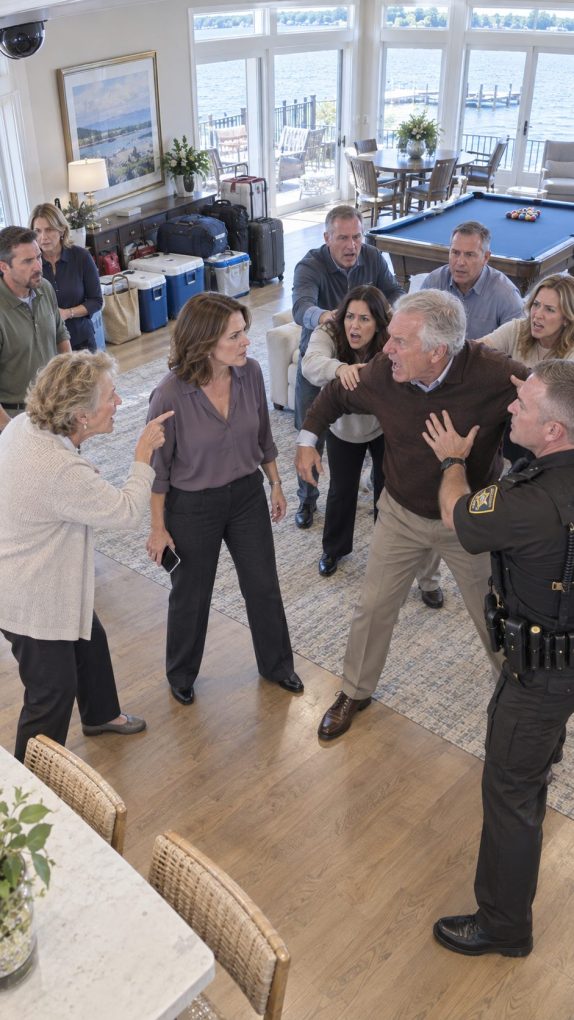
A las 2:18 de la tarde del sábado, mi cámara de seguridad emitió una alerta que mostraba a mis padres en el porche de mi casa del lago, con veinte personas detrás. Neveras portátiles, maletas, sillas plegables y bolsas estaban apiladas en la entrada. Les había dicho tres veces que nadie usaría la casa ese fin de semana.
Mi madre miró fijamente a la cámara. «Evan, abre la puerta. Deja de decir tonterías». Detrás de ella, los familiares se reían como si fuera una broma familiar. Mi padre ya estaba frente al teclado, introduciendo una y otra vez el viejo código de cuatro dígitos.
Hablé a través de la cámara. “Dije que no. Por favor, váyanse.”
Mi madre se cruzó de brazos. «No tienes derecho a avergonzarnos después de que todos hayan viajado hasta aquí». Al parecer, les había dicho a todos que yo había cambiado de opinión. No era cierto. La casa era solo mía, y había planeado un fin de semana tranquilo allí después de meses de reparaciones.
Mi padre volvió a pulsar el teclado. “Esta cosa estúpida no funciona”.
“Cambié el código.”
Eso finalmente captó la atención de todos.
Mi madre se acercó a la cámara. —¿Lo cambiaste por nuestra culpa? —pregunté—. Lo cambié porque el mes pasado entraron sin permiso. Inmediatamente gritó que los padres no deberían necesitar permiso para visitar la propiedad de su propio hijo.
Entonces mi primo rodeó la casa y probó con una de las ventanas.
Le advertí por el altavoz que se detuviera. Se rió y dijo: «Tranquilo, hombre. Solo estamos intentando entrar».
Fue entonces cuando llamé a la oficina del sheriff.
Me quedé treinta minutos fuera y observé todo a través de las cámaras. Mi madre insistía en que abriera la puerta. Mi padre empezó a sacudir la manija con tanta fuerza que activó otra alarma. Dos huéspedes comenzaron a descargar neveras portátiles en mi terraza como si tuvieran la intención de esperarme.
Entonces, un coche patrulla del sheriff entró lentamente en la entrada de la casa.
Ya nadie se reía.
Un agente salió y preguntó quién era el dueño de la propiedad. Mi padre señaló la casa y dijo: «Nuestro hijo es el dueño, pero esta es una casa familiar». El agente preguntó si tenían permiso para estar allí.
Mi madre dijo: “Por supuesto que sí”.
A través del altavoz del timbre, respondí: “No, no lo hacen”.
Todos los rostros se volvieron hacia la cámara.
El agente se acercó al porche y me pidió que confirmara mi nombre y la titularidad de la propiedad. Le di la información y le dije que podía enviarle por correo electrónico una copia del registro de la propiedad y mi licencia de conducir si fuera necesario.
Mi madre interrumpió: “Esto es una locura. Somos sus padres”.
El agente mantuvo la calma. «El hecho de ser pariente del propietario no da automáticamente permiso para entrar en una propiedad privada».
My father became angry. He insisted he had helped me repair the dock two summers earlier and therefore had every right to use the house. I reminded him that I had paid him back for every material he purchased, and helping with repairs did not create ownership.
Then my mother revealed why she had brought twenty people.
She had promised my aunt’s entire family a free holiday weekend at the lake.
Apparently, she had been telling relatives for years that the house was “basically ours too.” She had even collected money from several people for groceries and boat fuel. Now admitting I had refused permission would make her look foolish.
One guest quietly asked her, “You said Evan invited us.”
My mother snapped, “He was supposed to.”
That sentence changed the mood immediately.
The deputy told everyone they needed to leave unless I changed my decision. My father asked if they could at least stay outside and use the dock. I said no. The dock was part of the property, and I didn’t want twenty angry people wandering around without me there.
My mother stared into the camera again. “If you make us leave, don’t expect us at Thanksgiving.”
I answered, “That’s your choice.”
For several seconds, she simply stared back.
Then my cousin, the same one who had checked the window, became argumentative with the deputy. He claimed nobody had broken anything, so police involvement was unnecessary. The deputy explained that refusing to leave after the owner revoked permission could become a trespassing issue.
That finally ended it.
People began loading their coolers back into vehicles. Some looked angry at me. Others looked embarrassed with my parents.
My aunt walked close enough to the camera that I could hear her say to my mother, “You should have told us he said no.”
My mother answered, “He usually gives in.”
She was right.
I drove to the lake house after the last vehicle disappeared. The sheriff’s cruiser was still there when I arrived, and the deputy walked around the property with me to make sure nobody had damaged anything.
The window my cousin had tested was fine. The front door had scratches near the keypad where my father had repeatedly pulled the handle, but nothing was broken. I thanked the deputy and saved every camera recording.
That evening, my phone exploded with messages.
My father said I had humiliated my mother. My mother said I had treated them like criminals. Several relatives accused me of destroying a family weekend over an empty house.
The house wasn’t empty.
It was mine.
That distinction seemed impossible for my parents to understand.
Three days later, my younger sister called. She admitted our mother had been using the lake house without telling me for nearly a year. Whenever I traveled for work, she sometimes checked my social media, guessed when I was away, and used the old keypad code.
Suddenly, everything made sense.