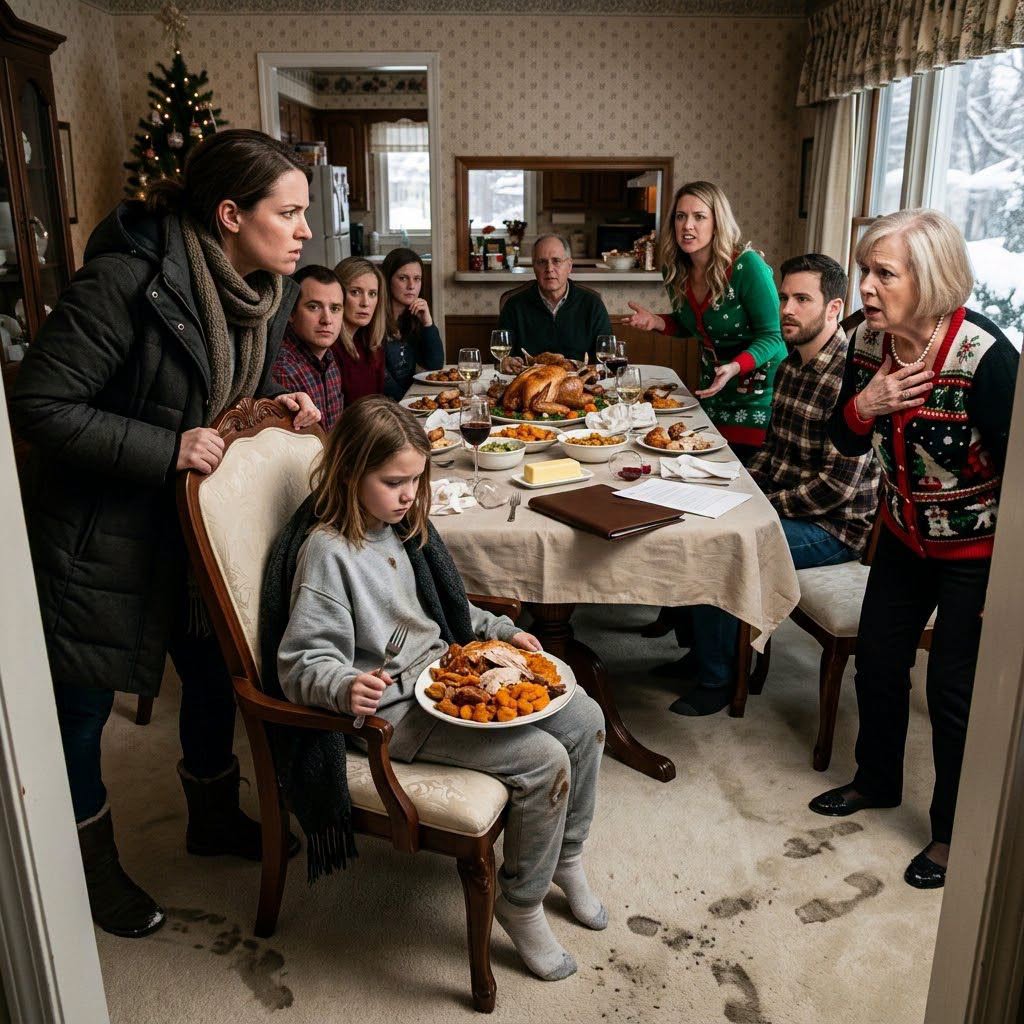
When they canceled family dinners without explanation, I was expected to understand.
Now they had turned my home into their private vacation destination, and somehow I was the problem.
“Robert, how did you get inside?”
He shifted his weight and looked toward the front door.
“We used the lockbox.”
I remembered the small metal box beside the porch, installed after Henry’s surgery so Robert could enter during an emergency.
I had shared the code because I trusted my only son.
That trust had apparently become an unlimited invitation.
“The lockbox was for emergencies and visits I approved,” I said.
Megan shrugged.
“Well, it is the family beach house.”
I looked directly at her.
“No, Megan, it is my beach house, and family comes here when invited.”
The room quieted enough for several nearby guests to overhear our conversation.
One woman lowered her coffee cup, while a man near the window glanced uncomfortably toward Robert.
Megan’s parents, Carol and Thomas, emerged from the dining room and approached us with puzzled expressions.
Carol smiled nervously.
“Margaret, we thought you knew everyone was coming.”
I looked at her.
“I didn’t know a single person was coming.”
Thomas turned sharply toward Robert.
“You told us your mother was fine with the gathering.”
Robert opened his mouth, but Megan answered before he could speak.
“She was supposed to be away until tomorrow.”
The implication was impossible to miss.
My permission had never mattered because they expected me to remain absent.
I walked farther into the living room, forcing myself to examine the damage without allowing my anger to control me.
A quilt I had stitched during Henry’s final winter lay beneath several wet towels.
His restored sea chest was surrounded by luggage and children’s sandy sandals.
Someone had moved our wedding photograph onto the floor to make space for the speaker.
The photograph showed Henry and me outside a tiny church, smiling beneath an archway decorated with flowers from my mother’s garden.
I bent down and picked it up, carefully wiping a fingerprint from the glass.
Robert watched me without speaking.
I wondered whether he understood that the things surrounding him were not simply furniture that would someday become his.
They were pieces of a life he had not witnessed completely.
Henry and I had purchased the cottage when Robert was only four years old.
The roof leaked, the kitchen cabinets were crooked, and the sunroom consisted of little more than unfinished wooden framing.
For years, Henry worked additional shifts while I repaired curtains, painted walls, and saved grocery money for improvements.
We could never afford expensive vacations, but every summer we brought Robert to the shore and watched him chase waves.
Henry taught him to build sandcastles, repair fishing nets, and recognize approaching storms by studying the horizon.
I remembered Robert as a little boy, falling asleep against his father’s shoulder while the sun disappeared beyond the water.
I had believed those memories would make him cherish the cottage after Henry was gone.
Instead, he seemed interested mainly in how much it was worth.
During the previous year, Robert had repeatedly asked about property taxes, insurance, renovation costs, and recent sales along the coastline.
At first, I assumed he was trying to help me manage the responsibilities of living alone.
Then he began asking whether I had updated my will.
He wanted to know whether Henry’s original wishes remained unchanged.
Henry and I had once planned for Robert to inherit the cottage outright.
We believed he would care for it, preserve our memories, and eventually share it with his own children.
But shortly before this disastrous weekend, I had overheard something that changed how I viewed that plan.
Three weeks earlier, I had been trimming the climbing roses beside the kitchen window when Megan arrived with Carol.
They didn’t realize I was outside.
Their conversation drifted through the open window while I worked beneath the wooden trellis.
“When it’s ours, the first thing going is that ugly little sunroom,” Megan said.
Carol apparently agreed, because I heard her discussing the possibility of expanding the kitchen into that space.
Megan laughed.
“Robert says his mother barely uses it anymore.”
My pruning shears stopped moving.
The sunroom was where Henry and I had eaten Sunday breakfasts, celebrated anniversaries, and watched thunderstorms roll across the ocean.
It was also where I had held his hand during his final months, when his illness made walking down to the beach impossible.
Even after his death, I sat there every evening with a cup of tea and watched the sunset.
Robert knew that.
He had watched me cry there after Henry’s funeral.
Yet someone had convinced Megan that the room meant nothing to me.
I remained beneath the window, unwilling to reveal that I had overheard them.
Then Megan said something that disturbed me even more.
“Once everything is settled, we’ll finally be able to make this place useful.”
Not if the property eventually belonged to them.
When.
That single word stayed with me throughout the night.
The following morning, I made an appointment with my attorney, Ellen Price, who had handled Henry’s estate.
Ellen had known our family for nearly twenty years, and she understood how much the cottage meant to me.
I told her about Megan’s conversation, Robert’s questions, and the uncomfortable feeling that my son had begun treating me as a temporary occupant.
She listened carefully before opening the estate documents Henry and I had signed years earlier.
“Margaret, this property is still entirely yours,” she reminded me.
I stared at Henry’s signature near the bottom of the old document.
“I know, but I’m beginning to wonder whether Robert remembers that.”
We discussed alternatives to leaving the cottage directly to him.
Eventually, I decided that the property should be sold after my death unless I chose another arrangement while I was alive.
The proceeds would support carefully structured trusts, including educational assistance for my grandchildren and a vocational scholarship.