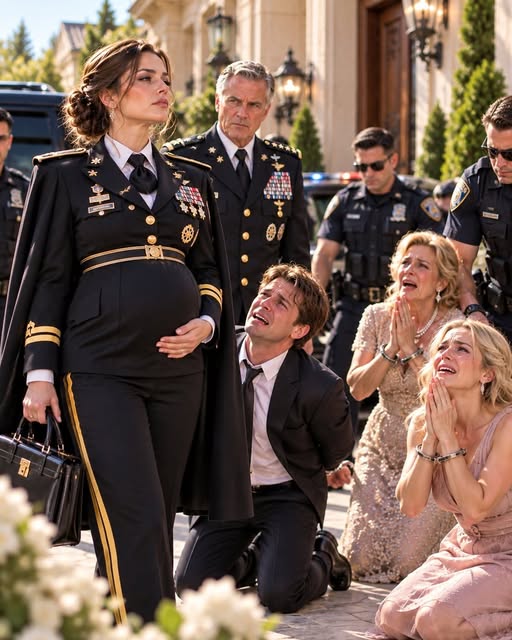
“I’m done absorbing your crashes,” I said. “Nolan and I are going home. You can deal with the police, the auditors, and the truth all by yourselves.”
Chapter 5 – The Sage Room
The drive home took twelve minutes. Neither of us spoke.
When we walked through our front door, the house was dark, warm, and quiet. There was no party tent, no brass bell, and no artificial celebration waiting for us. There was only the smell of fresh coffee and the soft hum of the refrigerator.
I walked straight down the hallway and pushed open the door to the third bedroom.
The room was painted a soft, soothing sage green—the color we had chosen four years ago when we first began mapping out a future that felt like it was sliding forever out of reach. For two years, every time I walked past this door, a heavy, suffocating ache settled into my chest. It was a room full of empty air and postponed hope.
I switched on the light and walked in.
On the closet shelf sat the box of tiny yellow socks and the newborn onesie that read GRANDMA’S FAVORITE—a gift I had bought in a moment of innocent, naive joy before my mother tried to crush it out of me.
I picked up the onesie, folding it neatly in my hands. The cotton was soft, untouched, and waiting.
Nolan appeared in the doorway. He leaned his shoulder against the frame, watching me quietly.
“Your phone’s been ringing,” he said gently. “Your dad. Three times. Your mom once.”
“Did you answer?”
“No.” He walked into the room, stepping softly across the hardwood floor, and wrapped his arms around me from behind, resting his chin on my shoulder. “It’s your call. Always.”
I looked down at the sage-green walls.
The $18,000 was gone. It had funded Nashville bachelorette trips, designer clothes, and a boutique LLC for a sister who viewed my life as a secondary resource for her own performance. Our fertility doctor’s warning echoed softly in my mind: Every year matters, Gina.
We were back at square one. We had to start saving from zero. We had to rebuild the account from night shifts at the hospital and office management salaries.
Except this time, we weren’t carrying anyone else’s weight.
“I’m not calling them back tonight,” I whispered, leaning back against Nolan’s chest.
“Good.”
“And Nolan?”
“Yeah?”
“Tomorrow morning, I want to call Dr. Hayes’s office.”
Nolan tightened his arms around me, pressing a soft kiss against my temple. “Done.”
Chapter 6 – What She Cost and What She’s Worth
Two weeks later, the front page of the local newspaper ran a short, unsparing article in the local news section: LOCAL WOMAN CHARGED IN MASSIVE FRAUD SCHEME; CHARITY DISSOLVED AMID ALLEGATIONS OF FAKE ILLNESS.
There was no photograph of Tessa in a white blouse. There was a mugshot of her looking sullen and exhausted in an intake jumpsuit, her pixie cut messy, her eyes avoiding the camera.
My parents didn’t call me to complain about the bad press. They didn’t ask me to retract anything or smooth things over with the neighbors.
In fact, they didn’t call at all.
According to Aunt Patty, who had called to apologize profusely on behalf of the entire extended family, Mom had taken down the blue-blanket photograph from the refrigerator and locked herself in her bedroom, while Dad had spent three days in the garage with a bottle of solvent and a scraper, trying to remove the gold engraving from the brass ship’s bell before throwing it into the local scrap yard.
He had also spent six hours cleaning out the old 1989 red-and-silver Ford F-150.
On a warm Saturday morning in mid-May, the rumble of an old V8 engine echoed down our street.
I looked out our living room window and saw the dented, perfectly restored red-and-silver truck pull up to our curb. The engine idled with a deep, throaty roar that hadn’t changed in thirty years.
My father stepped out of the cab. He was wearing his old work boots and a faded flannel shirt. His head was still mostly bald, but a fringe of gray hair was starting to sprout around the edges like stubborn weeds after a frost.
He walked up our driveway, carrying a manila envelope in one hand and a small cardboard box in the other.
I opened the front door before he could knock.
Dad stood on the porch, looking older, thinner, and profoundly tired. He didn’t smile his old, blindingly cheerful smile. He looked at me with a quiet, devastating humility.
“Hey, kiddo,” he murmured.
“Dad.”
He held out the manila envelope. “Your grandfather’s original bill of sale for the truck,” he said softly. “I put your name on the title transfer yesterday. It’s yours now.”
I looked at the envelope, then up at his face. “Dad, you love this truck. You spent an entire summer building it with me.”
“I know,” he said, his voice breaking slightly. “And for twenty years, I let your sister cost you everything because I was too weak to protect what mattered. I kept telling myself she needed me more. But the only person who was ever really there… the only person who ever built anything real with me… was you.”
He set the envelope and the small cardboard box on our porch table.
Inside the box was a set of spare keys on a brass ring, alongside the original handwritten bill of sale from 1996. On the back of the bill, in my father’s messy, familiar handwriting from twenty years ago, were the words he had told me in the garage: Remember what she cost and what she’s worth now.
For years, I thought he meant Tessa. I thought the truck was a monument to how much my sister took from our family and how much we had to sacrifice to keep her afloat.
Standing there on the porch in the warm May sunshine, looking at my father’s weathered face and feeling Nolan’s hand rest gently on my shoulder from behind, I finally understood what those words actually meant.
Tessa was the cost.
I was the worth.
“Thank you, Dad,” I said, picking up the keys.
He nodded slowly, wiping his eyes with the back of his thumb, and walked back down the driveway without asking me to fix anything else.