Chapter 1 – The First Swipe
The blue light of Nolan’s phone illuminated the sharp lines of his face as we sat in the quiet shadow of the white party tent. Beyond the white canvas walls, fifty people were still laughing, clinking plastic champagne flutes, and scanning the pink cards to donate to a twenty-five-thousand-dollar fertility fund built entirely out of my stolen grief.
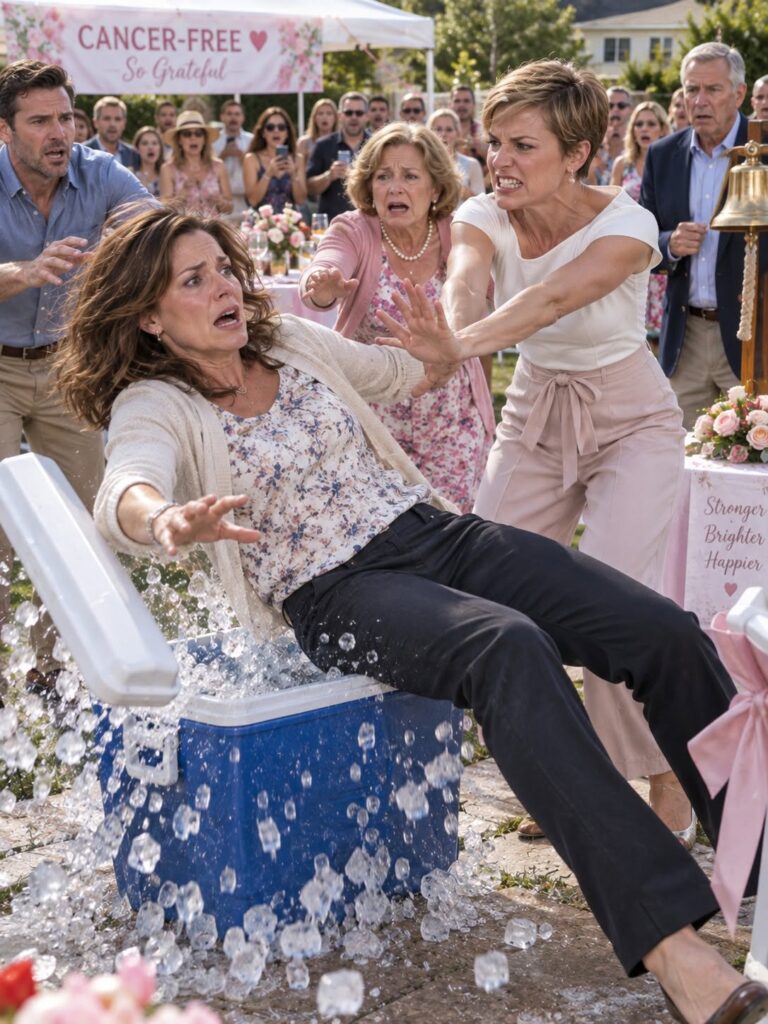
My father was handing out slices of cake near the folding tables. My mother was wiping away happy tears as Aunt Patty hugged her. And Tessa stood smiling in her white blouse, basking in the applause of people who believed she had just bared her soul about a fabricated infertility struggle she had stolen word-for-word from my life.
My wrist throbbed where it had scraped against the stone patio. The damp chill of the scattered ice was beginning to soak through the fabric of my shirt, but I barely felt it. The cold was entirely inside me now, spreading outward from my chest until my fingers went numb.
“Are you ready?” Nolan asked. His voice was steady, but his jaw was clenched so hard the muscle leaped beneath his skin.
He didn’t ask me to calm down. He didn’t tell me to be the bigger person. For thirty-seven years, my entire existence had been managed by other people’s comfort—by my mother’s insistence that peace mattered more than truth, by my father’s fragile happiness, and by Tessa’s endless, insatiable appetite for attention.
“Unlock it,” I said.
Nolan’s thumb hovered over the screen. He had organized our digital evidence into three distinct folders over the past two weeks: The Proof, The Alibi, and The Theft.
“We aren’t just stopping at a conversation,” Nolan reminded me quietly, watching my eyes in the dim light of the dashboard. “Once we pull this trigger, there’s no walking back. Your parents won’t just be embarrassed, Gina. Their entire world is going to fracture. Are you sure?”
I thought back to the broken plaster of the Susquehanna River watershed model when I was twelve. I thought of the zero balance in my college fund when I was eighteen. I thought of the $18,000 transfer confirmation sitting in my bank history, money I had saved dollar by dollar while skipping meals and working double shifts at the dental office. I thought of the forty hours spent sitting in the dark, damp concrete of the Cumberland Valley Cancer Institute parking garage, answering work emails on my phone while my sister supposedly fought for her life in a room she had never entered.
I thought of the sage-green room in our house—the empty space where a crib was supposed to go, a room Tessa had weaponized and turned into a punchline for a crowd of strangers.
“Give me the phone,” I whispered.
Nolan didn’t hand it over. Instead, he opened AirDrop and tapped a single, heavy file directly to the sound system controller that his friend Marcus had set up for the party’s outdoor speakers. Marcus was a local DJ who thought he was just playing background acoustic tracks for a cancer-free celebration. He had left his phone plugged into the auxiliary port on the amp while he went to grab a plate of brisket.
Nolan’s screen flashed: Transfer Complete.
“What did you do?” I asked, my breath catching.
“Marcus has the master playlist on his iPad,” Nolan said, slipping his phone back into his jacket pocket. “I just dropped an audio file into his local downloads folder. All he has to do is hit shuffle.”
Outside the car, the acoustic guitar music faded out. A brief, scratching sound echoed from the speakers mounted on the trees around the backyard.
My mother stopped mid-sentence with a paper plate in her hand. My father turned his head toward the house, his brow furrowing in confusion.
Then, through the crisp April evening air, the clear, unmistakable sound of Tessa’s voice began to play.
“I was going to stop,” the recording declared, echoing off the white tent canvas. “I just didn’t know how.”
The backyard went dead silent.