I laughed.
At the end of the afternoon, he stopped beside a stone bridge.
“I’m proud of you,” he said.
“I know.”
“I should have said it more often.”
“Yes.”
He nodded, accepting the correction.
“And I’m sorry I thought protecting you meant keeping you uninformed.”
“I know.”
“Are we all right?”
I looked at the water moving beneath the bridge.
“Not completely.”
“I understand.”
“But we’re getting there.”
His eyes shone.
“That’s enough for me.”
It was enough for me too.
A year after I left Chicago, I submitted my final thesis.
The subject was ethical responsibility in family-owned corporations. I wrote about the way loyalty could become an excuse for silence, and how protection without consent could become another form of control.
I never used the Moretti name in the paper.
I did not need to.
The story belonged to me now, and I no longer needed to prove what had happened to anyone.
On graduation day, Eleanor sat beside my father in the audience.
Amara stood with me afterward, holding flowers and complaining that my cap had ruined her hair when we hugged.
I looked across the courtyard at the people who had become my family by choice, by blood, and by the difficult work of learning to tell the truth.
My phone vibrated.
A message from Adrian.
Congratulations, Claire. I hope you are proud of yourself. You should be.
I read it once.
Then I placed the phone back in my purse.
Not because I was angry.
Because I was no longer waiting for his approval to feel complete.
I had left Chicago believing freedom meant escaping the life Adrian had built around me.
I had been wrong.
Freedom was not merely leaving.
It was learning to make decisions without asking whether someone else would approve. It was allowing people to love me without giving them ownership of my future. It was understanding that family could be cherished without being obeyed blindly.
Most of all, freedom was recognizing that I could forgive without returning.
That I could remember without longing.
That I could love the person Adrian had been to me and still choose the woman I was becoming.
Years later, when people asked why I moved to London, I gave them the simple answer.
“I wanted to finish my degree.”
It was true.
I simply never explained that I had also come to finish a life I had outgrown.
The last time I visited Bellwether House, Eleanor and I sat beneath the apple tree while the evening light turned the garden gold.
She placed a small box in my hands.
Inside was my mother’s wedding ring.
“I thought it belonged with you,” Eleanor said.
I closed my fingers around it.
“Are you sure?”
“She wanted you to choose your own life. This is not a request to wear it.”
“I know.”
“What will you do with it?”
I looked at the ring, then toward the open garden gate.
“I’ll keep it,” I said. “Not as a promise.”
Eleanor smiled.
“Then as what?”
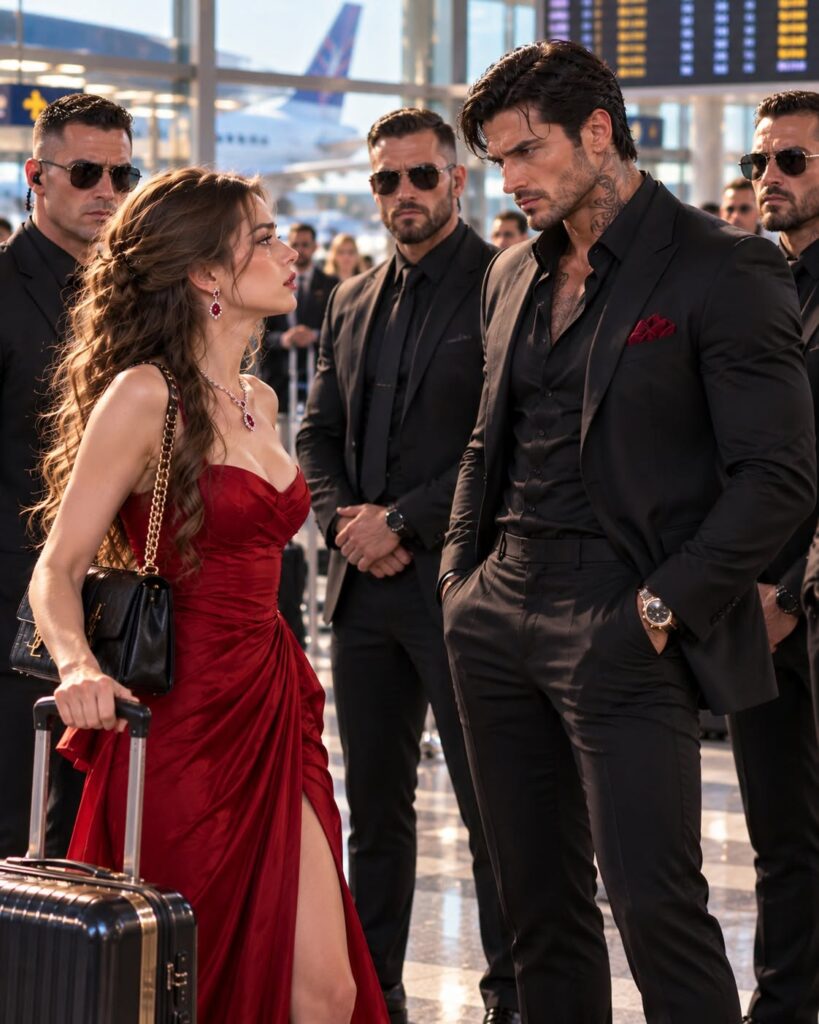
I thought of the airport departure board, the suitcase Adrian had promised to carry, and the woman I had been when I first removed my ring.
“As a reminder,” I answered. “That leaving can be an act of love too.”
Eleanor leaned her head against my shoulder.
The house behind us was no longer a secret.
The past was no longer a locked room.
And my future belonged entirely to me.