Adrian lowered his eyes.
“I know.”
The simple admission left me without an immediate response.
Eleanor sat in a high-backed chair near the window. She had not taken her eyes off me.
“I’m sorry,” she said.
“For what?”
“For the way you found out.”
I gave a short laugh. “That seems to be the family tradition.”
She absorbed the words without flinching.
“I understand why you’re angry.”
“You don’t understand anything about me.”
“No,” she said. “But I understand what it means to be kept outside a family story.”
Her answer was so gentle that my anger lost its direction.
I looked toward the photograph on the table.
My mother’s face seemed almost alive in it. She was laughing, her hair loose around her shoulders, one arm linked through Eleanor’s. Adrian stood behind them, younger and less guarded, but unmistakably himself.
“How did you know my mother?” I asked.
Eleanor looked at the photograph.
“She was my little sister.”
“I know that now.”
“She was also the person who made sure I never felt forgotten.”
There was no self-pity in her voice. That somehow made it worse.
“What happened between you?”
“Nothing happened between us.”
“Then why did everyone act as if you didn’t exist?”
Eleanor glanced at Adrian.
He answered.
“Your grandfather believed Eleanor’s condition should remain private. He was afraid people would treat her differently, or use her dependence against the family.”
I turned to him.
“And my mother agreed?”
“At first.”
“What changed?”
“Your mother left for university. She began making her own decisions. She visited Eleanor regularly, even when your grandparents disapproved.”
Eleanor’s expression softened.
“She brought books,” she said. “And music. She taught me how to write letters.”
“Why didn’t she tell me about you?”
“Because she believed she was protecting you.”
I felt the familiar frustration rise again.
“Everyone keeps saying that as if it explains everything.”
“It doesn’t,” Eleanor said. “Your mother made mistakes. So did your father. So did Adrian.”
I looked at him.
“Did you know about me before we married?”
“Yes.”
“Did you know I didn’t know about Eleanor?”
“Yes.”
“Did you think that was acceptable?”
“No.”
His answer came without hesitation.
“Then why did you agree to keep the secret?”
He held my gaze.
“Because your mother asked me to.”
I stood.
The room seemed too small for the anger moving through me.
“My mother died eighteen years ago. She cannot continue making decisions for me.”
“I know.”
“Then why are you still letting her?”
“I’m not.”
He placed the envelope on the low table between us.
“That is why I brought this.”
I stared at it but did not touch it.
“What does it say?”
“I don’t know.”
“You’ve had it for eighteen years.”
“It was sealed.”
“Why didn’t you open it?”
“Because it was addressed to you.”
I looked at the envelope more closely.
The paper had yellowed slightly with age. My name was written in my mother’s unmistakable hand.
Claire.
No surname. No explanation.
“I was twelve when she died,” I said. “You could have opened it.”
“I could have.”
“But you didn’t.”
“No.”
“Why?”
“Because I had already broken one promise to her.”
My throat tightened.
“What promise?”
“That I would protect you.”
I shook my head.
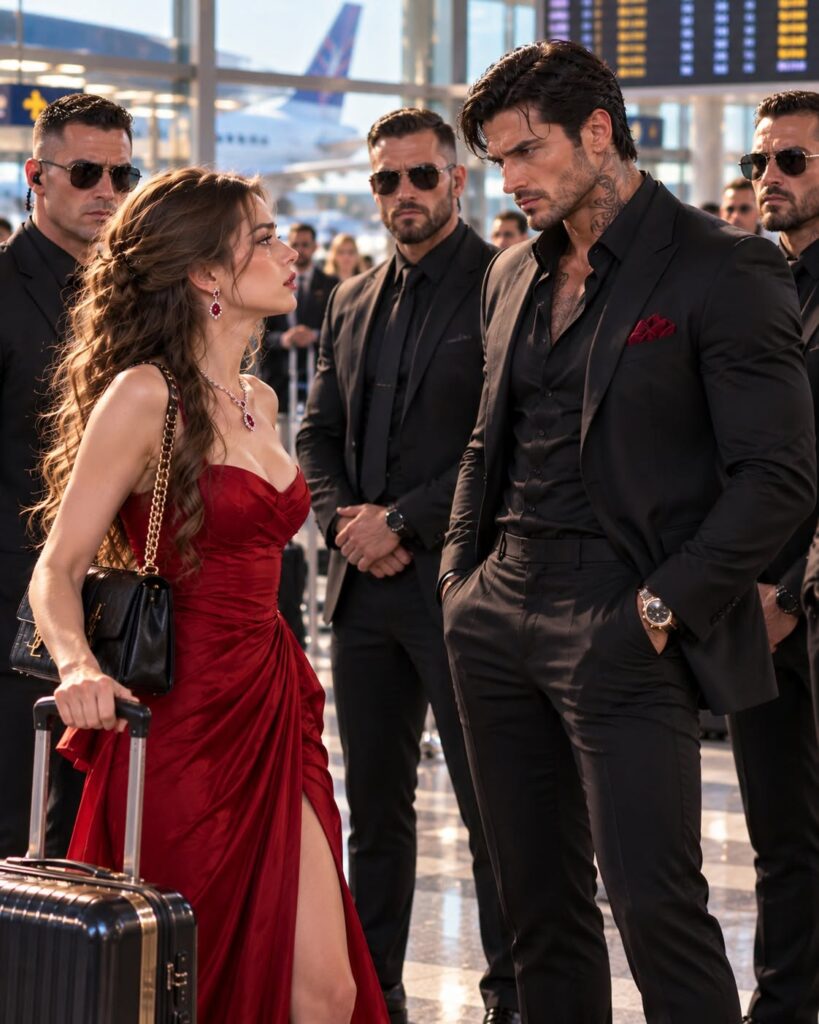
“You abandoned me at an airport.”
“I know.”
“You changed your reservation with Sophia and left me there.”
“I know.”
“You spent our entire marriage telling me I was imagining things whenever I questioned your relationship with her.”
His face changed at the mention of Sophia, but he did not interrupt.
“You protected me from the truth by making me feel foolish,” I continued. “Do you understand what that did to me?”
“Yes.”
“No, you don’t.”
“You’re right,” he said. “I don’t know what it was like to stand inside that marriage and feel alone. I only know that I made you feel that way.”
The words were quiet, but they landed heavily.
Amara shifted beside me. Eleanor looked down at her hands.
I wanted to keep arguing. I wanted to force him to explain every forgotten dinner, every interruption, every time Sophia had been placed between us.
But standing in that house, with my mother’s letter waiting on the table, I sensed that the answers were not going to arrive in the order I wanted them.
I sat again.
“Tell me about Sophia.”
Adrian’s jaw tightened.
“There was never a romantic relationship between us.”
“I didn’t ask whether you slept with her.”
“I know.”
“Then what was she?”
He looked toward the rain-streaked window.
“Sophia’s father was my father’s closest business partner. When I was sixteen, my father died, and the Moretti organization fractured. Several people expected me to step into his position before I was old enough to understand what that meant.”
“I know the family history.”