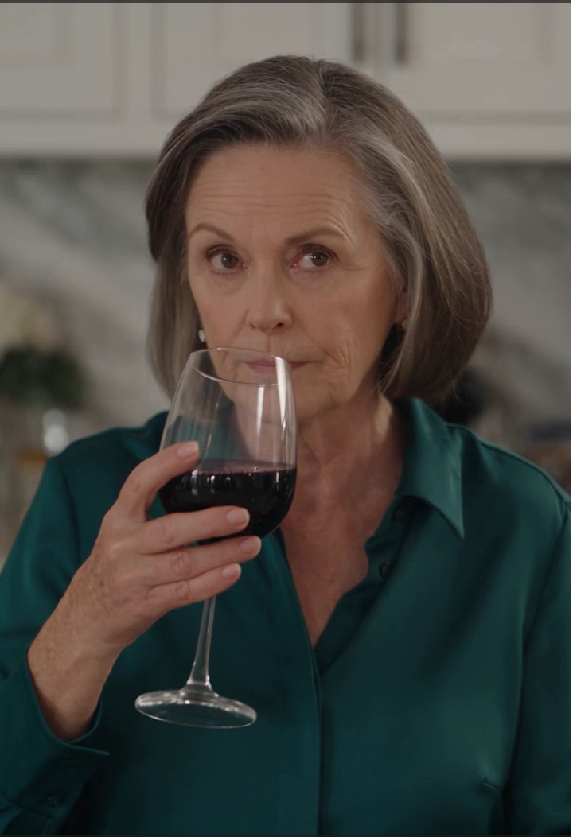
“Where have you been? My family has been waiting for dinner for almost an hour!”
Harper’s voice cracked across my kitchen hard enough to stop fourteen conversations at once.
Someone lowered a champagne glass. A chair scraped once against the dining-room floor and then went still. Even the jazz playing through the speakers seemed suddenly too loud.
I didn’t move.
I sat at my kitchen island with half a ribeye on my plate, roasted asparagus beside it, a slice of warm sourdough bread, and a glass of cabernet near my hand.
Behind me, the kitchen was immaculate.
The oven was cold.
There were no potatoes under foil, no casserole bubbling on the stove, no rolls warming in a basket, no serving dishes waiting beneath silver lids.
And there was definitely no chocolate cake from the expensive bakery Harper loved.
Her eyes traveled slowly across the empty counters.
Then back to me.
“You’re eating?”
“Yes.”
“By yourself?”
I cut another piece of steak.
“Yes.”
Harper stared at me as though I had answered in another language.
Her mother, Brenda, appeared behind her. Several aunts, uncles, cousins, and family friends crowded the doorway. My son, Liam, emerged from the living room with a face so pale that I knew he understood exactly what was happening.
“Harper,” he said quietly.
She spun around.
“Don’t Harper me.”
Liam stopped.
That was the moment I knew I had made the right decision.
Because four months earlier, I would have stood up.
I would have opened the freezer.
I would have found chicken, pasta, frozen vegetables—anything.
I would have called three restaurants until one agreed to prepare fourteen meals on New Year’s Eve.
Then I would have apologized.
For a dinner I had never promised.
For guests I had never invited.
For expectations I had never agreed to meet.
That was the woman I had spent most of my life being.
But she wasn’t sitting at that island anymore.
Harper planted one hand against her hip.
“Everyone has been waiting.”
I lifted my wineglass.
“And?”
Her eyes widened.
“And?”
“Yes.”
“Chelsea, this is ridiculous.”
Brenda folded her arms. “This really isn’t the evening to make some kind of point.”
I looked at her.
“I agree.”
That seemed to confuse her more than an argument would have.
Harper stepped closer.
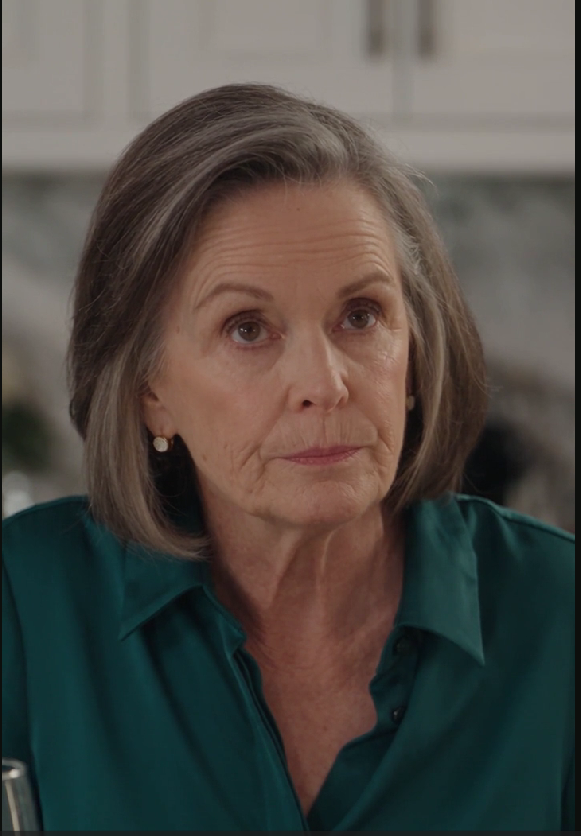
“You said we could have New Year’s here.”
“I said you could invite your family here.”
“That means you’re hosting.”
“No.”
“You knew they were coming.”
“Yes.”
“You knew dinner was at seven.”
“I knew you announced that dinner was at seven.”
Her mouth tightened.
She looked toward Liam.
“Are you hearing this?”
Liam stared at the floor.
“Mom…”
“Yes?”
His shoulders sagged.
Nothing else came out.
Harper gave a short, humorless laugh.
“This is unbelievable.”
She pointed at my plate.
“You cooked for yourself.”
“Yes.”
“And nothing for fourteen other people.”
“Correct.”
The silence that followed felt almost physical.
Then Harper lowered her voice.
“You embarrassed me.”
I put down my wineglass.
“No.”
I looked directly at her.
“You embarrassed yourself.”
Her face changed.
I recognized the expression immediately.
It was the one that had kept me quiet for months.
But this story hadn’t started on New Year’s Eve.
It had started four months earlier, with a coffee cup and my son asking for a favor.
My name is Chelsea Powell.
I was sixty-eight years old that winter, and the house everyone was arguing about belonged entirely to me.
My husband, David, and I bought it thirty-one years earlier.
Back then, the kitchen had mustard-yellow countertops and dark brown cabinets. The basement smelled like wet cement whenever it rained. The backyard contained more weeds than grass.
We loved it anyway.
David refinished the floors himself.
He built the shelves in the den.
He replaced the porch railing twice and complained both times that modern lumber was “made from compressed disappointment.”
When Liam was eight, I planted a maple tree too close to the patio.
David told me exactly what would happen.
I ignored him.
He was right.
By the time Liam left for college, the branches nearly touched our bedroom window.
Every autumn, they turned orange.
Every autumn, David reminded me that he had warned me.
And every autumn, I reminded him that he secretly loved the tree.
Then, after thirty-seven years of marriage, David d.i.e.d.
The first year without him was not dramatic.
That was the cruelest part.
Nothing exploded.
Nobody announced that my life had changed forever.
There was simply one coffee mug where there had always been two.
One toothbrush.
One indentation in the mattress.
One coat missing from the hook beside the garage.
For months, I left the television playing in empty rooms because silence felt heavier than noise.
Then grief changed.
It didn’t disappear.
