El retrato de Audrey Whitmore aún colgaba sobre la escalera este, aunque casi todos en el salón de baile habían aprendido a pasar por debajo sin alzar la vista. La fotografía había sido tomada seis meses antes de su desaparición: cabello oscuro recogido sobre un hombro, una mano apoyada en la barandilla, la leve sonrisa de una mujer que jamás imaginó que su rostro se convertiría algún día en un monumento. Esa noche, máscaras plateadas y esmóquines negros se movían bajo esa imagen en un flujo constante mientras un cuarteto tocaba cerca de las ventanas, y cada superficie pulida de la mansión Whitmore reflejaba la luz de las velas, el champán y a personas que habían aprendido a comportarse en torno a una tragedia que ya no les pertenecía.
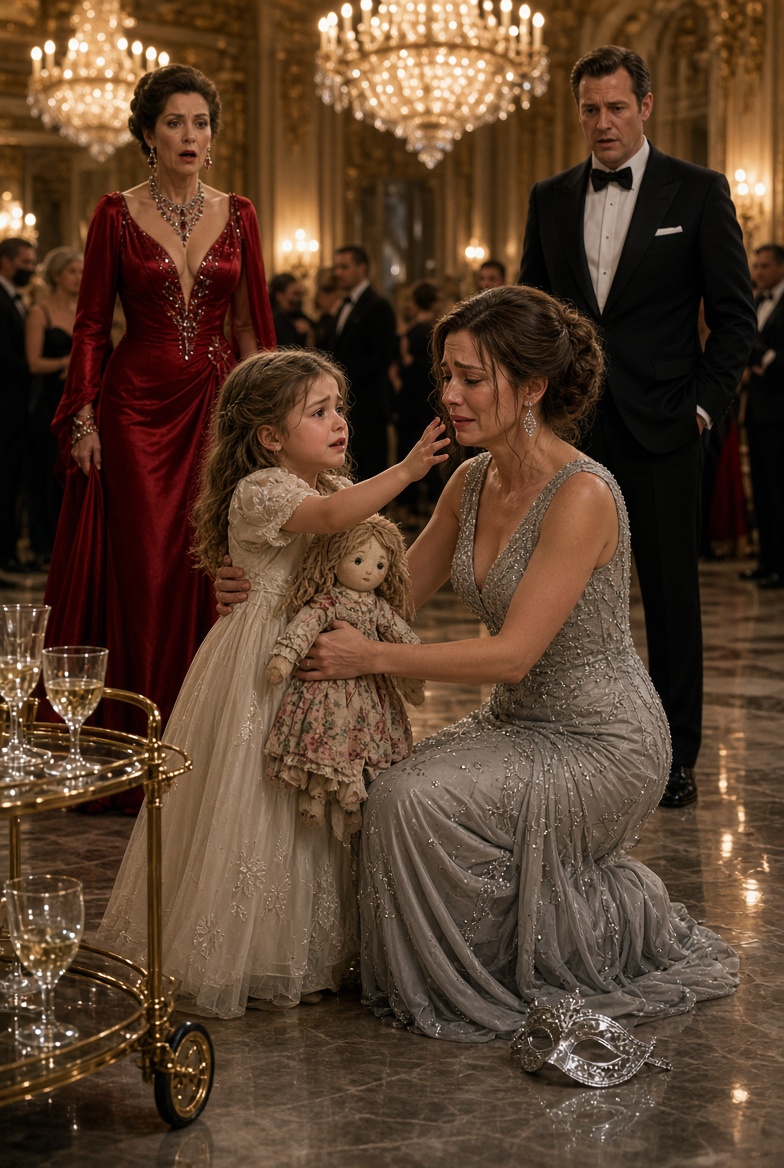
Al borde del salón de baile, Ellie Whitmore, de seis años, estaba sentada en un banco de terciopelo con una vieja muñeca de tela apoyada sobre sus rodillas. La fiesta parecía girar a su alrededor en lugar de incluirla; cada vez que el cuarteto de cuerdas subía el volumen, ella presionaba dos dedos contra la cinta de la muñeca y frotaba la tela hasta que su respiración se calmaba. Graham había preparado una sala de estar más tranquila en el piso de arriba por si se sentía abrumada, pero Ellie había insistido en quedarse donde pudiera verlo, y cada pocos minutos él apartaba la atención de algún donante o miembro de la junta directiva el tiempo suficiente para asegurarse de que ella seguía allí.
Camille Arden se percató de esas miradas porque llevaba tres años aprendiendo a percibir lo que Graham había notado. Permanecía a su lado, vestida con un elegante vestido rojo, respondiendo preguntas sobre la expansión de la fundación y desviando la conversación del procedimiento legal programado para la mañana siguiente, siempre con la calidez natural que había hecho que los donantes confiaran en ella tras la desaparición de Audrey. Cuando un anciano miembro del consejo directivo felicitó a Camille por «mantener a la familia unida», la expresión de Graham se tensó casi imperceptiblemente, y Camille respondió antes de que él pudiera hacerlo.
“Mantuvimos la fundación en funcionamiento”, dijo. “Eso era todo lo que cualquiera de nosotros tenía derecho a hacer”.
Graham giró lentamente su vaso entre sus dedos. “Hay cosas que no deberían convertirse en un discurso de victoria”.
Camille sostuvo su mirada por un instante, luego esbozó una sonrisa amable antes de que alguien cercano notara la corrección. “No intentaba que fuera una corrección. Solo intentaba evitar que Ellie volviera a hablar de mañana”.
“Entonces no menciones el mañana delante de ella.”
“No lo he hecho.”
“No hace falta decirlo para que los niños sepan que algo está cambiando.”
The exchange ended when another donor approached, but something remained unsettled behind Camille’s composure. She had wanted this gala to feel controlled: the trustees reassured, the donors impressed, Graham exhausted enough to accept that life could not remain suspended around a missing woman forever. Instead, there was an unfamiliar tension in the room, subtle enough that she initially blamed the approaching court date, until she saw the woman in silver standing beneath Audrey’s portrait.
The stranger wore a pale evening gown and a delicate masquerade mask that covered the upper half of her face. Nothing about her should have held Camille’s attention for more than a second; the guest list was large, and half the room had arrived through corporate sponsors Camille herself had approved. Yet the woman was not watching the orchestra, the donors, or Graham. Her attention rested on Ellie with such unwavering concentration that Camille stopped listening to the trustee beside her.
Across the room, Audrey kept both hands folded loosely in front of her because she no longer trusted them not to betray her. Three years had altered Ellie in ways photographs had failed to prepare her for: longer legs, darker hair, a more deliberate way of turning the doll’s ribbon between her fingers when the room became too loud. Audrey had imagined this moment during hospital nights, during physical therapy, during every silent hour in which returning home had remained a future tense, but imagination had never included the simple cruelty of standing thirty feet from her own daughter and having no right to cross the distance.
A waiter approached Ellie from behind carrying a tray of champagne. The child did not see him, but her shoulders rose when the glasses touched with a bright, brittle chime, and Audrey’s weight shifted forward before she caught herself. The waiter reached toward Ellie’s shoulder, perhaps intending to ask whether she wanted to move, and Audrey’s hand lifted a fraction from her side; Graham saw the waiter at almost the same moment and crossed the room to redirect him without touching his daughter.
Camille saw both reactions.
She watched Graham crouch beside Ellie until the girl’s shoulders relaxed, then turned back toward the masked stranger. The woman’s chin had lowered, her fingers still slightly curled as if she had interrupted an instinctive movement halfway through. Camille felt a pressure gather beneath her ribs that had nothing to do with fear yet and everything to do with recognition arriving before reason could explain it.
She moved closer without appearing to hurry. “I’m sorry, I don’t believe we’ve met.”
Audrey looked at her.
Camille had prepared herself for many things during the past three years, although never for the possibility that a stranger’s silence could feel familiar. The lower half of the woman’s face offered nothing Camille recognized, and her voice, when it came, was lower than the one preserved in old videos.
“We haven’t.”
“Are you here with one of our sponsors?”
“A friend invited me.”
“Which friend?”
Audrey’s eyes moved briefly toward the ballroom rather than supplying a name. “Does it matter?”
“It does when someone spends half the evening watching a child she doesn’t know.”
Audrey held her gaze. “Perhaps I’m watching the adults around her.”
